Permanent product identification is essential in modern manufacturing. Whether it’s serial numbers, QR codes, barcodes, logos, or traceability information, selecting the right marking technology can improve productivity, product quality, and compliance.
Two widely used marking methods are Laser Marking and Dot Peen Marking. Although both provide permanent identification, they differ in speed, marking quality, maintenance, and operating costs.
Let’s explore the key differences to help you determine which solution is the right fit for your manufacturing process.
Understanding Laser Marking
Laser marking is a non-contact process that uses a concentrated laser beam to permanently mark the surface of a material. Instead of physically striking the material, the laser alters the surface to create sharp, durable, and high-contrast markings.
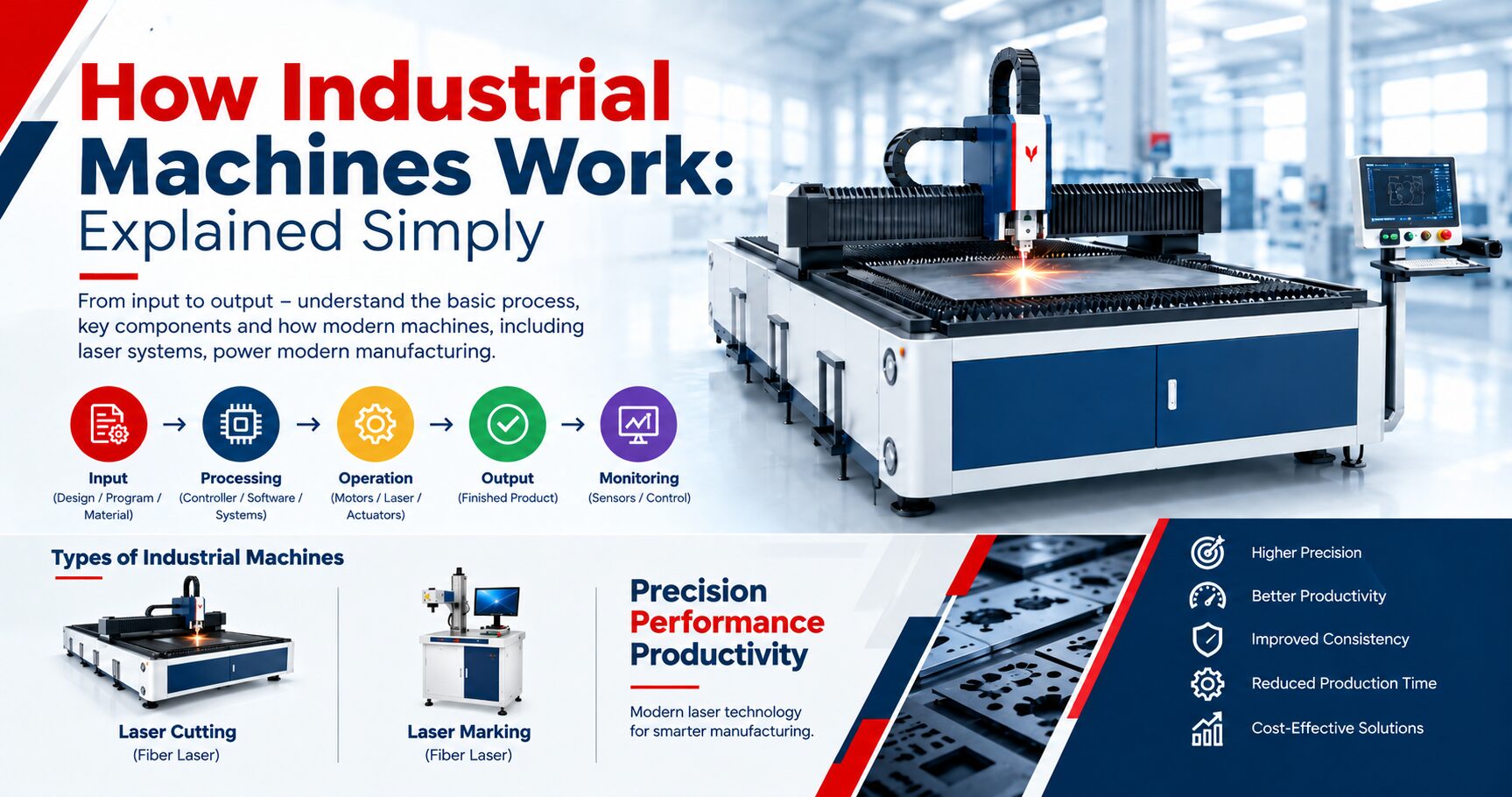
A fiber laser marking machine is widely used across industries because it delivers fast, precise, and maintenance-free performance.
Typical Applications
- Serial Number Marking
- QR Code Marking
- Barcode Marking
- Data Matrix Codes
- Product Traceability
- Company Logo Engraving
- Name Plates
- Component Identification
Understanding Dot Peen Marking
Dot peen marking is a contact-based marking process that uses a hardened carbide pin to create thousands of tiny indentations on the material surface. These dots combine to form letters, numbers, logos, or symbols.
It is commonly used in industries where basic identification is sufficient and aesthetics are less important.
Laser Marking vs Dot Peen Marking
| Feature | Laser Marking | Dot Peen Marking |
| Technology | Laser Beam | Mechanical Pin |
| Contact with Material | No | Yes |
| Marking Speed | Very Fast | Moderate |
| Marking Quality | High Resolution | Dot Pattern |
| Noise Level | Quiet | Loud |
| Surface Damage | None | Creates Indentations |
| Maintenance | Low | Regular Pin Replacement |
| Automation | Excellent | Limited |
| QR & Barcode Quality | Excellent | Average |
| Overall Productivity | High | Moderate |
Speed & Productivity
Manufacturers operating high-volume production lines require marking systems that can keep pace with demand.
Laser marking delivers significantly faster marking speeds while maintaining consistent quality, making it ideal for automated production.
Dot peen systems are slower because every character is created by individual pin impacts.
Best Choice: Laser Marking
Marking Quality
High-quality identification is essential for traceability, especially in industries like automotive, aerospace, and electronics.
Laser marking creates:
- Sharp text
- High-resolution logos
- Readable QR codes
- Clear barcodes
- Fine graphics
Dot peen marking produces visible dots, which may reduce readability on smaller components.
Best Choice: Laser Marking
Precision
Laser technology offers exceptional precision, making it suitable for tiny components and complex markings.
Applications include:
- Electronic Components
- Medical Devices
- Aerospace Parts
- Precision Engineering Products
Dot peen marking is generally better suited for larger characters and simple identification.
Effect on Material Surface
Since laser marking is completely contactless, it preserves the original surface finish without causing dents or deformation.
Dot peen marking permanently indents the material, which may not be desirable for decorative or high-end products.
Maintenance Requirements
One of the biggest advantages of laser marking is its low maintenance.
Laser marking machines have:
- No marking pins
- No consumables
- No ink
- Very few moving parts
Dot peen systems require periodic replacement of marking pins, increasing maintenance costs over time.
Operating Costs
Although the initial investment in a laser marking system is higher, its long-term operating costs are much lower due to reduced maintenance and the absence of consumables.
This makes laser marking a cost-effective solution for manufacturers focused on long-term productivity.
Automation Compatibility
Laser marking integrates seamlessly with modern manufacturing systems, including:
- Robotic Arms
- Conveyor Lines
- Vision Inspection Systems
- Industry 4.0 Production Lines
- Smart Factory Automation
Its ability to integrate into automated environments makes it the preferred choice for high-volume production.
Industries That Prefer Laser Marking
Laser marking technology is widely adopted in:
- Automotive Manufacturing
- Aerospace
- Medical Device Manufacturing
- Electronics
- Metal Fabrication
- Tool & Die Industry
- Electrical Components
- Engineering Industries
When Dot Peen Marking Makes Sense
Dot peen marking remains a practical choice when:
- Production volume is low.
- Budget is limited.
- Simple identification is required.
- Cosmetic appearance is not a priority.
Why More Manufacturers Are Choosing Laser Marking
Today’s industries demand faster production, better traceability, and consistent quality. Laser marking meets these expectations by offering:
- High-Speed Operation
- Permanent Marking
- Superior Precision
- Excellent Readability
- Minimal Maintenance
- Lower Operating Costs
- Easy Automation
- Eco-Friendly Processing
- Long Machine Life
Conclusion:
Both laser marking and dot peen marking provide permanent identification, but their suitability depends on your production requirements.
If your goal is to improve productivity, enhance marking quality, reduce maintenance, and integrate with automated production lines, a fiber laser marking machine is the better long-term investment.
For manufacturers embracing smart manufacturing and Industry 4.0, laser marking delivers the speed, precision, and reliability needed to stay competitive.