Introduction
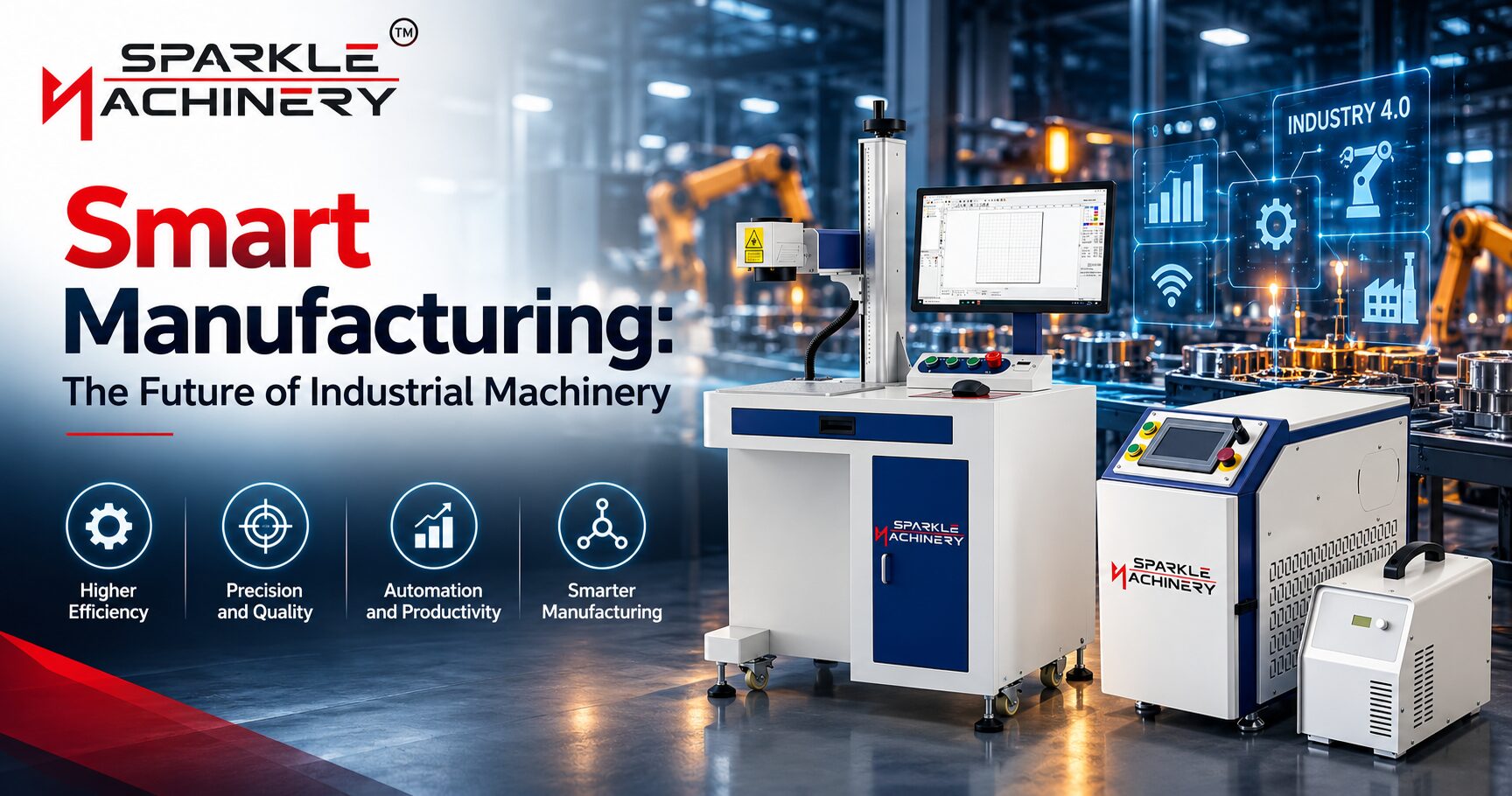
The manufacturing industry is rapidly evolving with the adoption of automation, digital technologies, and intelligent production systems. Today, manufacturers are looking for ways to improve productivity, reduce operational costs, maintain consistent quality, and meet growing customer demands. This transformation is driving the growth of smart manufacturing, one of the most important developments in modern industrial machinery.
Smart manufacturing combines advanced machines, automation, data monitoring, and connected technologies to create more efficient production processes. Technologies such as laser marking machines, laser welding machines, laser cleaning machines, fiber laser cutting machines, and industrial automation solutions are helping manufacturers improve precision, productivity, and process consistency.
At SM Laser Technology, we provide industrial laser solutions designed to support modern manufacturing requirements through precision laser processing and customized machinery.
What Is Smart Manufacturing?
Smart manufacturing is a modern approach to production that uses advanced machinery, automation, digital monitoring, and data-driven processes to improve manufacturing performance.
Unlike conventional production systems that depend heavily on manual operations, smart manufacturing focuses on improving efficiency, consistency, traceability, and process control.
Key elements of smart manufacturing include:
- Industrial automation: Reducing repetitive manual work and improving production efficiency.
- Intelligent machinery: Using advanced machines for precise and repeatable operations.
- Digital monitoring: Tracking machine performance, production output, and process parameters where supported.
- Quality control: Maintaining consistent product quality and reducing manufacturing defects.
- Data traceability: Recording product identification information to support tracking throughout production and supply chains.
- Customized production systems: Integrating machines and special-purpose machinery to meet specific application requirements.
By adopting these technologies, manufacturers can build more flexible, productive, and reliable production environments.
Why Is Smart Manufacturing Important for Modern Industries?
Manufacturers face increasing pressure to deliver high-quality products while controlling costs and meeting strict delivery schedules. Traditional processes may struggle with high production volumes, changing product requirements, and the need for consistent quality.
Smart manufacturing helps address these challenges in several ways.
1. Improved Production Efficiency
Modern industrial machinery helps manufacturers complete repetitive processes with greater speed and consistency. Automated laser marking, welding, and cutting operations can reduce manual handling and streamline production workflows.
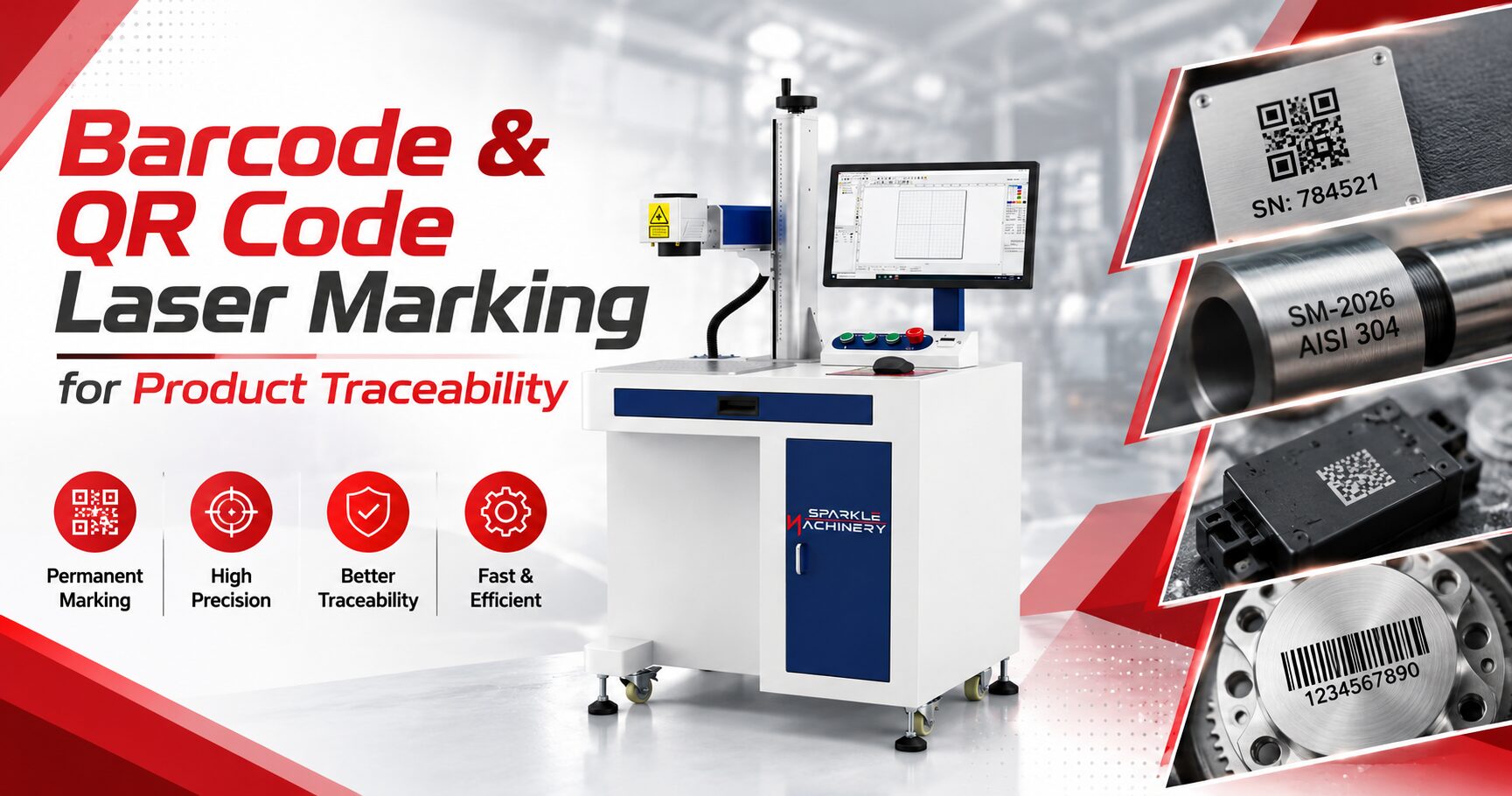
For example, a laser marking machine can mark serial numbers, QR codes, barcodes, logos, and product identification details directly onto compatible components. When integrated into an appropriate production line, automated marking can reduce repetitive operator tasks and support faster production cycles.
2. Higher Precision and Consistent Quality
Precision is essential in industries such as automotive manufacturing, electronics, electrical equipment, engineering, and industrial component production.
Industrial laser technology enables controlled processing with accurate marking, cutting, welding, and cleaning, depending on the application and material.
A fiber laser marking machine can produce clear, permanent markings on suitable metal components. Laser welding can create precise joints when the machine and process parameters are correctly selected. Fiber laser cutting machines can deliver accurate cuts on compatible sheet metals.
These technologies help manufacturers improve repeatability and reduce the risk of quality variations.
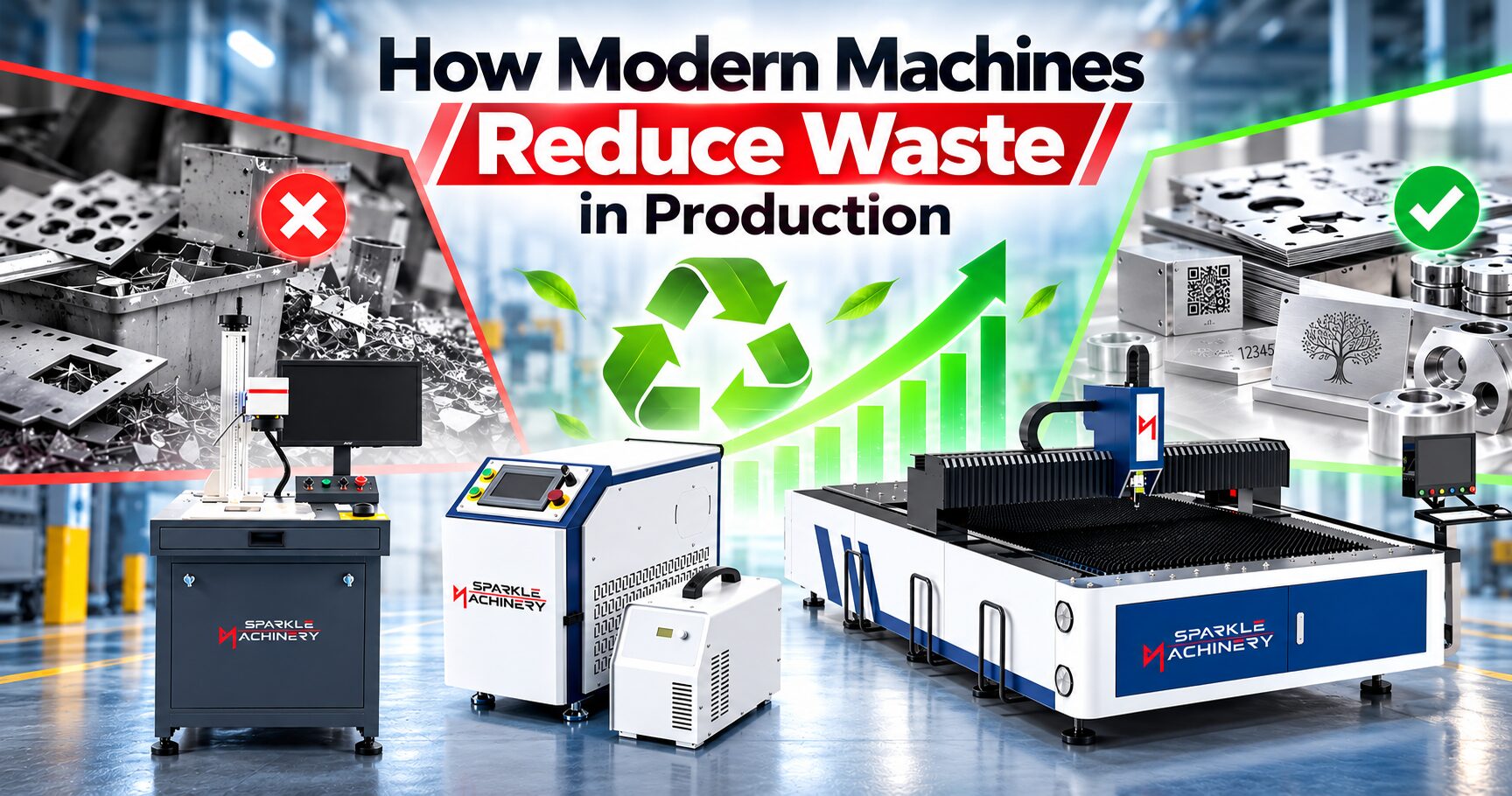
3. Reduced Material Waste and Rework
Material waste and defective products can increase manufacturing costs. Smart manufacturing focuses on improving process control and reducing avoidable errors.
Modern laser machines can help reduce waste through:
- Accurate laser marking and component identification.
- Controlled cutting paths and suitable nesting strategies.
- Consistent welding parameters and appropriate process setup.
- Reduced reliance on certain consumables in applications where laser processing replaces conventional methods.
- Better process monitoring and inspection.
The actual savings depend on the material, product design, machine configuration, operator training, and production volume.
4. Better Product Traceability
Product traceability is increasingly important for manufacturers supplying automotive, engineering, electronics, medical-device, and other regulated or quality-sensitive industries.
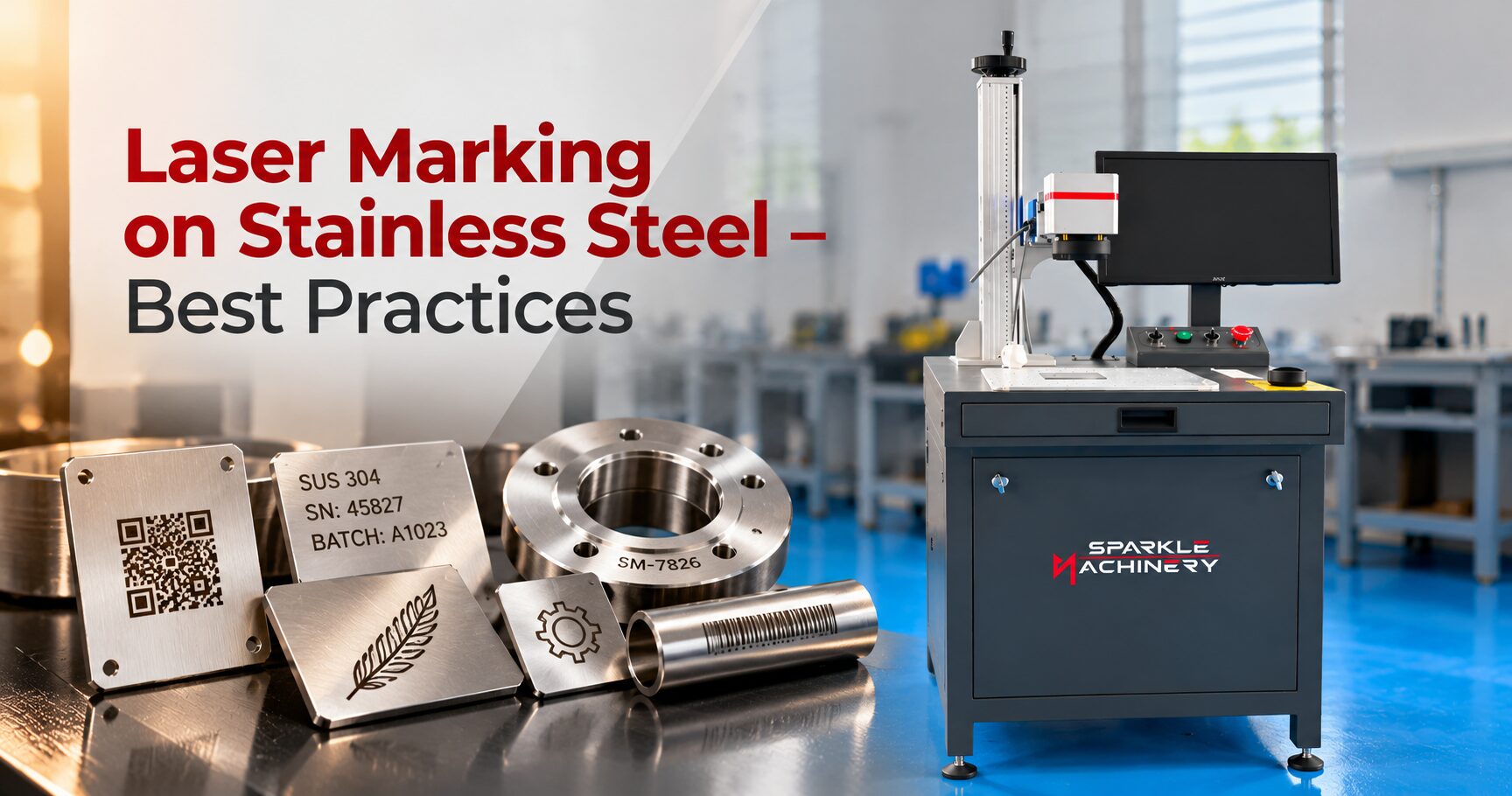
Laser marking machines can permanently mark identification details such as:
- Serial numbers and part numbers.
- QR codes and barcodes.
- Manufacturing dates and batch numbers.
- Company logos and product information.
- Identification codes required for production tracking.
When these markings are readable and connected to a suitable tracking system, they can help manufacturers identify components, maintain records, and improve traceability throughout the production process.
5. Improved Workplace Productivity
Automation helps reduce repetitive manual tasks and enables employees to focus on inspection, machine setup, production planning, and other value-added activities.
For instance, an automated laser marking system can mark components in a repeatable sequence, while a customized fixture or special-purpose machine can help position parts accurately and reduce handling time.
The objective is not simply to replace manual work. It is to build a production process that uses people, machinery, and automation more effectively.
Role of Laser Technology in Smart Manufacturing
Laser processing is an important part of modern industrial production because it offers precision, flexibility, and suitability for a wide range of applications.
1. Laser Marking Machines
Laser marking machines are used to mark product identification details, logos, serial numbers, QR codes, and other information on compatible materials.
Fiber laser marking machines are widely used for many metal-marking applications. Depending on the material and marking requirements, other technologies, including UV and CO₂ laser marking systems, may be more suitable.
Benefits include:
- Permanent, high-quality marking.
- Accurate marking of small text and detailed designs.
- Support for product identification and traceability.
- Reduced need for inks, labels, and other marking consumables in suitable applications.
- Potential integration with production-line automation.
Explore our laser marking machine solutions.
2. Laser Welding Machines
Laser welding machines use a concentrated laser beam to join compatible materials with controlled heat input.
They can be suitable for applications requiring precise welds, a defined weld profile, and efficient processing. The final result depends on material type, thickness, joint design, surface condition, and process parameters.
Common applications include metal fabrication, industrial components, enclosures, and selected automotive and engineering parts.
Benefits may include:
- Precise welding on suitable components.
- Reduced distortion in appropriately designed applications.
- Consistent weld quality with proper process control.
- Potential improvements in production speed and repeatability.
Choosing the right laser welding machine requires evaluating the actual material, joint geometry, production volume, and quality requirements.
3. Laser Cleaning Machines
Laser cleaning machines use laser energy to remove selected surface contaminants, coatings, oxides, or residues from compatible materials.
They can support applications where controlled surface preparation is important, including maintenance, manufacturing, and preparation before certain welding or coating operations.
Potential benefits include:
- Reduced use of chemical cleaning agents in suitable applications.
- Controlled treatment of selected surfaces.
- Less dependence on abrasive consumables for certain cleaning tasks.
- Improved process consistency when parameters are optimized.
Material compatibility, surface condition, extraction requirements, and laser safety must be considered before selecting a cleaning system.
4. Fiber Laser Cutting Machines
Fiber laser cutting machines are widely used for cutting compatible sheet metals and other suitable materials.
In smart manufacturing environments, these machines can support precision cutting, repeatable production, and integration with computer-controlled workflows.
Key benefits include:
- Accurate cutting of suitable materials.
- Efficient processing of complex profiles.
- Support for CNC-based production workflows.
- Potential reduction in scrap through optimized nesting and cutting plans.
- Improved consistency across repeated jobs.
Cutting performance depends on laser power, material type, thickness, assist gas, cutting speed, and machine configuration.
5. Laser Automation and Special-Purpose Machines
Every manufacturing process has different requirements. Standard machinery may not always meet the needs of specialized components, production volumes, or complex workflows.
Customized laser automation and special-purpose machines (SPMs) can be designed around a particular application.
Examples include:
- Conveyor-based laser marking.
- Automated component loading and unloading.
- Rotary marking for cylindrical components.
- Customized fixtures and positioning systems.
- Integration with scanners, sensors, and production equipment where supported.
- Application-specific marking and processing stations.
Customized machinery can help reduce repetitive handling, improve process consistency, and connect laser operations with the wider production workflow.
Smart Manufacturing and Industry 4.0
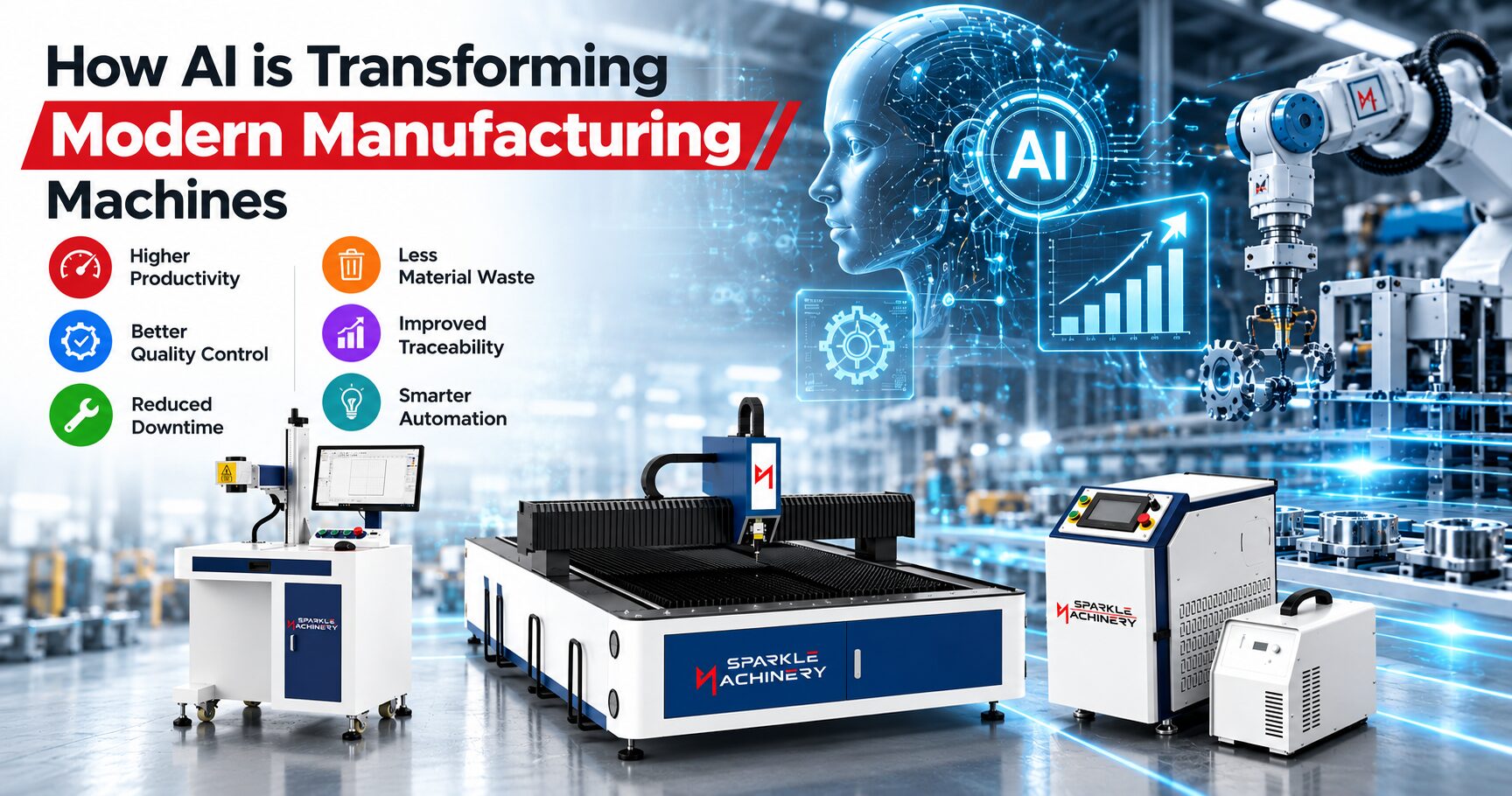
Industry 4.0 refers to the use of connected technologies, automation, data, and intelligent systems to improve industrial production. Smart manufacturing is a practical application of these principles.
Depending on the equipment and integration, an Industry 4.0 production environment may include:
- Programmable logic controllers (PLCs).
- Sensors and machine-status monitoring.
- Manufacturing execution systems (MES).
- Enterprise resource planning (ERP) integration.
- Production dashboards and performance reporting.
- Barcode or QR-code-based tracking.
- Automated quality inspection.
- Predictive maintenance systems.
Laser machinery can become part of this environment when it supports the required interfaces and is properly integrated with other equipment and software.
For example, a laser marking system connected to a production database may receive product information and mark a unique serial number or QR code on each component. A downstream scanning system can then read that code to support traceability.
It is important to confirm connectivity, communication protocols, software compatibility, and integration requirements before purchasing equipment.
Industries Benefiting from Smart Manufacturing
Smart manufacturing technologies can support a broad range of industrial sectors.
Automotive Industry
Laser marking can identify components with part numbers, serial numbers, and traceability codes. Laser welding and cutting can support suitable fabrication and assembly processes.
Electrical and Electronics Industry
Laser marking is used for product identification, logos, codes, and labels on compatible components, panels, and enclosures.
Sheet Metal Fabrication
Fiber laser cutting and suitable welding systems can help manufacturers process metal parts with precision and repeatability.
Engineering and Industrial Components
Laser marking can support permanent identification of tools, dies, bearings, shafts, machine parts, and other compatible components.
Manufacturing and Fabrication
Laser cleaning, marking, cutting, and welding can help address specific production requirements when selected according to material and process needs.
The appropriate technology depends on the application, material, required finish, production volume, and quality standards.
How to Start Implementing Smart Manufacturing
Manufacturers do not need to automate their entire facility at once. A step-by-step approach can help identify the most valuable opportunities.
Step 1: Evaluate Existing Production Processes
Identify operations that involve repetitive manual work, inconsistent output, high rejection rates, lengthy cycle times, or traceability challenges.
Step 2: Identify the Right Technology
Determine whether laser marking, welding, cleaning, cutting, or a customized automation solution addresses the identified problem.
Step 3: Test Your Own Components
Sample testing helps verify marking quality, cutting performance, weld quality, or cleaning results on the actual material before investing in equipment.
Step 4: Calculate the Expected Return
Consider the machine investment, installation, training, maintenance, consumables, labour savings, scrap reduction, and expected production improvements.
A simple payback estimate is:
Payback Period = Total Investment ÷ Monthly Net Savings
Use realistic production data and include operating costs when calculating the expected savings.
Step 5: Plan for Automation and Integration
If required, assess how the machine will connect with existing fixtures, conveyors, production software, inspection systems, and other equipment.
Step 6: Train Operators and Monitor Performance
Provide appropriate operator training and track useful indicators such as cycle time, rejection rate, marking readability, machine availability, and production output.
This approach allows manufacturers to expand automation based on measurable results.
How SM Laser Technology Supports Smart Manufacturing
SM Laser Technology, also known as Sparkle Machinery, provides laser machinery and customized solutions for a range of industrial applications.
Our solutions include laser marking machines, laser welding machines, laser cleaning machines, fiber laser cutting machines, and customized laser automation systems.
We help manufacturers evaluate their applications and identify suitable laser technologies based on component requirements, material compatibility, marking or processing quality, and production needs.
Our approach focuses on helping customers make informed machinery decisions through application discussions and component testing where appropriate.
Explore our website to learn more about our laser marking machine solutions, including our standard laser marking machines, premium laser marking machines, and special laser marking machines.
To discuss your application or request further information, visit our Contact Us page.
Conclusion
Smart manufacturing is shaping the future of industrial machinery by bringing together precision equipment, automation, process control, and digital technologies. These developments help manufacturers improve productivity, maintain quality, strengthen traceability, and make better use of production resources.
Laser marking, welding, cleaning, cutting, and customized automation can all contribute to a smarter manufacturing environment when selected and implemented according to the application.
For manufacturers planning their next step towards modern production, the best starting point is to identify a specific challenge, evaluate suitable technologies, and measure the results.