Introduction
Industrial machinery plays an important role in modern manufacturing. From metal fabrication and automotive production to electronics and engineering industries, machines help businesses maintain production speed, accuracy and product quality.
However, unexpected machinery breakdowns can interrupt production, increase maintenance costs, delay deliveries and affect overall productivity.
Whether you operate conventional industrial equipment or advanced machines such as fiber laser marking machines, laser welding machines, laser cleaning machines or laser cutting machines, regular maintenance is essential for smooth and reliable operation.
Understanding the common causes of machinery breakdown can help manufacturers identify potential problems early and take preventive action.
Let’s explore the top causes of machinery breakdown and how to prevent them.
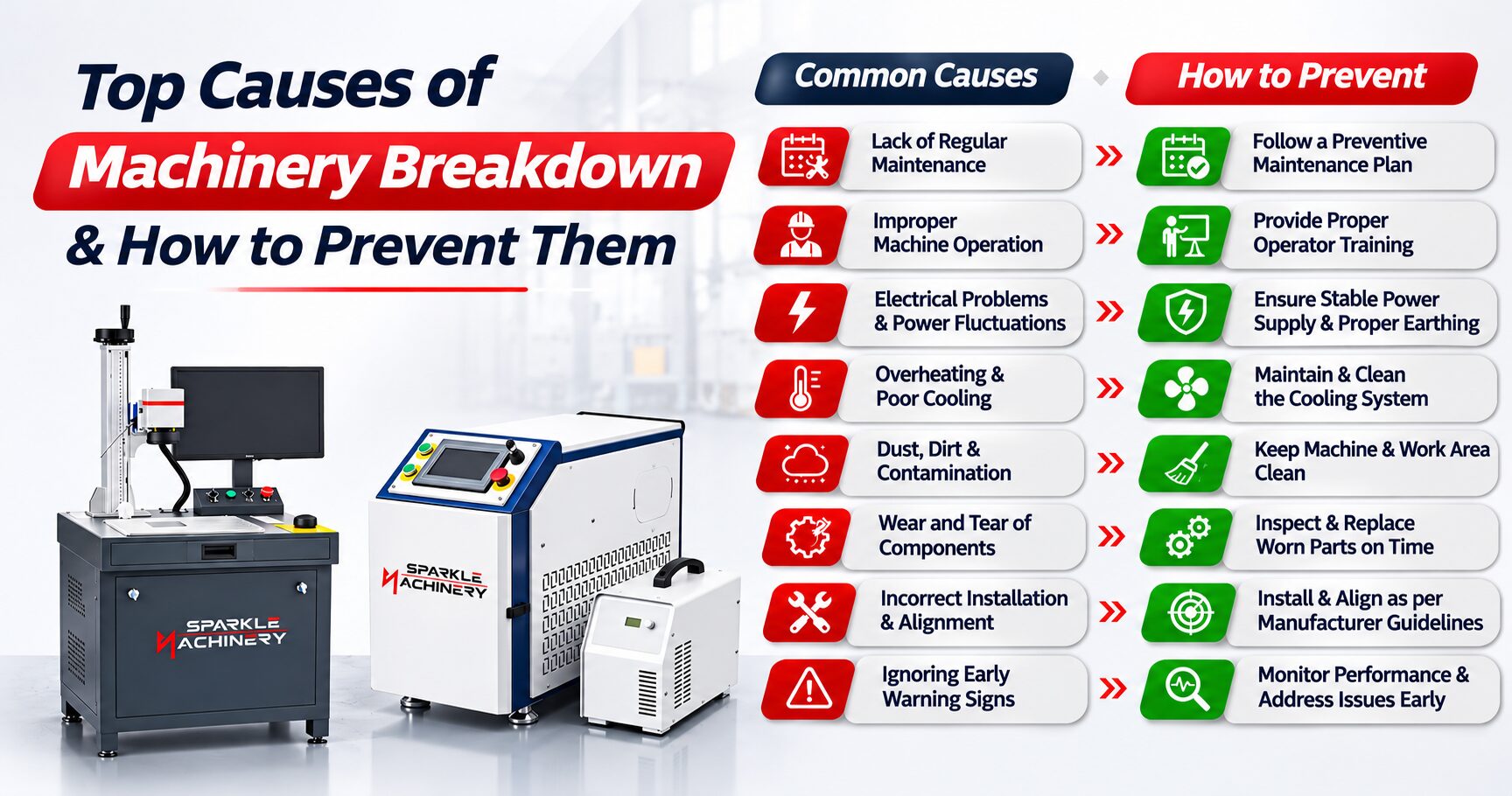
1. Lack of Regular Preventive Maintenance
One of the most common causes of machinery breakdown is poor maintenance. When machines are not inspected, cleaned or serviced regularly, small issues can develop into major mechanical or electrical failures.
Dust accumulation, loose connections, worn-out components and insufficient lubrication can gradually affect machine performance.
How to Prevent It:
- Follow a scheduled preventive maintenance plan.
- Inspect important machine components regularly.
- Clean machines to prevent dust and debris accumulation.
- Replace worn-out parts before they fail.
- Maintain service and inspection records.
Regular preventive maintenance helps reduce unexpected machine downtime and improves equipment life.
2. Improper Machine Operation
Operating machinery without proper training or following incorrect procedures can cause serious equipment damage.
Incorrect machine settings, excessive loads, improper handling and ignoring operating instructions may affect machine accuracy and performance.
In laser processing equipment, incorrect operating parameters or improper handling of optical components can also lead to poor processing results.
How to Prevent It:
- Provide proper operator training.
- Follow the manufacturer’s operating instructions.
- Use recommended machine settings.
- Avoid operating machines beyond their specified capacity.
- Ensure operators understand machine safety procedures.
Trained operators help maintain consistent production quality and reduce avoidable equipment failures.
3. Electrical Problems and Power Fluctuations
Electrical faults are another major reason for industrial machinery breakdowns. Voltage fluctuations, unstable power supply, damaged cables, loose connections and improper earthing can affect sensitive electronic components.
Advanced industrial machines, including fiber laser marking and laser welding machines, depend on electronic control systems and stable electrical power.
How to Prevent It:
- Ensure a stable and suitable power supply.
- Check electrical connections periodically.
- Maintain proper earthing.
- Inspect cables, switches and control panels.
- Use appropriate electrical protection devices as recommended by the machine manufacturer.
A reliable electrical system helps protect machine electronics and ensures consistent operation.
4. Overheating and Poor Cooling
Excessive heat can reduce machine efficiency and damage important components. Cooling problems may occur due to blocked ventilation, dirty filters, insufficient coolant flow or malfunctioning cooling systems.
In laser machines, maintaining the recommended operating temperature is particularly important. Laser sources and other heat-sensitive components require suitable cooling conditions.
How to Prevent It:
- Check cooling systems regularly.
- Maintain the recommended coolant level and quality.
- Clean air filters and ventilation areas.
- Monitor machine temperature during operation.
- Follow the manufacturer’s cooling and maintenance guidelines.
Proper cooling helps maintain stable performance and reduces the risk of heat-related failures.
5. Dust, Dirt and Contamination
Dust and contamination can affect moving parts, sensors, electrical components and optical systems.
In industrial environments, metal particles, oil, smoke and other contaminants can accumulate inside machines. This may lead to inaccurate operation, poor output quality or component damage.
For laser marking and laser cutting machines, keeping the working area and optical components clean is especially important.
How to Prevent It:
- Clean machine surfaces and working areas regularly.
- Keep electrical panels free from dust.
- Inspect filters and ventilation systems.
- Clean optical components only using approved procedures.
- Maintain a clean and suitable operating environment.
Regular cleaning helps prevent contamination-related machine problems.
6. Wear and Tear of Machine Components
Every machine contains components that experience natural wear during regular operation. Bearings, belts, motors, guide rails, connectors and other moving parts may deteriorate over time.
If worn components are not replaced on time, they can affect machine accuracy and may lead to unexpected breakdowns.
How to Prevent It:
- Inspect moving components periodically.
- Check for unusual vibration or noise.
- Follow recommended lubrication schedules.
- Replace damaged or worn components on time.
- Use manufacturer-recommended spare parts.
Timely replacement of components helps improve machine reliability and reduce costly repairs.
7. Incorrect Machine Installation and Alignment
Improper installation can create long-term operational problems. Incorrect alignment, unstable foundations, loose mounting and unsuitable environmental conditions may affect machine accuracy and performance.
This is especially important for precision equipment such as laser marking and laser cutting machines.
How to Prevent It:
- Install machinery according to manufacturer guidelines.
- Ensure proper foundation and machine stability.
- Check alignment before starting production.
- Verify electrical and utility connections.
- Get installation and commissioning support from trained technicians.
Professional installation helps ensure that machinery operates as intended.
8. Ignoring Early Warning Signs
Many machinery failures do not happen suddenly. Machines often show warning signs before a major breakdown occurs.
Unusual sounds, excessive vibration, overheating, inconsistent output and frequent error messages may indicate an underlying problem.
Ignoring these signs can increase repair costs and extend production downtime.
How to Prevent It:
- Monitor machine performance regularly.
- Investigate unusual sounds and vibrations.
- Record recurring errors and alarms.
- Schedule inspection when performance changes.
- Contact qualified service technicians when necessary.
Early identification of problems makes troubleshooting easier and can prevent major failures.
9. Using Low-Quality or Incorrect Spare Parts
Using incompatible or low-quality spare parts can affect machine performance and reliability. Incorrect components may not meet the machine’s required specifications and can create additional problems.
How to Prevent It:
- Use manufacturer-approved or technically compatible spare parts.
- Verify component specifications before replacement.
- Purchase critical components from reliable suppliers.
- Maintain an inventory of essential spare parts.
- Keep replacement and service records.
Choosing suitable spare parts helps maintain machine performance and reduces repeated failures.
10. Poor Maintenance Planning and Documentation
Without proper maintenance records, manufacturers may miss recurring problems, scheduled servicing and component replacement requirements.
A lack of maintenance planning can result in reactive repairs instead of preventive action.
How to Prevent It:
- Create a daily, weekly and monthly maintenance checklist.
- Maintain machine service history.
- Record breakdowns and repair activities.
- Track component replacement dates.
- Assign maintenance responsibilities to trained personnel.
A structured maintenance system helps manufacturers manage equipment more effectively.
Importance of Preventive Maintenance in Laser Machines
Modern laser machines are designed for precision, speed and consistent processing. However, like other industrial equipment, they require proper maintenance to deliver reliable performance.
Here are some important maintenance practices for different laser machines:
Fiber Laser Marking Machines
- Keep the marking area clean.
- Inspect the protective lens and optical components.
- Check cable connections and ventilation.
- Maintain stable operating conditions.
Laser Welding Machines
- Inspect the welding head and protective lens.
- Check cooling system performance.
- Inspect cables and connections.
- Follow recommended cleaning and servicing procedures.
Laser Cleaning Machines
- Keep the cleaning head and optical components clean.
- Inspect the cooling and ventilation systems.
- Check cables and connectors.
- Follow the recommended operating parameters.
Laser Cutting Machines
- Clean and inspect cutting optics.
- Check assist-gas connections and pressure.
- Inspect guide rails and moving components.
- Maintain the cooling and extraction systems.
Always follow the specific maintenance instructions provided by the machine manufacturer. Optical components should be cleaned using approved materials and procedures.
Benefits of Regular Industrial Machine Maintenance
A proper industrial machine maintenance program offers several benefits:
- Reduced Downtime: Helps prevent unexpected production interruptions.
- Improved Productivity: Keeps machines operating efficiently.
- Longer Equipment Life: Reduces premature component damage.
- Better Product Quality: Maintains consistent machine performance and accuracy.
- Lower Repair Costs: Identifies small problems before they become expensive failures.
- Improved Workplace Safety: Helps identify equipment-related risks at an early stage.
Conclusion
Machinery breakdowns can affect production efficiency, operating costs and delivery schedules. However, many common machine failures can be reduced through proper preventive maintenance, trained operators, regular inspections and timely replacement of worn components.
For manufacturers using advanced laser technology, maintaining the cooling system, electrical connections, optical components and operating environment is equally important.
At SM Laser Technology, we understand the importance of reliable industrial laser solutions. We offer advanced laser marking, laser welding, laser cleaning and laser cutting machines designed to support modern manufacturing requirements.
Choosing the right machine and following proper maintenance practices can help your business achieve better productivity, consistent performance and long-term operational efficiency.
Looking for reliable industrial laser machines?
Explore our range of laser solutions at www.sparklemachinery.com or contact SM Laser Technology to discuss your manufacturing requirements.
Frequently Asked Questions (FAQs)
1. What are the most common causes of machinery breakdown?
The most common causes include lack of preventive maintenance, improper machine operation, electrical problems, overheating, dust accumulation, component wear and incorrect installation.
2. How can industrial machinery breakdowns be prevented?
Machinery breakdowns can be reduced through regular inspections, preventive maintenance, operator training, proper lubrication, stable power supply and timely replacement of damaged components.
3. What is preventive maintenance in industrial machinery?
Preventive maintenance is a planned process of inspecting, cleaning, servicing and replacing machine components at regular intervals to reduce the possibility of unexpected failures.
4. How often should industrial machines be maintained?
Maintenance frequency depends on the machine type, operating hours, working environment and manufacturer’s recommendations. Daily inspections and scheduled periodic servicing are generally recommended.
5. Why is maintenance important for laser marking machines?
Regular laser marking machine maintenance helps maintain marking quality, protect optical components, prevent overheating and support consistent machine performance.
6. What are the early warning signs of machinery failure?
Common warning signs include unusual noise, vibration, overheating, inconsistent output, reduced performance, error messages and frequent machine stoppages.