Introduction
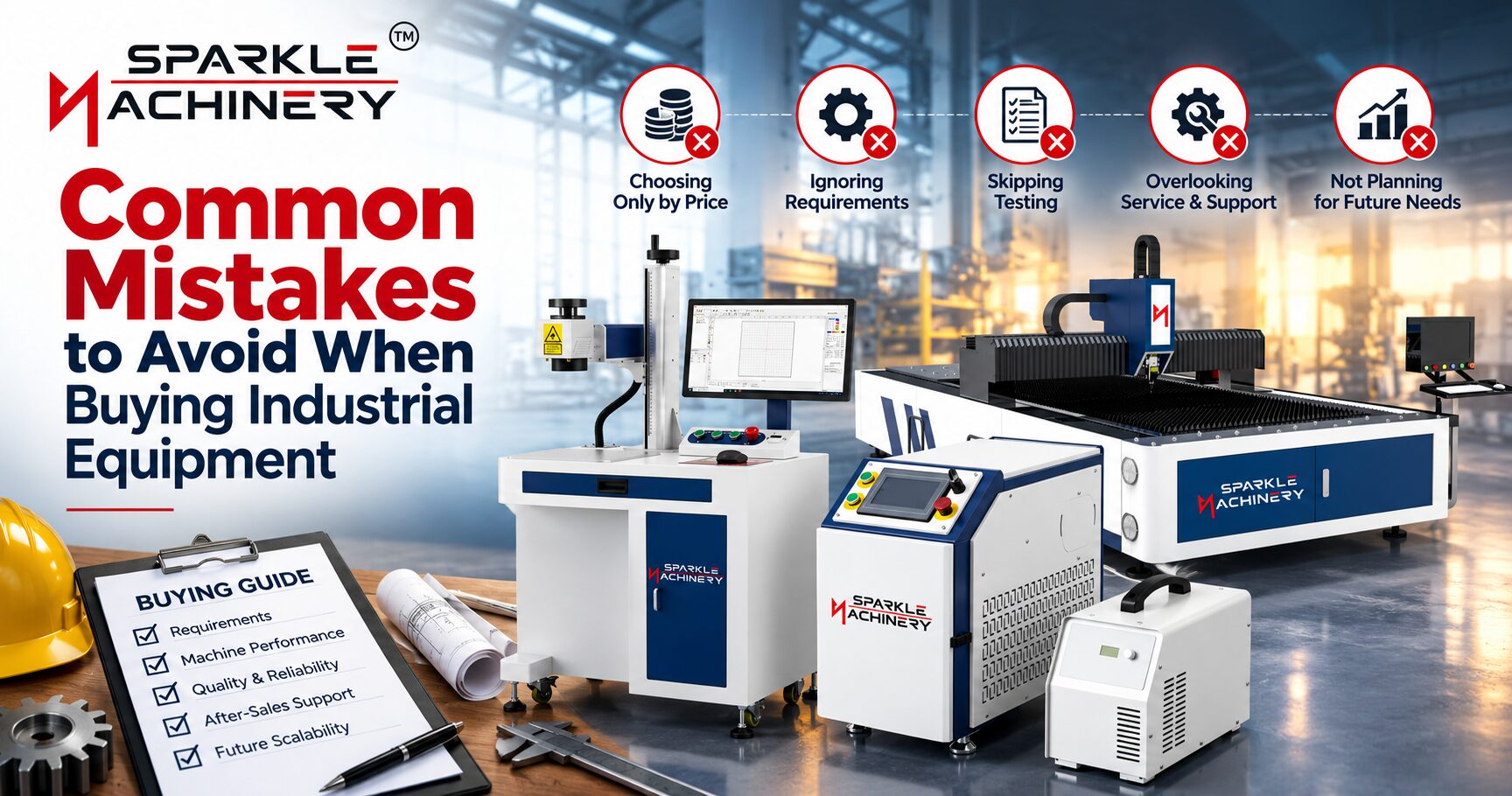
Buying industrial equipment is an important investment for any manufacturing business. The right machinery can improve production efficiency, enhance product quality, reduce manual work, and support long-term business growth. However, choosing the wrong equipment can lead to unnecessary expenses, production delays, maintenance problems, and poor operational performance.
Many manufacturers focus only on the purchase price when selecting machinery. In reality, several other factors—including application suitability, machine performance, operating costs, after-sales service, and future production requirements—must be considered before making a decision.
Whether you are planning to purchase a laser marking machine, laser welding machine, laser cleaning machine, fiber laser cutting machine, or industrial automation solution, understanding common purchasing mistakes can help you make a more informed investment.
At SM Laser Technology, we understand the importance of selecting the right laser equipment for specific industrial applications. This guide explains the most common mistakes to avoid when buying industrial equipment and how manufacturers can choose machinery that meets their production requirements.
1. Choosing Equipment Based Only on Price
One of the most common mistakes when buying industrial equipment is selecting a machine solely because it has the lowest purchase price.
Although a low-cost machine may appear attractive initially, it may not provide the performance, durability, precision, or support required for your application.
Industrial machinery should be evaluated based on its overall value rather than its initial cost alone.
Before purchasing equipment, consider:
- Machine quality and expected service life.
- Processing speed and production capacity.
- Accuracy and repeatability.
- Power consumption and operating expenses.
- Maintenance requirements and spare-part availability.
- Warranty coverage and technical support.
For example, when comparing two fiber laser marking machines, a manufacturer should evaluate marking quality, cycle time, compatibility with the material, software features, and service support—not just the quoted price.
Tip: Compare the total cost of ownership, including purchase price, installation, training, maintenance, consumables, and operating costs.
2. Ignoring Your Actual Production Requirements
Industrial equipment should be selected according to the work it needs to perform. Purchasing machinery without clearly defining production requirements can result in equipment that is either insufficient for the application or unnecessarily expensive.
Before buying a machine, identify:
- The type of components you manufacture.
- Material type and dimensions.
- Required production volume.
- Desired processing speed.
- Quality and precision requirements.
- Operating hours per day.
- Scope for future production expansion.
For example, a business marking a small number of customized components may have different requirements from a manufacturer marking thousands of components per shift.
Similarly, a company processing thin metal sheets may require a different fiber laser cutting machine configuration from one processing thicker materials.
Tip: Prepare a list of your current production requirements and expected future needs before approaching an industrial equipment supplier.
3. Not Testing the Machine on Your Own Components
Another major mistake is purchasing industrial machinery without verifying its performance on actual production components.
A machine may perform well during a demonstration but produce different results depending on material composition, surface finish, component geometry, and process settings.
This is particularly important when buying laser processing equipment.
For laser marking, sample testing can help evaluate:
- Marking clarity and contrast.
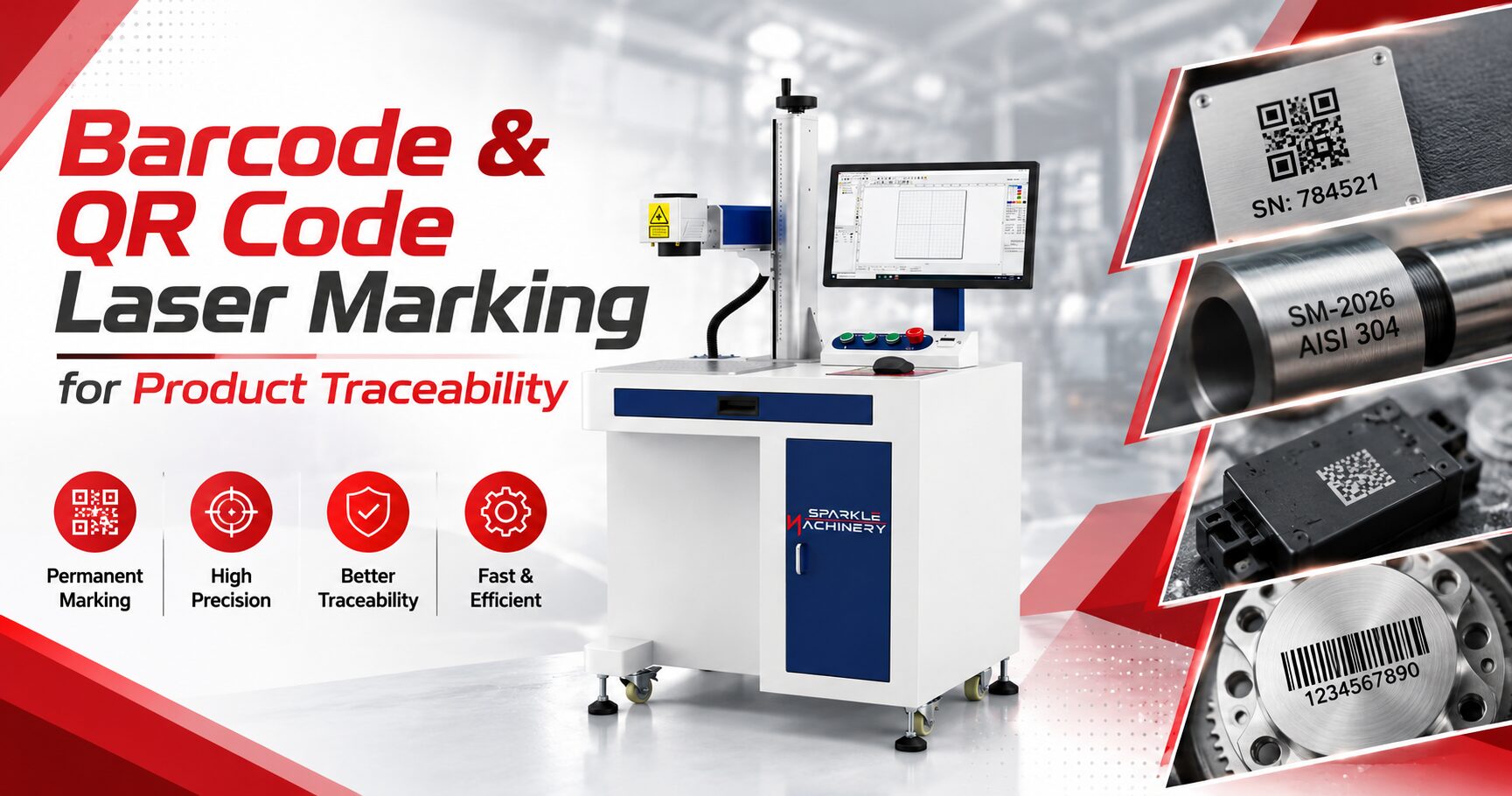
- QR code and barcode readability.
- Marking speed and cycle time.
- Suitability for the component material.
- Logo, serial number, and text quality.
For laser welding, testing helps assess joint quality and the suitability of the proposed process. For laser cleaning, it helps verify contaminant removal and surface compatibility. For laser cutting, it helps evaluate cut quality, edge finish, and processing performance.
Tip: Request a sample test using your actual components before finalizing the purchase. Confirm that the results meet your quality and production requirements.
4. Selecting the Wrong Machine Technology
Not every industrial machine is suitable for every material or application. Choosing the wrong technology can affect processing quality, productivity, and operating costs.
Different laser technologies serve different purposes.
Laser marking machines
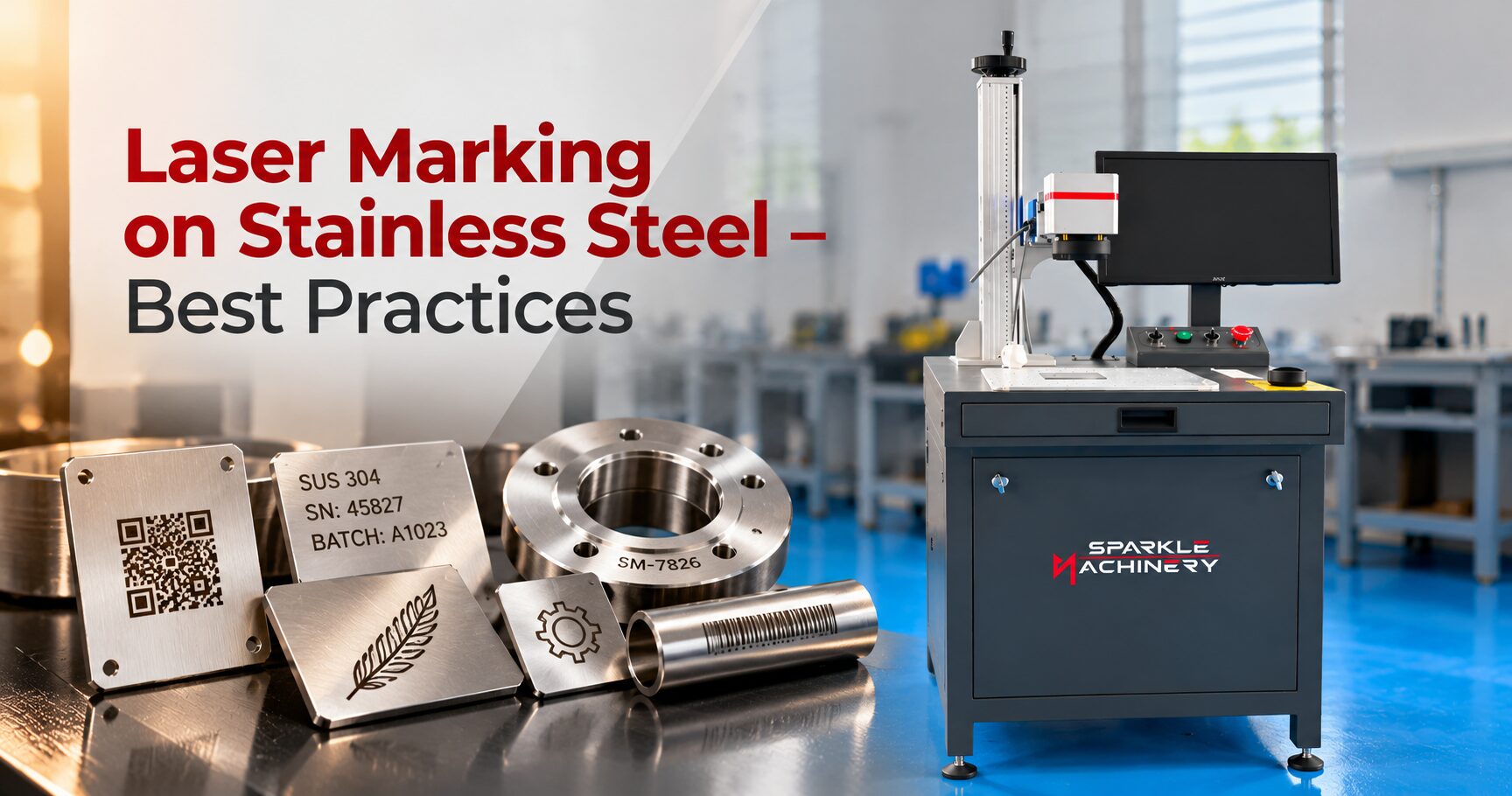
Fiber laser marking machines are widely used for marking compatible metals and many industrial components. UV laser marking may be suitable for certain plastics, electronics, and applications requiring finer processing. CO₂ laser marking systems are commonly used for compatible non-metallic materials.
The right choice depends on the material, required marking appearance, component size, and application.
Laser welding machines
Laser welding machines are used to join compatible materials with controlled heat input. The correct machine depends on material type, thickness, joint design, production volume, and required weld quality.
Laser cleaning machines
Laser cleaning equipment can remove selected contaminants, oxides, and coatings from compatible surfaces. The appropriate configuration depends on the contaminant, base material, surface condition, and cleaning objective.
Fiber laser cutting machines
Fiber laser cutting machines are commonly used for processing compatible sheet metals. Laser power, material thickness, cutting speed, assist gas, and machine configuration all influence performance.
Tip: Discuss your application with a qualified supplier and verify material compatibility before choosing an industrial laser machine.
5. Overlooking Machine Specifications
Machine specifications provide important information about the equipment’s capabilities and limitations. Failing to review them carefully can result in an unsuitable purchase.
Depending on the machine type, important specifications may include:
- Laser source type and rated power.
- Marking area or working envelope.
- Processing speed and accuracy.
- Compatible material types and thicknesses.
- Software compatibility and control features.
- Cooling requirements.
- Electrical power requirements.
- Safety enclosure and protective features.
- Automation and integration capabilities.
For example, when purchasing a laser marking machine, the marking area, required marking depth, material compatibility, and production cycle time may be more important than laser power alone.
Similarly, a laser cutting machine must be evaluated against the required material thickness, sheet dimensions, cutting quality, and production volume.
Tip: Ask the supplier to explain which specifications directly affect your application and request a demonstration where practical.
6. Ignoring After-Sales Service and Technical Support
Industrial equipment requires appropriate installation, training, maintenance, and technical support. A machine that cannot be serviced promptly may cause production interruptions when a problem occurs.
Before purchasing equipment, check:
- Warranty terms and exclusions.
- Availability of technical support.
- Installation and commissioning services.
- Operator training and documentation.
- Availability of spare parts.
- Preventive maintenance requirements.
- Expected service response arrangements.
This is especially important for manufacturers who depend on machinery for daily production.
For example, if a laser marking machine stops working during a high-volume production run, access to qualified technical assistance can help reduce downtime.
Tip: Evaluate the supplier’s service capabilities alongside machine performance and price.
7. Not Considering the Total Cost of Ownership
The purchase price is only one part of the overall investment in industrial equipment.
The total cost of ownership includes the expenses involved in installing, operating, maintaining, and supporting the machine throughout its useful life.
These expenses may include:
- Purchase and transportation costs.
- Installation and commissioning.
- Operator training.
- Electricity and cooling.
- Consumables and replacement components.
- Preventive maintenance and repairs.
- Software or integration expenses.
- Production downtime.
Laser technology can reduce certain consumable expenses in suitable applications. For example, laser marking may reduce dependence on inks and labels, while laser cleaning may reduce the need for some chemical or abrasive cleaning methods.
However, actual savings depend on the existing process, equipment configuration, application, and operating conditions.
Tip: Estimate the total cost of ownership over a suitable period and compare it with the expected production benefits.
8. Forgetting Workplace Safety Requirements
Industrial machinery must be appropriate for the working environment and operated according to the manufacturer’s safety instructions.
Safety considerations are particularly important when purchasing laser equipment because different laser classes and processing applications require different protective measures.
Before purchasing a laser machine, assess:
- Laser safety classification and required controls.
- Appropriate protective enclosures and interlocks.
- Operator training requirements.
- Electrical and grounding requirements.
- Fume extraction and ventilation needs.
- Cooling and environmental conditions.
- Applicable workplace safety regulations.
Laser welding, cutting, marking, and cleaning may generate fumes or particles depending on the material and process. Suitable extraction and ventilation should be evaluated accordingly.
Tip: Confirm the machine’s safety provisions and the additional protective measures required for your application before installation.
9. Ignoring Future Production Requirements
Industrial equipment is often purchased to solve an immediate production problem. However, businesses should also consider how their production requirements may change over time.
A machine that meets today’s needs may become unsuitable if production volume increases, new components are introduced, or customers require additional traceability features.
When evaluating equipment, consider:
- Potential increases in production volume.
- New product sizes and material types.
- Additional marking or processing requirements.
- Integration with conveyors or automated handling.
- Compatibility with future production systems.
- Scope for customized fixtures or special-purpose machinery.
For example, a manufacturer initially using a standalone laser marking machine may eventually benefit from a conveyor-based or automated marking solution if production volumes increase.
Tip: Choose equipment that meets your current requirements while allowing reasonable scope for future expansion.
10. Overlooking Automation and Integration Opportunities
Many manufacturers continue using manual processes because their existing workflow has not been evaluated for automation.
Depending on the application, industrial automation can help reduce repetitive handling, improve consistency, and increase production efficiency.
Examples include:
- Conveyor-based laser marking.
- Rotary marking for cylindrical components.
- Automated loading and unloading.
- Customized component fixtures.
- Integration with barcode scanners or production databases.
- Special-purpose machines designed for specific manufacturing operations.
However, automation is not necessary for every application. A standalone machine may be more appropriate for low-volume production or frequent changes in component design.
Tip: Evaluate whether automation will deliver measurable benefits based on production volume, labour requirements, cycle time, and the cost of integration.
11. Not Evaluating the Supplier’s Experience
Selecting a suitable machine is important, but choosing a supplier who understands your application is equally valuable.
An experienced supplier should be able to discuss machine capabilities, application limitations, material compatibility, safety requirements, and service support.
Before finalizing your purchase, consider:
- The supplier’s experience with similar applications.
- Availability of product demonstrations or sample testing.
- Clarity of technical specifications.
- Installation and training arrangements.
- Warranty and service conditions.
- Ability to provide customized solutions where required.
For specialized applications, ask whether the supplier can demonstrate the expected result on your components rather than relying only on general product claims.
Tip: Compare suppliers based on technical suitability, transparency, service capabilities, and long-term support—not just quotations.
12. Skipping Operator Training and Maintenance Planning
Even suitable industrial equipment may fail to deliver expected results if operators are not trained properly or maintenance is neglected.
Training helps operators understand machine controls, correct operating procedures, safety precautions, and basic troubleshooting.
Maintenance planning helps reduce avoidable breakdowns and supports consistent machine performance.
Before commissioning the machine, establish:
- Operator training schedules.
- Standard operating procedures.
- Routine inspection checklists.
- Cleaning and maintenance schedules.
- Preventive maintenance intervals.
- Fault reporting and escalation procedures.
For laser machinery, maintenance requirements vary depending on the laser source, optics, cooling system, operating environment, and machine design.
Tip: Ask the supplier for operating manuals, maintenance instructions, training, and recommended service intervals.
Checklist Before Buying Industrial Equipment
Use this checklist to evaluate your options before making a purchasing decision.
- Define production requirements and application objectives.
- Confirm material compatibility and required processing quality.
- Test the machine using actual components where appropriate.
- Review specifications, working area, and operating limits.
- Compare total cost of ownership, not just purchase price.
- Verify warranty terms and technical support.
- Assess safety requirements and installation conditions.
- Evaluate operator training and maintenance needs.
- Consider future production growth and automation options.
- Confirm delivery, installation, and commissioning arrangements.
Reviewing these points can help manufacturers make better purchasing decisions and reduce the risk of investing in unsuitable equipment.
How SM Laser Technology Can Help
SM Laser Technology, also known as Sparkle Machinery, provides industrial laser solutions for a variety of manufacturing applications.
Our solutions include:
- Laser marking machines for product identification, serial numbers, QR codes, barcodes, logos, and other compatible marking applications.
- Laser welding machines for suitable precision metal-joining applications.
- Laser cleaning machines for selected surface-cleaning and preparation requirements.
- Fiber laser cutting machines for compatible sheet-metal processing.
- Customized laser automation and special-purpose machines designed around specific production requirements.
Choosing the right machine begins with understanding your components, materials, production volume, and quality objectives.
Where appropriate, sample testing can help evaluate the expected processing results before you make an investment.
Explore our laser marking machine solutions, including our standard laser marking machines, premium laser marking machines, and special laser marking machines.
To discuss your application and machinery requirements, visit our Contact Us page.
Conclusion
Buying industrial equipment is a long-term business decision that requires careful planning and technical evaluation. Choosing machinery based only on price, ignoring application requirements, skipping sample testing, and overlooking after-sales support can lead to avoidable expenses and production challenges.
By evaluating machine specifications, total cost of ownership, safety, maintenance, supplier experience, and future production needs, manufacturers can make more informed investment decisions.
Whether you need a laser marking machine, laser welding machine, laser cleaning machine, fiber laser cutting machine, or customized industrial automation solution, the key is to select equipment that matches your actual production requirements.