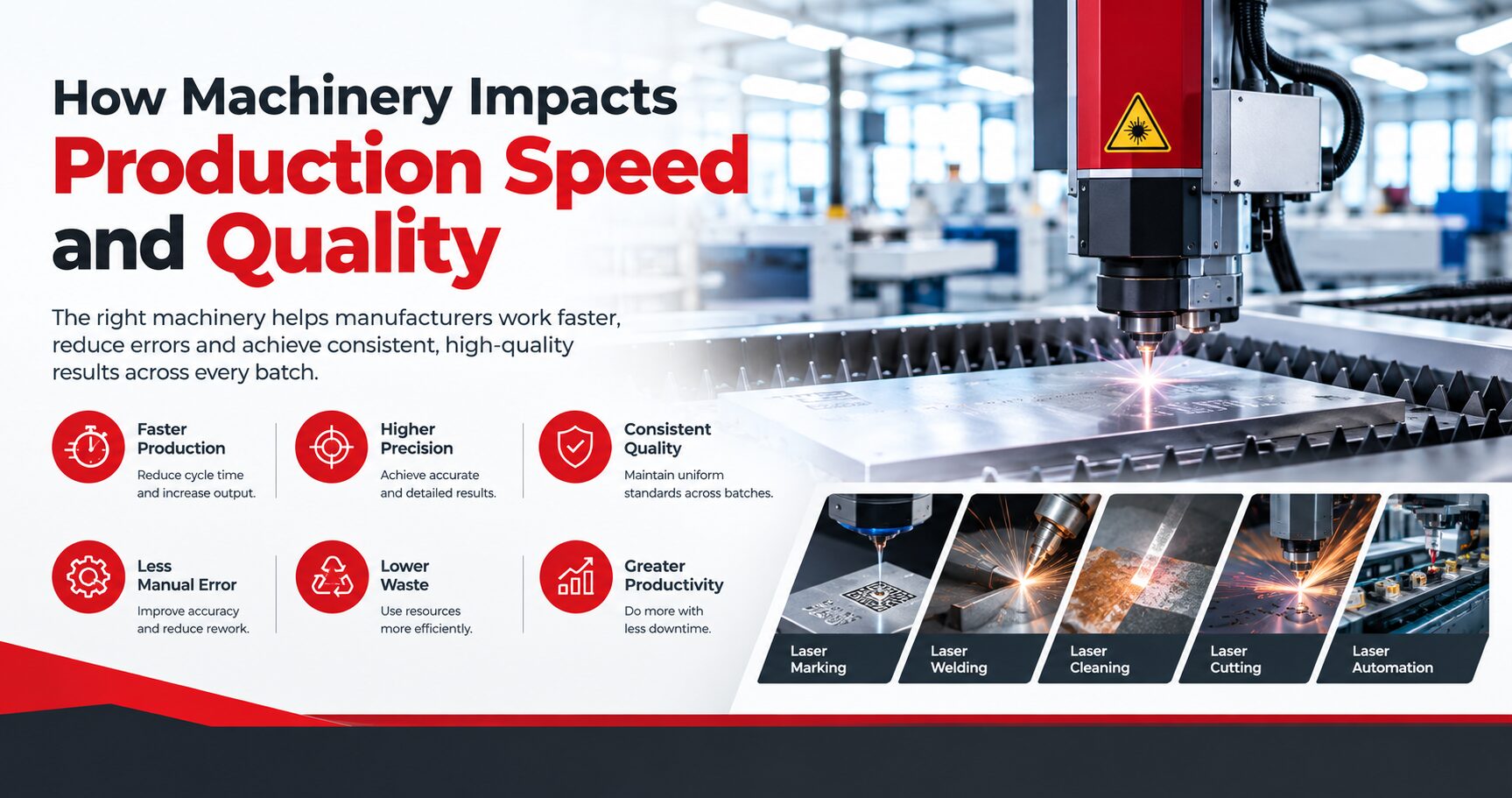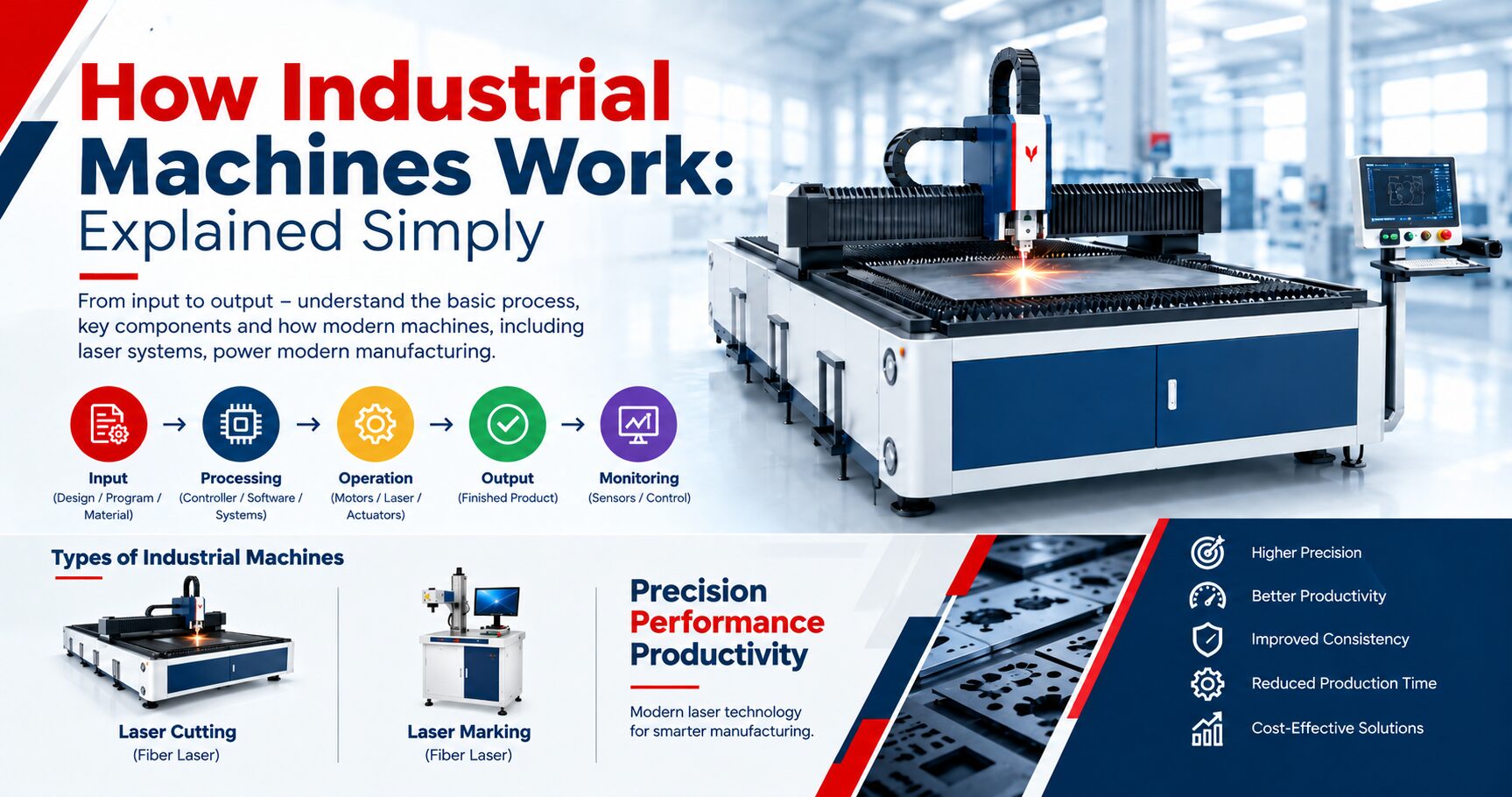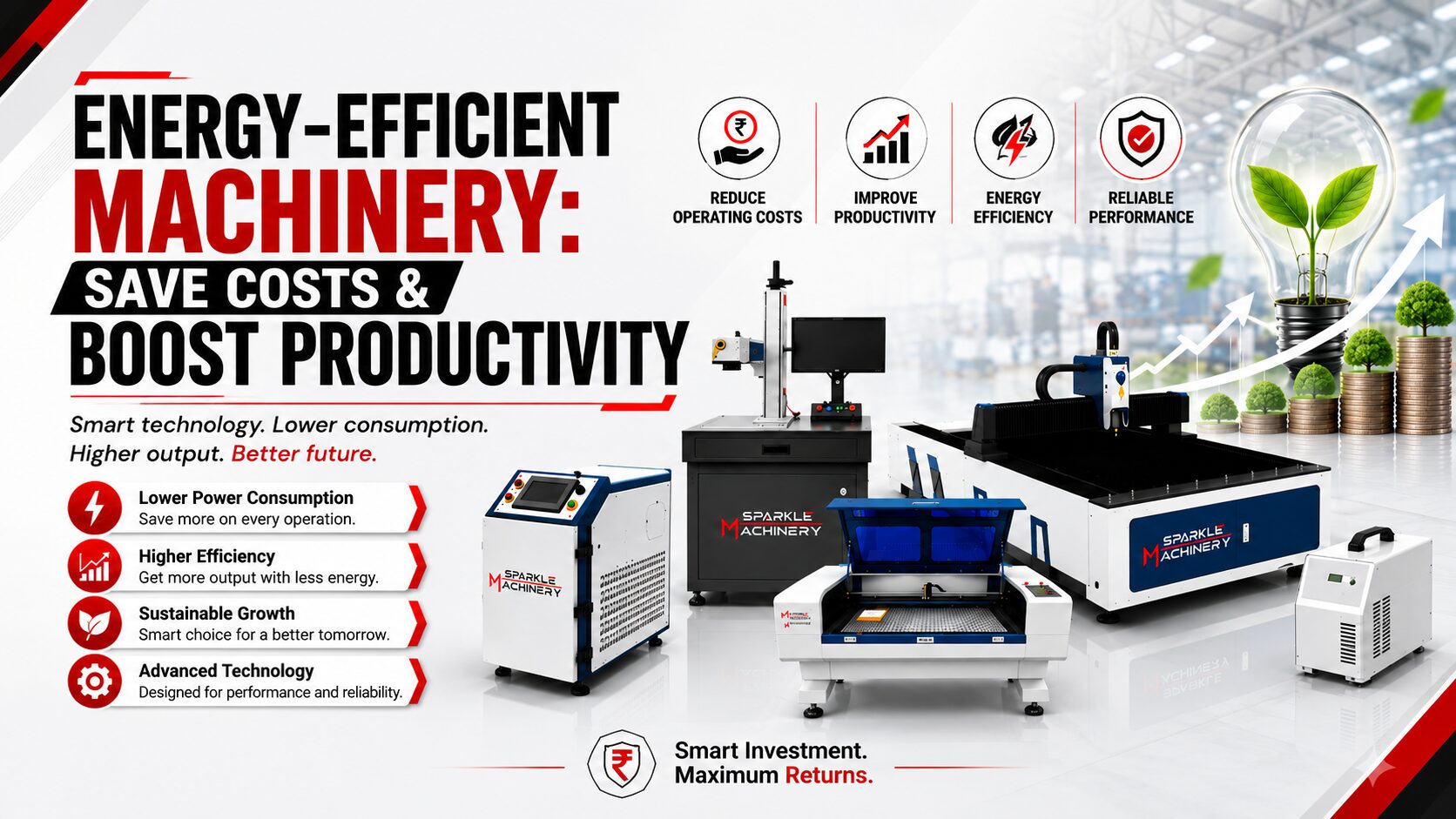
In modern manufacturing, machinery plays a critical role in determining how quickly products can be produced and how consistently quality standards can be maintained. The right industrial machinery can help manufacturers improve production speed, reduce errors, minimize downtime, and achieve consistent results across large production volumes.
For industries such as automotive, electronics, engineering, aerospace, jewellery, medical devices, and general manufacturing, investing in the right industrial laser machines and production equipment can make a significant difference to overall productivity.
From laser marking and laser welding to laser cleaning, cutting, and automation, advanced machinery is helping manufacturers improve both speed and quality while reducing dependence on manual processes.
What Is the Relationship Between Machinery, Production Speed and Quality?
Production speed and product quality are closely connected. Increasing production speed without maintaining quality can result in defects, rework, material wastage, and customer complaints.
On the other hand, using reliable and precision-oriented machinery allows manufacturers to increase throughput while maintaining consistent output.
Modern machinery can help manufacturers achieve:
- Faster production cycles
- Higher dimensional and process accuracy
- Consistent product quality
- Reduced manual errors
- Lower rejection rates
- Reduced material wastage
- Better process repeatability
- Improved production capacity
- Lower machine downtime
- Better traceability
This is why selecting the right industrial machinery manufacturer or technology partner is an important decision for growing manufacturing businesses.
1. Faster Production Through Automation
One of the biggest advantages of modern machinery is the ability to automate repetitive production processes.
Manual operations can be time-consuming, particularly when the same marking, welding, cleaning, or processing operation needs to be performed on hundreds or thousands of components.
Automation can help manufacturers:
- Reduce cycle time
- Increase production output
- Reduce operator dependency
- Maintain consistent processing
- Improve material handling
- Integrate machines with existing production lines
For example, fly-type laser marking machines with conveyor integration can mark components while they are moving through the production line. This eliminates the need to stop the conveyor for every marking operation and can improve production throughput.
2. Precision Improves Product Quality
Precision is one of the most important factors in modern manufacturing.
When components require accurate marking, welding, engraving, or cutting, even a small variation can affect the final product.
Advanced laser machines use controlled laser energy and precision motion systems to perform highly accurate processes.
For example, a fiber laser marking machine can be used for:
- Serial numbers
- QR codes
- Barcodes
- Logos
- Product identification
- Batch numbers
- Date codes
- Data Matrix codes
These permanent markings can support product identification and traceability while maintaining consistent appearance across components.
3. Consistency Across High-Volume Production
Maintaining the same quality across thousands of components can be difficult when processes depend heavily on manual work.
Industrial machinery can improve process repeatability by using predefined parameters and controlled operating conditions.
For example, once the correct laser marking parameters are established, the same design and marking parameters can be reproduced across multiple components.
This is particularly useful for industries where every component needs to have:
- The same logo
- The same serial number format
- Consistent marking depth
- Consistent positioning
- Similar visual quality
Consistent processing helps manufacturers reduce variations between batches.
4. Laser Marking Machines Improve Speed and Traceability
Product identification is an important part of modern manufacturing.
Traditional marking methods may involve consumables, manual handling, or additional processing steps. In comparison, fiber laser marking machines can create permanent marks directly on suitable materials without inks or similar consumables.
SM Laser Technology’s standard fiber laser marking systems are designed for applications including text, serial numbers, barcodes, QR codes, Data Matrix codes, logos and graphics.
For high-volume production, automated marking systems can further improve efficiency by integrating marking directly into the production line.
Common applications include:
- Automotive components
- Electrical and electronic parts
- Fasteners
- Engineering components
- Tools and tooling
- Industrial equipment
- Medical components
- Jewellery
5. Laser Welding Can Improve Production Efficiency
Welding is another area where machinery can have a direct impact on production speed and quality.
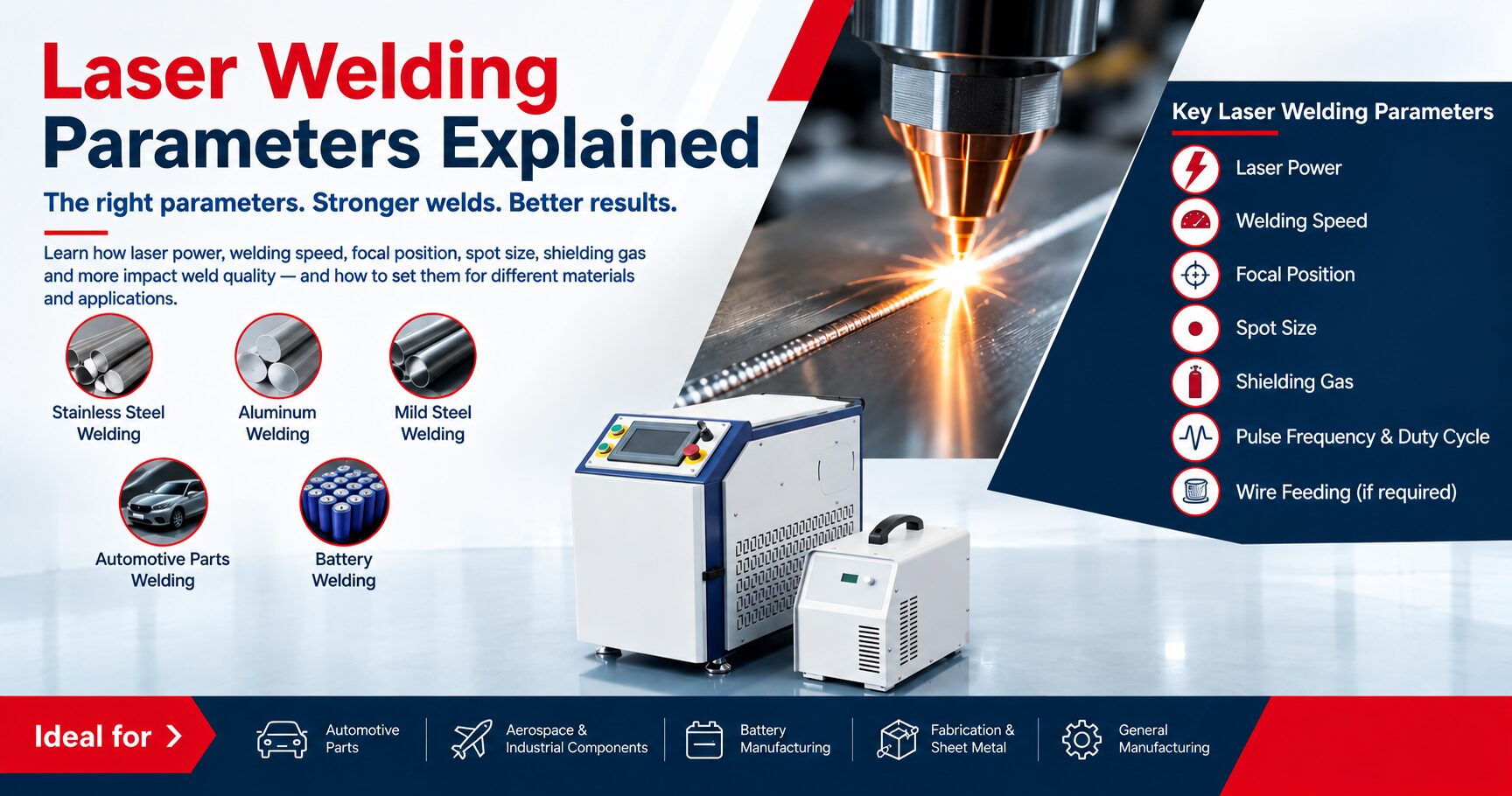
Modern laser welding machines provide controlled energy delivery, allowing manufacturers to perform precise welding operations on suitable materials and applications.
Laser welding can be used in industries such as:
- Automotive
- Aerospace
- Electronics
- Jewellery
- Engineering
- Sheet metal fabrication
- Industrial manufacturing
The right laser welding system can help manufacturers achieve accurate and consistent welds while improving production efficiency. SM Laser Technology provides laser welding solutions for materials including stainless steel, aluminium, copper and other alloys.
For applications where flexibility is important, handheld laser welding machines can also provide an alternative to conventional welding processes for suitable jobs.
6. Laser Cleaning Can Reduce Preparation Time
Surface preparation is an important part of many manufacturing processes.
Rust, paint, oil, oxide layers and other contaminants may need to be removed before welding, coating, maintenance, or further processing.
A laser cleaning machine uses focused laser energy to remove contaminants from suitable surfaces without physical contact with the workpiece.
This can help manufacturers improve surface preparation while reducing dependence on chemical-based cleaning processes.
Laser cleaning is particularly useful for applications such as:
- Rust removal
- Paint removal
- Oil and grease removal
- Oxide removal
- Surface preparation
- Industrial maintenance
SM Laser Technology’s laser cleaning solutions are designed for non-contact cleaning applications and can help reduce substrate damage when properly configured for the application.
7. Better Machinery Can Reduce Production Errors
Manual processes can introduce variations because of:
- Operator fatigue
- Incorrect positioning
- Human error
- Inconsistent pressure
- Incorrect settings
- Repetitive work
Modern machinery can reduce some of these variations by standardizing the process.
For example, a laser marking system can use predefined software parameters for marking speed, power, frequency and positioning.
Similarly, automated fixtures and Special Purpose Machines (SPMs) can be designed around specific production requirements.
This helps manufacturers move from operator-dependent processes toward controlled and repeatable manufacturing processes.
8. Automation Helps Reduce Downtime
Production downtime can directly affect manufacturing costs.
A machine that frequently stops due to poor reliability, difficult operation, or maintenance requirements can negatively impact production schedules.
Therefore, manufacturers should consider more than just machine purchase price when selecting industrial equipment.
Important factors include:
- Machine reliability
- Ease of operation
- Maintenance requirements
- Availability of technical support
- Spare parts
- Operator training
- Integration capability
- After-sales service
SM Laser Technology provides installation, operator training and after-sales technical support for its laser machine solutions.
9. The Right Machine Depends on the Application
There is no single machine that is suitable for every manufacturing application.
The right equipment depends on several factors, including:
Material
The material may be:
- Stainless steel
- Mild steel
- Aluminium
- Brass
- Copper
- Plastics
- Ceramics
- Glass
- Wood
- Leather
- Coated surfaces
Different laser technologies may be appropriate for different materials and applications. For example, CO₂ laser systems are commonly used for materials such as wood, acrylic, plastics, leather, paper and packaging materials.
Application
Manufacturers should first identify whether they need:
- Marking
- Engraving
- Welding
- Cleaning
- Cutting
- Traceability
- Surface preparation
- Automation
Production Volume
A small workshop and a high-volume automotive production line may have completely different machine requirements.
Part Geometry
Flat, cylindrical, curved or complex components may require different machine configurations. For example, 3-axis laser marking systems can be useful for applications involving curved or three-dimensional surfaces.
10. Automation Can Connect Machinery With the Production Line
For manufacturers with high production volumes, standalone machines may not always be enough.
Laser systems can be customized for integration with:
- Conveyors
- Fixtures
- Sensors
- PLC systems
- Robotics
- Automatic loading and unloading
- Vision systems
- Production tracking systems
This creates a more connected production environment.
For example, a laser marking machine with conveyor integration can automatically mark components as they move through the manufacturing line, supporting higher throughput and consistent marking.
11. How Machinery Affects Overall Manufacturing Cost
The impact of machinery should not be evaluated only by its purchase price.
A machine with a higher initial investment may provide better long-term value if it offers:
- Higher production capacity
- Lower rejection rates
- Reduced labour dependency
- Lower consumable requirements
- Reduced downtime
- Better product consistency
- Easier automation
- Lower maintenance requirements
Therefore, manufacturers should evaluate the total cost of ownership (TCO) rather than only comparing machine prices.
12. Machinery and Quality Control
Modern manufacturing requires more than simply producing products quickly.
Manufacturers must also maintain quality and traceability.
Laser marking technology can support quality-control processes by permanently marking:
- Serial numbers
- Batch numbers
- QR codes
- Barcodes
- Data Matrix codes
- Manufacturing dates
- Product identification codes
These markings can help manufacturers track components throughout the production and supply chain.
For industries such as automotive, electronics, medical devices and engineering, traceability can become an important part of quality management.
How to Choose the Right Machinery for Your Production?
Before investing in industrial machinery, manufacturers should evaluate the following:
1. Understand your application
Clearly define what the machine needs to accomplish.
2. Evaluate production volume
Determine your current and expected future production requirements.
3. Check material compatibility
Make sure the machine technology is suitable for your material.
4. Compare cycle time
Ask for realistic processing times based on your actual application.
5. Consider automation
If production volume is high, explore conveyor, fixture, robotic or automated solutions.
6. Evaluate quality requirements
Check marking quality, welding quality, accuracy, repeatability and tolerances.
7. Consider after-sales support
Installation, training, maintenance and technical support are important for long-term performance.
8. Test your application
Whenever possible, conduct an application test using your actual component before finalizing the machine.
The Role of SM Laser Technology in Modern Manufacturing
SM Laser Technology provides laser-based manufacturing solutions designed for different industrial applications. Its product range includes fiber laser marking machines, UV laser marking machines, CO₂ laser marking and engraving machines, 3-axis laser marking machines, laser welding machines, laser cleaning machines, cutting solutions and customized laser automation systems.
The company also provides customized solutions depending on factors such as material, marking area, laser power, application requirements and automation setup.
From individual workstations to automated production lines, selecting the right laser technology can help manufacturers improve production efficiency, process consistency, traceability and overall product quality.
Conclusion
Machinery has a direct impact on both production speed and product quality.
The right machinery can help manufacturers increase production capacity while maintaining precision and consistency. Technologies such as laser marking, laser welding, laser cleaning, laser cutting and industrial automation are becoming increasingly important for manufacturers looking to improve productivity and reduce process variations.
However, the best machine is not necessarily the fastest or the most expensive machine. It is the machine that matches the application, material, production volume, quality requirements and future automation plans of the business.
For manufacturers planning to upgrade their production processes, investing in the right machinery can be an important step toward building a faster, more consistent and efficient manufacturing operation.
Looking for the right laser machine for your production application?
Talk to the SM Laser Technology team to discuss your material, application and production requirements and identify a suitable laser solution.