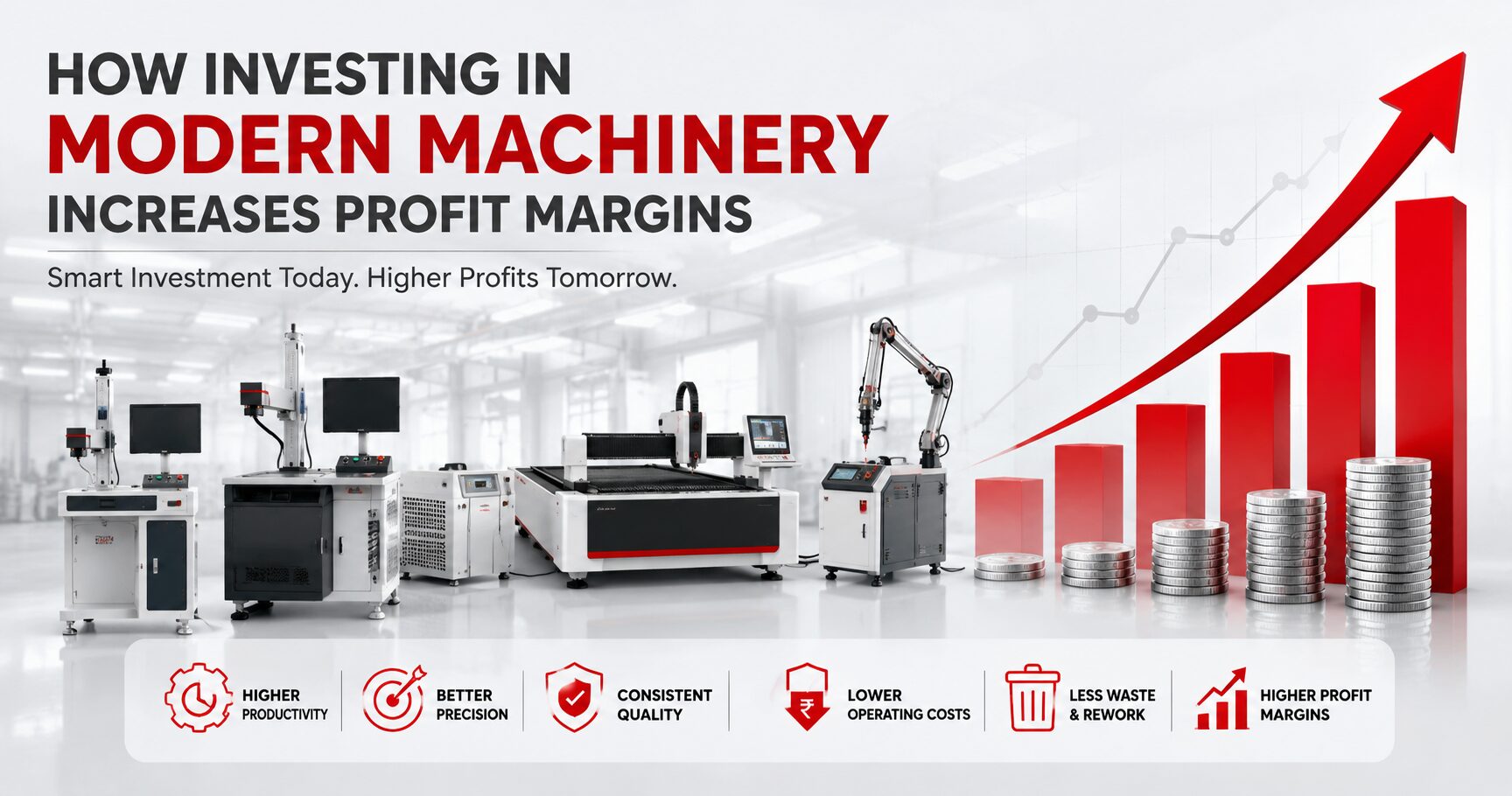
Industrial machines are an essential part of modern manufacturing. From cutting and welding metal to marking components and cleaning surfaces, machines help manufacturers improve speed, precision, productivity, and consistency.
But how do industrial machines actually work?
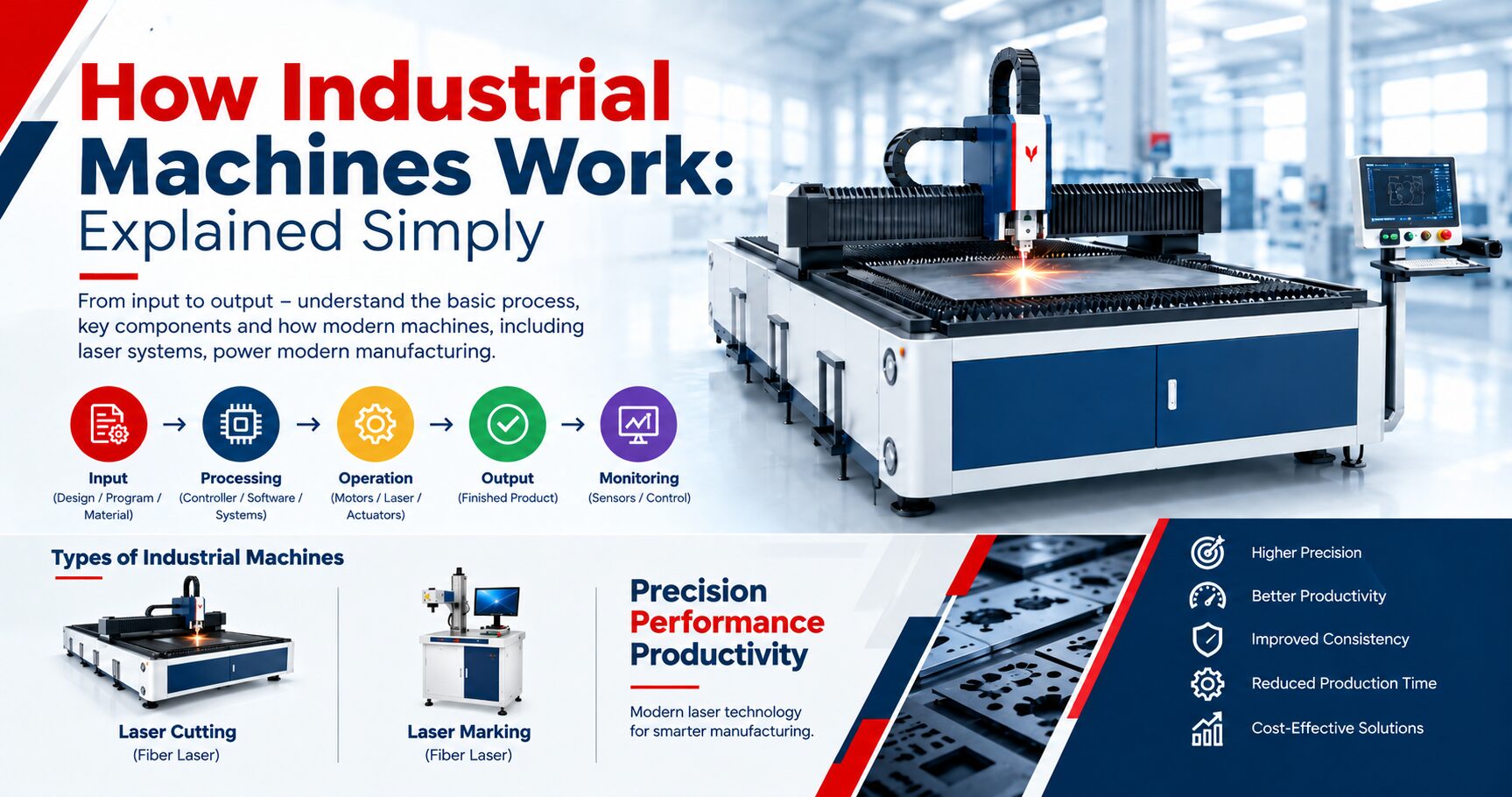
In simple terms, an industrial machine takes a command or input, processes it using mechanical, electrical, electronic, or laser technology, and produces a controlled output. Modern machines can also use sensors, controllers, motors, software, and automation systems to perform complex manufacturing operations with minimal manual intervention.
In this blog, we will explain how industrial machines work, the major components involved, and how laser machines are transforming manufacturing.
What Is an Industrial Machine?
An industrial machine is equipment designed to perform a specific manufacturing or production task.
Depending on the application, an industrial machine may be used for:
- Cutting
- Welding
- Marking
- Engraving
- Cleaning
- Drilling
- Bending
- Grinding
- Assembly
- Inspection
- Automation
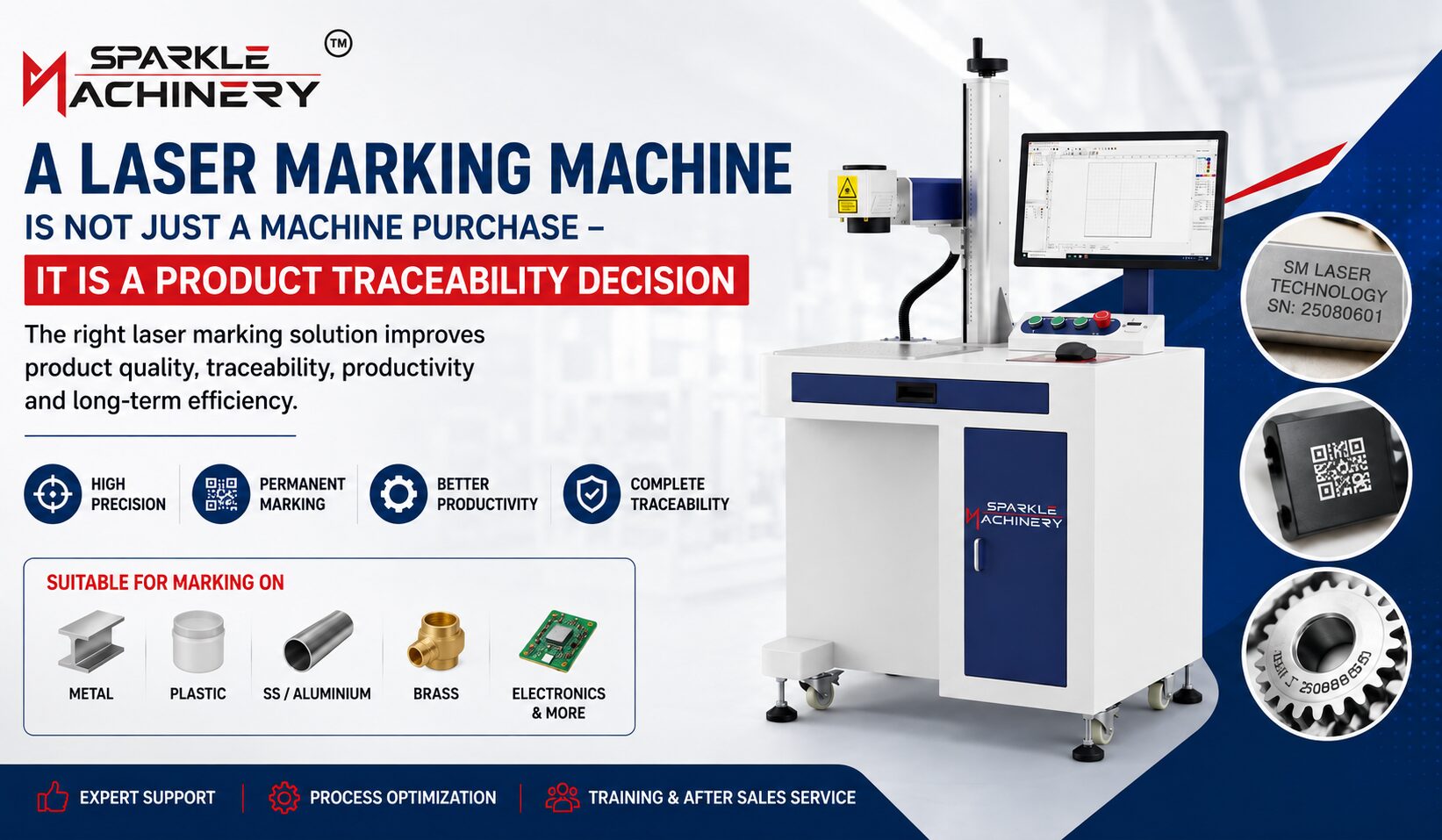
For example, a fiber laser cutting machine uses a concentrated laser beam to cut metal sheets, while a laser marking machine creates permanent marks such as serial numbers, QR codes, logos, and product information.
How Do Industrial Machines Work?
Although different machines use different technologies, most industrial machines follow a basic working process:
1. Input
The machine receives an input from an operator, computer, sensor, program, or production system.
For example, an operator may upload a design file to a laser machine.
2. Processing
The machine’s main system processes the input and converts it into instructions.
This may involve:
- Controllers
- Motors
- Drives
- Sensors
- Software
- Laser sources
- Pneumatic or hydraulic systems
3. Movement or Operation
The machine performs the required operation using motors, actuators, laser heads, cutting tools, welding heads, or other mechanisms.
4. Output
The final result is the completed manufacturing operation—for example, a cut component, welded joint, permanent marking, or cleaned metal surface.
5. Monitoring
Modern industrial machines can use sensors and control systems to monitor operation and maintain consistency.
Major Components of an Industrial Machine
Most modern industrial machines consist of several important systems working together.
1. Power Supply
The power supply provides electrical energy to the machine’s components.
Different machines have different electrical requirements depending on their:
- Motor capacity
- Laser power
- Cooling system
- Control system
- Automation requirements
Proper power supply is essential for reliable machine operation.
2. Control System
The control system acts as the machine’s command center.
It receives instructions and controls different components according to the programmed sequence.
In automated manufacturing, a PLC (Programmable Logic Controller) may be used to control:
- Motors
- Sensors
- Switches
- Safety systems
- Pneumatic components
- Automated sequences
This allows machines to perform repetitive operations accurately and consistently.
3. Motors and Drives
Motors convert electrical energy into mechanical movement.
Industrial machines may use motors to control:
- X-axis movement
- Y-axis movement
- Z-axis movement
- Rotary systems
- Conveyor systems
- Automated fixtures
Motor drives control the speed, position, and movement of these motors.
4. Sensors
Sensors provide information to the control system.
They can detect:
- Position
- Temperature
- Pressure
- Material presence
- Door status
- Machine limits
- System conditions
Sensors are especially important in automated industrial machines because they help improve safety and repeatability.
How Laser Machines Work
Laser technology has become increasingly important in modern manufacturing.
A laser machine generates a highly concentrated beam of light and directs it onto a specific area of the workpiece.
Depending on the application, the laser can:
- Cut material
- Weld components
- Mark surfaces
- Engrave designs
- Remove contaminants
- Etch information
The machine’s controller coordinates the laser source, motion system, software, and other components to perform the required operation.
How a Fiber Laser Cutting Machine Works
A fiber laser cutting machine uses a high-power fiber laser source to generate a concentrated laser beam.
The beam is directed through an optical system and focused onto the material.
The concentrated energy heats and melts or vaporizes the material in a controlled manner. Assist gas helps remove molten material from the cutting zone.
The machine’s motion system then moves the laser head according to the programmed design.
Common applications include:
- Stainless steel cutting
- Mild steel cutting
- Aluminium cutting
- Sheet-metal fabrication
- Automotive components
- Electrical enclosures
- Industrial parts
The combination of laser power, cutting speed, focus position, and assist gas pressure determines the cutting performance.
How a Laser Marking Machine Works
A fiber laser marking machine uses a focused laser beam to create permanent marks on a material’s surface.
The marking software controls the movement of the laser beam according to the design.
Depending on the material and laser settings, the process can create:
- Text
- Serial numbers
- Barcodes
- QR codes
- Logos
- Part numbers
- Identification codes
Laser marking is widely used for product traceability and identification.
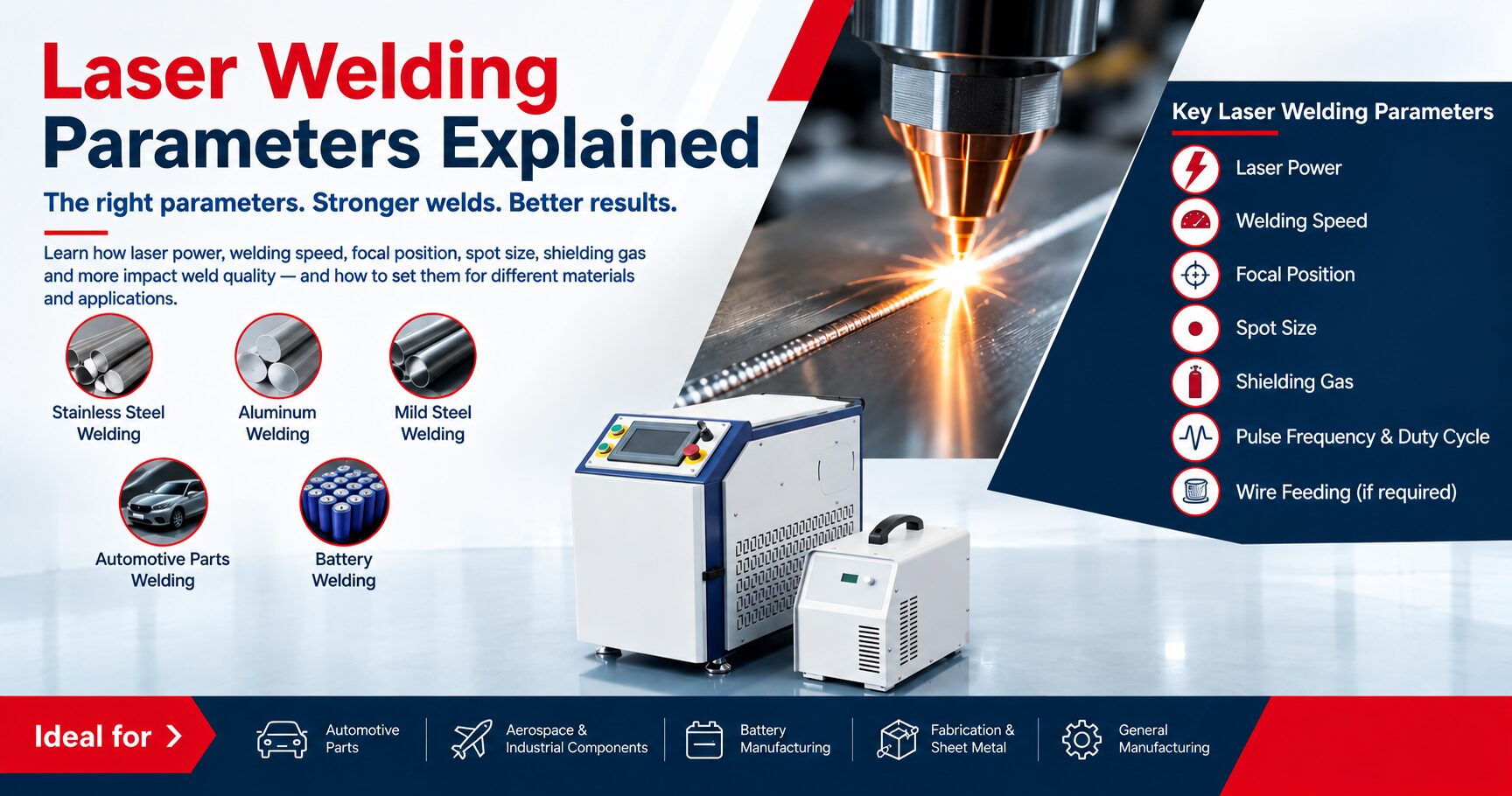
How a Laser Welding Machine Works
A laser welding machine uses concentrated laser energy to join two or more components.
The laser creates localized heat at the joint, causing the material to melt and form a weld as it cools.
Compared with many traditional welding methods, laser welding can provide:
- High precision
- Fast processing
- Lower heat input
- Reduced distortion
- Consistent weld quality
- Clean weld appearance
A handheld laser welding machine is useful for flexible fabrication applications, while automated laser welding systems are suitable for high-volume production.
How a Laser Cleaning Machine Works
A laser cleaning machine uses controlled laser energy to remove unwanted materials from a surface.
Depending on the application, it can remove:
- Rust
- Paint
- Oxide layers
- Oil
- Grease
- Surface contaminants
The laser is carefully controlled so that contaminants are removed while minimizing damage to the underlying material.
This makes laser cleaning useful for maintenance, restoration, fabrication, and industrial surface preparation.
The Role of Automation in Industrial Machines
Automation is one of the biggest developments in modern manufacturing.
An industrial automation system can connect machines, sensors, controllers, software, conveyors, robots, and other equipment to perform production operations automatically.
Automation can help manufacturers achieve:
Higher Productivity
Machines can perform repetitive operations continuously.
Better Consistency
Automated processes reduce variations caused by manual operations.
Improved Accuracy
Computer-controlled systems can precisely control machine movements and processes.
Reduced Production Time
Automated sequences can reduce unnecessary manual steps.
Better Traceability
Modern systems can record production information and process data.
Why CNC and Software Are Important
Many modern industrial machines use CNC or computer-controlled systems.
The operator provides a digital design or program, and the machine converts this information into movement and process instructions.
For laser machines, software can control parameters such as:
- Laser power
- Speed
- Frequency
- Focus
- Pulse settings
- Cutting paths
- Marking patterns
This allows manufacturers to reproduce the same operation across multiple components.
Industrial Machines vs Manual Processes
Industrial machines offer several advantages over completely manual manufacturing processes.
| Feature | Manual Process | Industrial Machine |
| Speed | Depends on operator | Generally higher |
| Repeatability | Variable | High |
| Precision | Operator dependent | Computer controlled |
| Production volume | Limited | Suitable for higher volumes |
| Automation | Limited | Available |
| Data/Traceability | Limited | Can be integrated |
| Consistency | Can vary | More consistent |
However, the right machine should always be selected according to the actual application, material, production volume, and required accuracy.
How to Choose the Right Industrial Machine
Before purchasing an industrial machine, manufacturers should evaluate several factors.
Material
Identify the materials that need to be processed.
Thickness
Material thickness can significantly affect machine specifications and process parameters.
Production Volume
A machine for occasional fabrication may have different requirements from a machine running continuously on a production line.
Accuracy
Determine the level of precision required for the application.
Automation
Consider whether manual, semi-automatic, or fully automated operation is appropriate.
Maintenance
Evaluate service requirements, spare parts availability, and technical support.
Operating Cost
Consider electricity consumption, consumables, maintenance, and productivity—not just the initial machine price.
Why Laser Technology Is Important for Modern Manufacturing
Laser technology provides manufacturers with a combination of precision, speed, flexibility, and repeatability.
Modern laser solutions can be used across multiple manufacturing processes, including:
- Laser cutting
- Laser welding
- Laser marking
- Laser engraving
- Laser cleaning
- Laser automation
This makes laser technology suitable for industries such as:
- Automotive
- Aerospace
- Electronics
- Engineering
- Sheet-metal fabrication
- Medical equipment
- Electrical manufacturing
- General industrial manufacturing
SM Laser Technology – Industrial Laser Solutions
At SM Laser Technology, we provide laser-based manufacturing solutions designed around specific industrial applications.
Our solutions include:
- Fiber Laser Cutting Machines
- Fiber Laser Marking Machines
- Laser Welding Machines
- Laser Cleaning Machines
- Laser Engraving & Etching Solutions
- Customized Laser Automation Systems
Our approach focuses on selecting the right machine configuration according to the material, application, production requirements, and desired output quality.
Conclusion
Industrial machines may look complex, but their basic working principle is simple: input → control → processing → output.
Modern machines combine power systems, controllers, motors, sensors, software, and specialized technologies to perform manufacturing operations accurately and repeatedly.
With the growth of automation and advanced technologies such as fiber lasers, manufacturers can improve productivity while achieving better precision and consistency.
Whether your requirement is laser cutting, laser welding, laser marking, or laser cleaning, selecting the right industrial machine and optimizing its parameters is essential for achieving the best results.