Surface cleaning is an essential part of many industrial manufacturing and maintenance processes. Rust, paint, oxide layers, oil, grease, contaminants and other unwanted materials can affect the performance, appearance and quality of metal components.
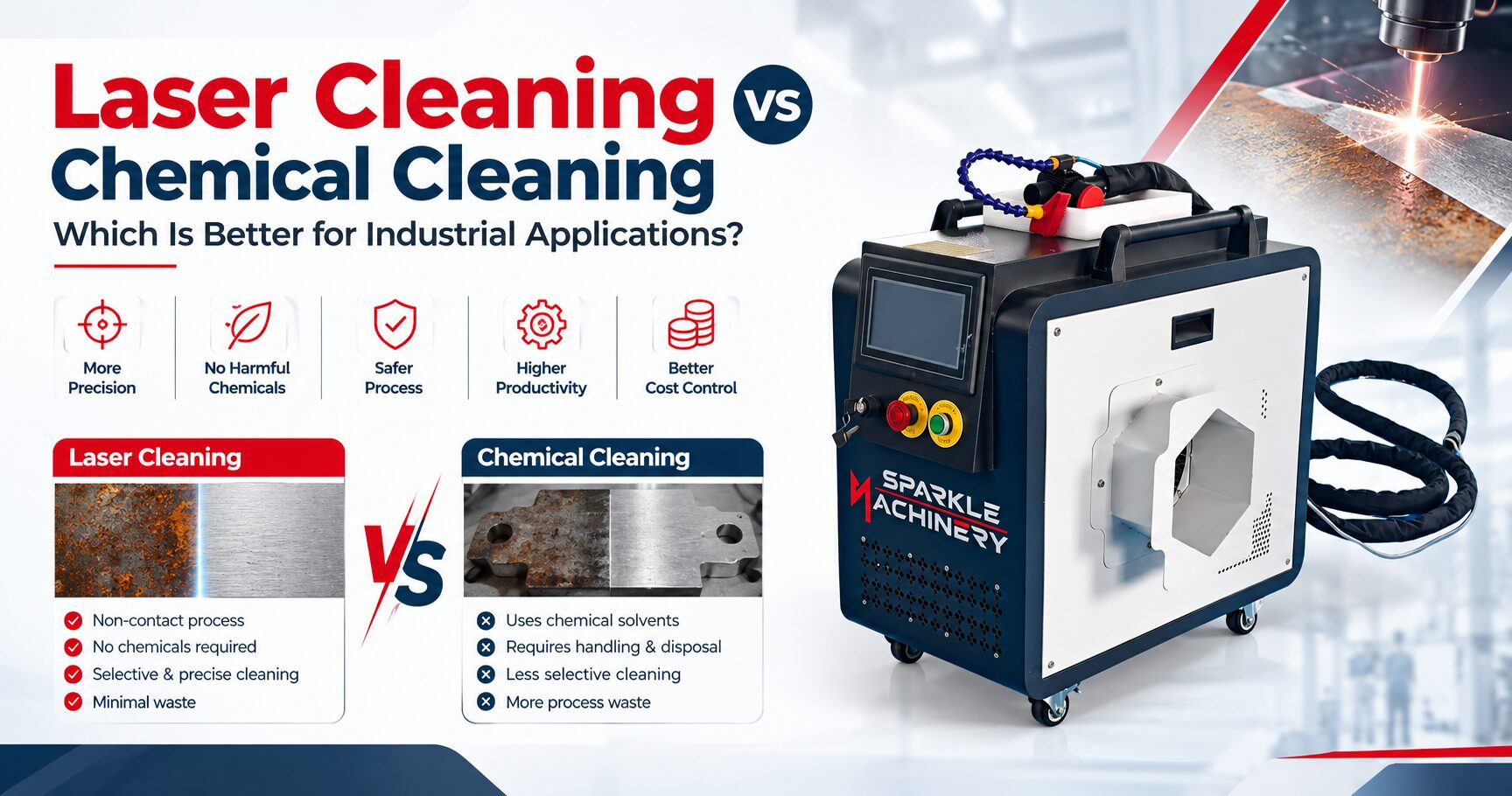
Traditional cleaning methods such as abrasive blasting, chemical cleaning, grinding and manual cleaning are widely used. However, these methods can involve consumables, labour, waste generation and additional preparation or finishing work.
A laser cleaning machine provides an alternative approach by using focused laser energy to remove unwanted surface contaminants from suitable materials.
For manufacturers considering this technology, one of the most important questions is:
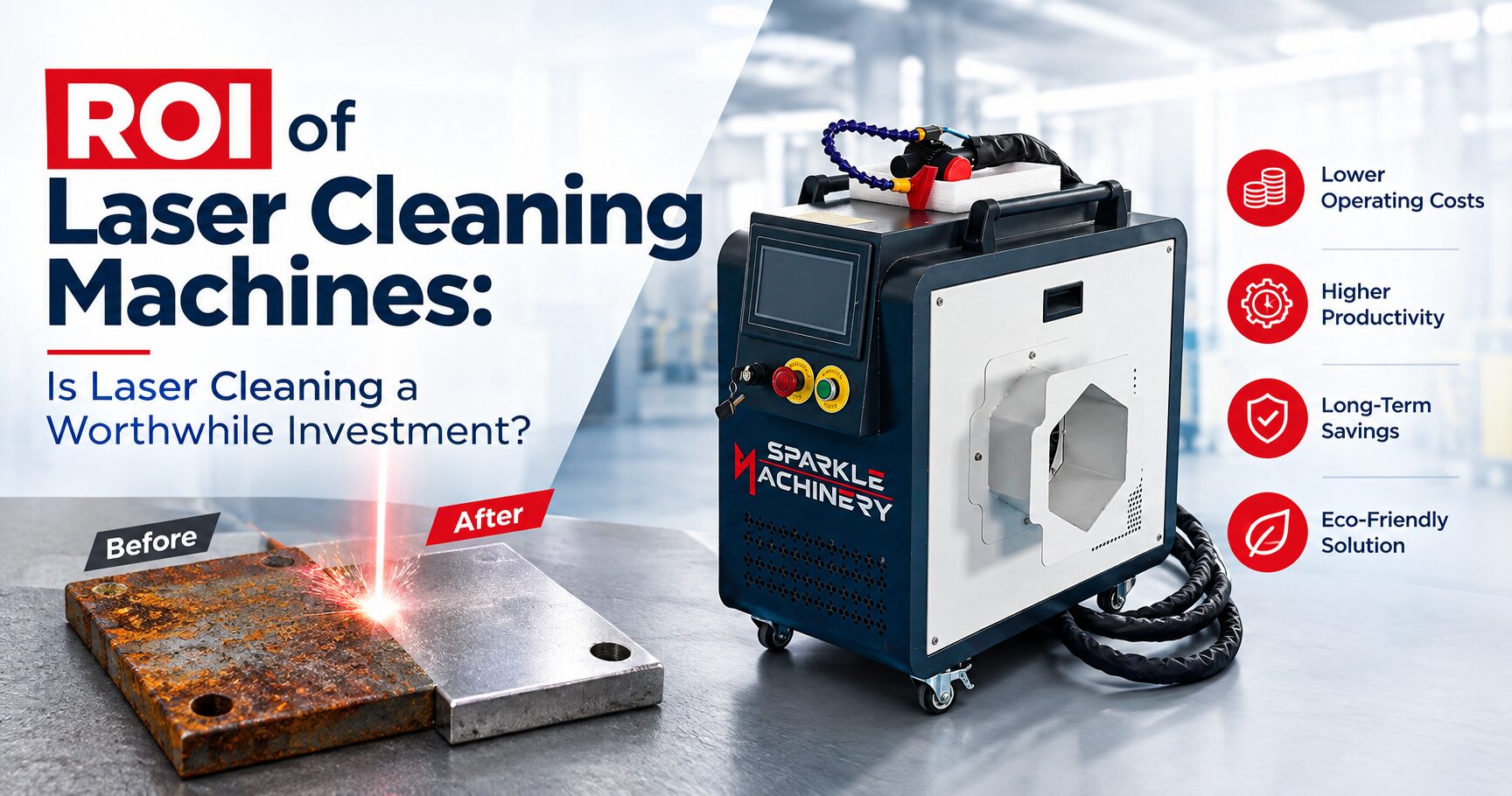
What is the ROI of a laser cleaning machine?
The answer depends on several factors, including the current cleaning process, production volume, labour requirements, consumable costs, cleaning speed, machine configuration and application.
This guide explains how businesses can evaluate the potential return on investment of a laser cleaning system.
What Is a Laser Cleaning Machine?
A laser cleaning machine uses a focused laser beam to remove contaminants or unwanted surface layers from a material.
Depending on the application and process parameters, laser cleaning can be used for removing:
- Rust
- Oxides
- Paint
- Oil and grease
- Dirt
- Coatings
- Surface contaminants
- Certain residues
The laser energy interacts with the unwanted surface layer, allowing it to be removed while the underlying substrate can be preserved when the process is correctly configured.
Laser cleaning is used across manufacturing, maintenance, restoration and industrial processing applications.
Why Are Industries Moving Toward Laser Cleaning?
The economics of cleaning are not limited to the initial price of a machine.
A company should consider the total cost of cleaning, including:
- Labour
- Consumables
- Chemicals
- Abrasive media
- Waste disposal
- Cleaning preparation
- Finishing work
- Machine downtime
- Maintenance
- Energy consumption
- Rework
A laser cleaning system can change several of these cost factors.
For example, when compared with a process that requires regular abrasive media or chemical consumables, a laser-based process may reduce or eliminate some consumable-related expenses.
However, the actual savings depend on the application and should be established through sample testing and process evaluation.
How to Calculate the ROI of a Laser Cleaning Machine
A simple ROI calculation can be based on the annual savings generated by the new cleaning process.
Basic ROI Formula
ROI (%) = (Annual Net Savings ÷ Machine Investment) × 100
Where:
Annual Net Savings = Current Annual Cleaning Cost − New Annual Cleaning Cost
For example, suppose a company currently spends:
- Labour: ₹6,00,000/year
- Abrasive/chemical consumables: ₹3,00,000/year
- Waste disposal: ₹1,00,000/year
- Other cleaning-related costs: ₹1,00,000/year
Current annual cleaning cost = ₹11,00,000
If the new laser cleaning process reduces the overall annual cleaning cost to ₹5,00,000:
Annual saving = ₹11,00,000 − ₹5,00,000 = ₹6,00,000
If the total investment in the laser cleaning system is ₹12,00,000:
Simple annual ROI = ₹6,00,000 ÷ ₹12,00,000 × 100 = 50%
This is only an illustrative calculation. Actual ROI should be calculated using the customer’s real production data, machine operating cost and application results.
1. Reduction in Consumable Costs
One of the major economic considerations when evaluating a laser cleaning machine is consumable usage.
Traditional cleaning processes may require:
- Abrasive media
- Chemicals
- Solvents
- Cleaning agents
- Brushes
- Grinding wheels
- Other consumables
A laser cleaning process does not use abrasive blasting media in the same way as conventional abrasive cleaning.
For suitable applications, this can reduce recurring consumable costs.
When calculating ROI, manufacturers should compare their monthly and annual consumable expenditure with the operating cost of the laser system.
2. Labour Cost and Productivity
Manual cleaning can require significant operator involvement, particularly when components have complex surfaces or when cleaning has to be repeated regularly.
A fiber laser cleaning machine can automate or simplify parts of the cleaning process depending on the application.
Potential economic benefits include:
- Reduced manual cleaning effort
- More consistent processing
- Improved operator productivity
- Reduced dependency on intensive manual cleaning
- Faster processing for suitable applications
The actual labour savings depend on the existing cleaning process and how much of it can be replaced or supplemented by laser cleaning.
3. Reduced Production Downtime
Downtime can be expensive for manufacturing companies.
If components, moulds, tools or equipment require frequent cleaning, the cleaning process itself can contribute to production interruptions.
An industrial laser cleaning system can be integrated into maintenance or production workflows where appropriate.
Reducing cleaning time can potentially help companies:
- Resume production faster
- Reduce maintenance downtime
- Improve equipment availability
- Increase production efficiency
For ROI calculations, manufacturers should determine the current cost of downtime per hour and compare the processing time of the existing method with the proposed laser process.
4. Lower Waste and Disposal Requirements
Some conventional cleaning processes generate significant waste.
For example, abrasive cleaning can generate used abrasive material mixed with removed contaminants, while chemical cleaning can produce spent chemicals or contaminated waste.
A laser cleaning process can reduce certain types of secondary waste because it does not require the same abrasive or chemical consumables.
This can be particularly relevant for companies that have significant waste-handling or disposal costs.
5. Maintenance and Equipment Life
Surface contaminants such as rust, oxides and coatings can affect equipment, tools, moulds and components.
Regular cleaning can help maintain surfaces and prepare components for subsequent processes such as:
- Welding
- Coating
- Painting
- Inspection
- Maintenance
- Surface treatment
A laser oxide removal machine can be used for suitable oxide-removal applications, helping prepare surfaces for further processing.
The economic benefit should be evaluated based on the specific component, cleaning requirement and maintenance cycle.
Laser Cleaning Applications That Can Influence ROI
The ROI of laser cleaning is highly dependent on the application.
Rust Removal
A rust removal laser machine can be used for suitable rust-removal applications on metal surfaces.
Applications can include:
- Machinery components
- Tools
- Automotive parts
- Fabricated metal components
- Industrial equipment
- Maintenance applications
For companies performing frequent rust removal, reducing manual labour and consumables can contribute to the economic case for laser cleaning.
Paint Removal
A laser paint removal machine can be used for selected paint and coating removal applications.
It can be considered for:
- Metal components
- Automotive parts
- Industrial equipment
- Maintenance applications
- Surface preparation
The appropriate laser configuration depends on the coating, substrate and required removal rate.
Metal Surface Cleaning
A metal surface cleaning laser can be used for removing suitable contaminants from metal surfaces.
Applications may include:
- Oil removal
- Oxide removal
- Rust removal
- Surface preparation
- Cleaning before welding
- Cleaning before coating
Handheld Laser Cleaning Machine vs Industrial Laser Cleaning System
Different production requirements call for different machine configurations.
Handheld Laser Cleaning Machine
A handheld laser cleaning machine may be suitable for:
- Maintenance work
- Large components
- Flexible cleaning operations
- Repair applications
- On-site cleaning
- Components with different geometries
The operator can move the laser cleaning head across the required surface.
Industrial Laser Cleaning System
An industrial laser cleaning system can be designed for higher levels of process integration.
It may be suitable for:
- Production lines
- Automated cleaning
- Repetitive components
- Robotic integration
- Conveyor-based processing
- Application-specific automation
The right configuration depends on production volume, component geometry, cleaning requirements and automation needs.
CW Laser Cleaning Machine vs Pulse Laser Cleaning Machine
Laser cleaning machines can use different laser sources and operating modes.
CW Laser Cleaning Machine
A CW laser cleaning machine uses continuous-wave laser output.
CW systems can be considered for applications where higher continuous energy delivery is appropriate, depending on the material and contaminant.
Pulse Laser Cleaning Machine
A pulse laser cleaning machine uses pulsed laser energy.
Pulsed systems can provide controlled energy delivery and are often considered for applications where precise surface treatment and controlled heat input are important.
The choice between CW and pulsed laser cleaning should be based on:
- Material
- Contaminant
- Coating thickness
- Required cleaning quality
- Cleaning speed
- Heat sensitivity
- Surface condition
- Production requirements
Application testing is the best way to determine the appropriate technology.
What Is the Laser Rust Remover Price?
One of the most common questions from potential buyers is:
“What is the laser rust remover price?”
There is no single price applicable to every laser cleaning machine.
The cost can vary depending on factors such as:
- Laser power
- CW or pulsed laser source
- Cleaning head
- Machine configuration
- Automation requirements
- Cooling system
- Control system
- Safety configuration
- Application requirements
Therefore, instead of evaluating a laser cleaning machine only on its purchase price, manufacturers should consider its total cost of ownership and expected productivity.
A machine with a higher initial investment may have a different ROI profile from a lower-cost system depending on the production requirement.
Eco-Friendly Cleaning and Operating Costs
An eco friendly cleaning laser machine can be considered by manufacturers looking to reduce their dependence on chemical or abrasive cleaning processes.
Potential environmental and operational advantages can include:
- Reduced chemical usage
- Reduced abrasive consumables
- Lower secondary waste for suitable applications
- Cleaner working processes
- Reduced consumable storage requirements
However, environmental performance depends on the complete process, including the removed material, extraction system, electricity consumption and waste generated during operation.
Factors That Affect Laser Cleaning Machine ROI
Before purchasing a laser cleaning machine, manufacturers should calculate these factors carefully:
1. Current Cleaning Cost
Calculate the actual monthly cost of your existing cleaning process.
2. Labour
Determine how many operators are required and how many hours they spend on cleaning.
3. Consumables
Record monthly spending on chemicals, abrasives and other cleaning materials.
4. Cleaning Time
Measure how long it takes to clean one component or batch.
5. Production Volume
Higher cleaning volumes can potentially provide greater opportunities for cost savings.
6. Downtime
Calculate the cost of production downtime associated with cleaning and maintenance.
7. Machine Operating Cost
Consider electricity, maintenance, consumables, extraction and other operating expenses.
8. Machine Utilisation
A machine used regularly will have a different ROI profile from one used only occasionally.
A Simple Laser Cleaning ROI Comparison
| Cost Factor | Traditional Cleaning | Laser Cleaning |
| Labour | Application dependent | Application dependent |
| Abrasive media | May be required | Generally not required |
| Chemicals | May be required | Can be reduced/eliminated for suitable processes |
| Waste disposal | Can be significant | Can be reduced for suitable processes |
| Cleaning consistency | Operator dependent | Process-parameter dependent |
| Automation | Possible depending on method | Suitable for automation/integration |
| Surface preparation | Application dependent | Suitable for many applications |
| Initial investment | Usually lower for basic tools | Higher equipment investment |
| Long-term operating cost | Depends on consumables/labour | Depends on machine utilisation and application |
The table provides a general comparison. Actual costs should be calculated based on the specific process and application.
When Does a Laser Cleaning Machine Make Financial Sense?
Laser cleaning can become more economically attractive when a company has:
- High cleaning frequency
- Large production volumes
- High labour requirements
- Significant consumable expenses
- Expensive abrasive or chemical processes
- Frequent rust or coating removal
- Repetitive cleaning operations
- High downtime costs
- Requirements for consistent cleaning
- Opportunities for automation
For low-volume or occasional cleaning, the investment may need to be evaluated differently.
How to Evaluate the ROI Before Buying
The most reliable approach is to conduct an application test using actual customer components.
SM Laser Technology recommends evaluating:
Existing Process → Current Cost → Cleaning Time → Laser Trial → New Process Cost → Annual Savings → ROI
During testing, manufacturers can compare:
- Cleaning speed
- Cleaning quality
- Surface condition
- Operator involvement
- Energy consumption
- Consumable requirements
- Overall process cost
This provides a more realistic basis for machine selection and ROI calculation.
Why Choose SM Laser Technology for Laser Cleaning Solutions?
SM Laser Technology provides laser-based solutions for industrial applications, including laser cleaning machines and laser cleaning systems.
Our solutions can be considered for applications such as:
- Rust removal
- Paint removal
- Oxide removal
- Metal surface cleaning
- Surface preparation
- Industrial maintenance
- Pre-welding cleaning
Depending on the application, customers can evaluate handheld laser cleaning machines, CW laser cleaning machines, pulse laser cleaning machines and application-specific industrial laser cleaning systems.
Before selecting a machine, we recommend testing your actual components to determine the appropriate laser configuration and process parameters.
Frequently Asked Questions
Is a laser cleaning machine worth the investment?
The financial benefit depends on your current cleaning costs, labour, consumable usage, production volume, downtime and machine utilisation. A detailed ROI calculation using actual process data provides the most reliable answer.
What is the price of a laser rust removal machine?
The laser rust remover price varies according to laser source, power, machine configuration, cooling system, cleaning head and automation requirements.
What can a laser cleaning machine remove?
Depending on the machine and application, laser cleaning can remove suitable rust, oxides, paint, coatings, oil, grease and other surface contaminants.
What is the difference between CW and pulse laser cleaning?
CW systems provide continuous laser output, while pulse systems deliver laser energy in pulses. The appropriate choice depends on the material, contaminant, required cleaning rate and heat sensitivity of the application.
Is laser cleaning environmentally friendly?
Laser cleaning can reduce dependence on chemicals and abrasive consumables for suitable applications, potentially reducing certain types of secondary waste. The overall environmental impact depends on the complete cleaning process.
Can laser cleaning be automated?
Yes. Laser cleaning can be integrated with automation, robotics, conveyors and application-specific production systems where the process and component requirements are suitable.
Conclusion
The ROI of a laser cleaning machine should be evaluated beyond its purchase price.
Labour, consumables, cleaning time, production downtime, waste management, process consistency and machine utilisation can all have a significant impact on the overall economics.
For companies regularly performing rust removal, paint removal, oxide removal or metal surface cleaning, laser technology can provide an alternative approach that may reduce certain recurring process costs and improve productivity for suitable applications.
Whether you are considering a handheld laser cleaning machine, fiber laser cleaning machine, CW laser cleaning machine, pulse laser cleaning machine or a fully integrated industrial laser cleaning system, the right choice depends on your specific application.
The best way to evaluate ROI is to test your actual components and compare the existing cleaning process with the proposed laser process.