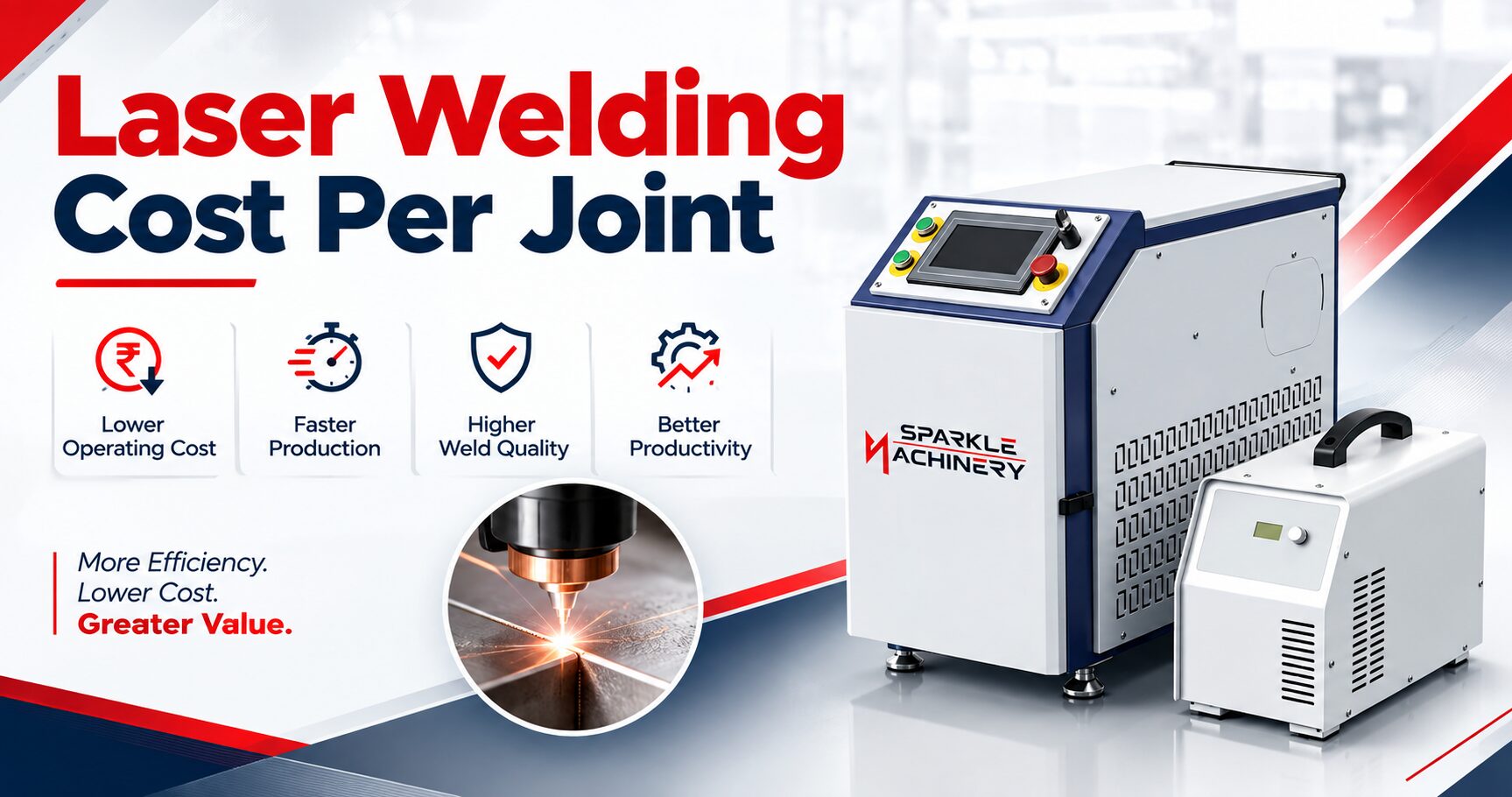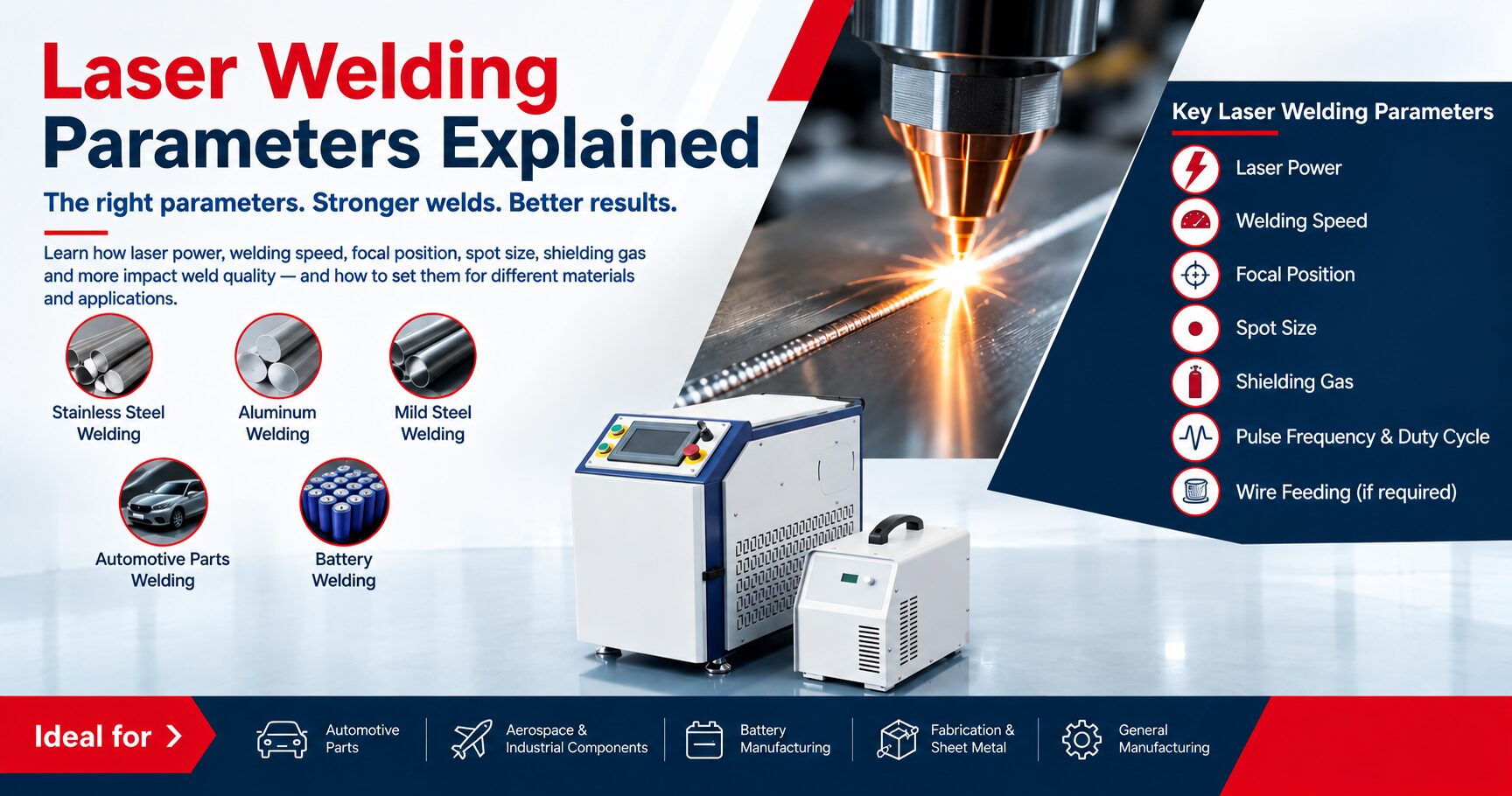
Laser welding cost per joint is an important consideration for manufacturers planning to invest in modern welding technology. While the purchase price of a laser welding machine is an important factor, the actual cost of producing each welded joint depends on several variables such as welding speed, laser power, labour, electricity, shielding gas, consumables, maintenance, material thickness, joint design, and production volume.
A proper cost-per-joint calculation helps manufacturers understand the actual economics of laser welding and compare different welding processes more effectively.
For applications ranging from general metal fabrication to automotive components, battery manufacturing, jewellery and precision engineering, the right fiber laser welding machine can offer high repeatability, controlled heat input and efficient production.
What Is Laser Welding Cost Per Joint?
Laser welding cost per joint means the total operating cost involved in producing one finished welded joint.
A basic calculation can be represented as:
Cost Per Joint = Total Welding Cost ÷ Number of Joints Produced
The total welding cost may include:
- Machine operating cost
- Operator/labour cost
- Electricity consumption
- Shielding gas
- Filler wire, where required
- Consumables
- Maintenance
- Machine depreciation
- Fixture and handling costs
- Post-welding finishing
- Rework and inspection
The actual cost varies from one application to another. Therefore, manufacturers should calculate the cost based on their specific material, component, welding length, production volume and machine configuration.
What Factors Affect Laser Welding Cost Per Joint?
There is no fixed price for every welded joint. Several factors influence the final cost.
1. Welding Time
Welding cycle time is one of the most important factors affecting cost.
A fiber laser welding machine can provide high welding speeds for suitable applications. When welding time is reduced, more components can potentially be processed within the same production period.
For example:
Lower cycle time → Higher production output → Lower cost contribution per joint
However, welding speed must be selected according to material, thickness, joint configuration, laser power and required weld quality.
2. Laser Welding Machine Power
The required laser power depends on the material, thickness and application.
A metal laser welding machine may be configured differently for thin sheet-metal applications compared with heavier industrial components.
Manufacturers may consider different laser power levels depending on:
- Stainless steel thickness
- Mild steel thickness
- Carbon steel
- Aluminium
- Copper and other metals
- Joint design
- Required penetration
- Welding speed
Choosing the appropriate power for the application is important because a higher-power machine does not automatically mean a lower cost per joint.
3. Material Type
Material characteristics have a direct effect on welding parameters and cycle time.
Stainless Steel Laser Welding
Stainless steel laser welding is widely used for industrial components, enclosures, fabrication, kitchen equipment, automotive components and precision parts.
Appropriate laser parameters can provide controlled and consistent welds while limiting unnecessary heat input.
Aluminium Laser Welding
An aluminum laser welding machine requires suitable parameters because aluminium has different thermal and optical characteristics compared with steel.
The required laser power, welding speed and shielding conditions can influence the cost per joint.
4. Labour Cost
Labour is another important component of the total welding cost.
A handheld laser welding machine can simplify certain welding operations and provide flexibility for different components. Depending on the application, this may reduce the amount of time required for certain manual operations.
When calculating labour cost, manufacturers should consider:
- Operator hourly cost
- Component loading time
- Positioning time
- Welding time
- Unloading time
- Inspection
- Finishing
- Rework
The complete production cycle should be considered rather than only the actual laser-on time.
5. Shielding Gas Consumption
Many laser welding applications use shielding gas to protect the weld area during processing.
Gas consumption depends on:
- Gas type
- Flow rate
- Welding time
- Nozzle configuration
- Joint geometry
- Material
- Welding parameters
Therefore, shielding gas should be included when calculating the actual laser welding cost per joint.
6. Electricity Consumption
Electricity is another operating expense.
The actual electrical consumption depends on the complete machine system, not just the rated laser source power.
A practical calculation is:
Electricity Cost = Electrical Consumption × Operating Time × Electricity Tariff
For accurate costing, manufacturers should use the machine’s actual electrical input specifications.
7. Consumables and Filler Wire
Depending on the application, laser welding may be performed with or without filler material.
Consumables may include:
- Filler wire
- Protective lenses
- Nozzles
- Protective components
- Shielding gas
For some applications, reduced consumable requirements can contribute to lower operating costs. However, this depends entirely on the joint design and welding requirements.
8. Maintenance Cost
Maintenance should also be included when calculating long-term welding costs.
A precision laser welding machine requires proper maintenance of components such as:
- Welding head
- Protective lens
- Cooling system
- Optical components
- Electrical system
- Laser source
- Motion system
Regular preventive maintenance can help maintain consistent performance and reduce unexpected downtime.
How to Calculate Laser Welding Cost Per Joint
One practical method is to calculate the total operating cost per hour and divide it by the number of joints produced per hour.
Formula
Laser Welding Cost Per Joint = Total Operating Cost Per Hour ÷ Number of Joints Per Hour
Example
Suppose a production line has an overall operating cost of ₹1,000 per hour and produces 200 joints per hour.
Then:
₹1,000 ÷ 200 = ₹5 per joint
This is only an illustrative example. Actual costs will depend on the machine, operator, electricity, gas, consumables, material, cycle time and production conditions.
Laser Welding Machine Cost vs Cost Per Joint
When evaluating laser welding machine price India, manufacturers should avoid looking only at the initial purchase price.
The more useful calculation is the total cost of ownership.
This can include:
| Cost Factor | What to Consider |
| Machine investment | Purchase and installation |
| Labour | Operator and handling |
| Electricity | Machine operating consumption |
| Shielding gas | Gas type and consumption |
| Consumables | Lens, nozzle, filler wire, etc. |
| Maintenance | Preventive and corrective maintenance |
| Downtime | Production losses |
| Finishing | Grinding or additional processing |
| Rework | Defective or rejected components |
| Production volume | Number of parts produced |
This provides a more realistic picture of the cost per finished component.
Handheld Laser Welding Machine and Cost Per Joint
A handheld laser welding machine can be suitable for applications where flexibility and manual control are important.
It can be considered for:
- Sheet-metal fabrication
- Stainless steel fabrication
- Mild steel components
- Aluminium components
- Machinery parts
- Enclosures
- General metal fabrication
- Repair and maintenance applications
For a handheld system, the operator’s welding speed and component handling time can have a significant impact on the final cost per joint.
For high-volume repetitive production, manufacturers may also consider automated or integrated laser welding solutions.
Portable Laser Welding Machine for Flexible Production
A portable laser welding machine can be useful when components cannot easily be moved to a large fixed welding system.
Portable systems can offer flexibility for:
- Large components
- Fabrication work
- On-site applications
- Repair operations
- Different component sizes
- Low-to-medium volume production
However, the actual cost per joint should still be calculated based on welding time, operator time, gas consumption, electricity and other operating expenses.
Industrial Laser Welding System for Production
An industrial laser welding system can integrate laser welding with fixtures, automation, motion systems, PLC controls and other production equipment.
Such systems can be developed for repetitive manufacturing applications where production consistency and cycle time are important.
Automation can potentially reduce:
- Manual handling
- Positioning time
- Repetitive operator movement
- Production variation
- Cycle time
For high-volume manufacturing, these factors can have a significant effect on the overall cost per joint.
Laser Welding for Automotive Parts
Laser welding for automotive parts is an important application because automotive manufacturing requires repeatability, productivity and consistent weld quality.
Laser welding can be considered for applications such as:
- Automotive brackets
- Sheet-metal assemblies
- Precision components
- Enclosures
- Structural components
- Exhaust-related components
- Battery-related components
- Small precision assemblies
For automotive production, manufacturers should calculate cost based on complete cycle time, fixture requirements, automation, inspection and production volume.
Battery Laser Welding Machine Applications
Battery manufacturing requires controlled and repeatable welding processes.
A battery laser welding machine can be used for suitable battery manufacturing and component applications where precise and controlled welding is required.
The cost per joint can depend on:
- Number of weld points
- Welding time
- Material
- Component geometry
- Required energy input
- Automation level
- Inspection requirements
- Production volume
For high-volume battery production, even a small reduction in cycle time can have a meaningful effect on production economics.
Platform Laser Welding Machine
A Platform laser welding machine is designed around a worktable/platform where components can be positioned for welding.
It can be useful for applications requiring:
- Repeatable component positioning
- Fixture-based welding
- Precision welding
- Small and medium components
- Batch production
- Controlled welding paths
The cost per joint depends on the machine’s cycle time, component loading, welding parameters and production volume.
Jewellery Laser Welding Machine Cost
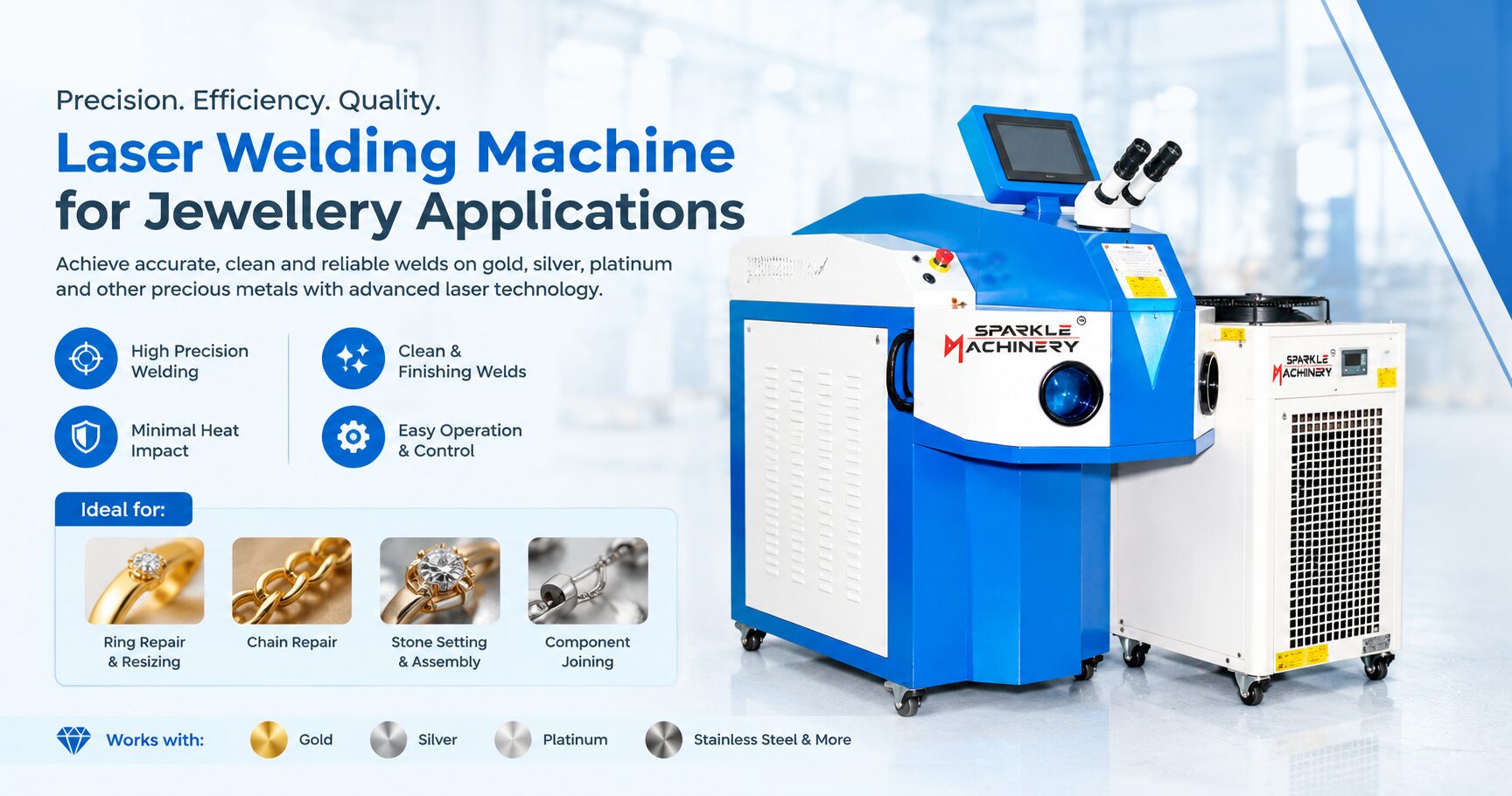
A jewellery laser welding machine is designed for applications where precision and controlled heat input are especially important.
Jewellery manufacturing may involve:
- Gold
- Silver
- Platinum
- Fine metal components
- Small repair work
- Precision assemblies
Because jewellery components can be small and delicate, welding parameters must be selected carefully.
The cost per joint depends on the welding time, material, component size, operator involvement, machine utilisation and required finishing.
How Laser Welding Can Reduce Cost Per Joint
Laser welding can potentially reduce production costs in suitable applications through several mechanisms.
Faster Production
Higher welding speeds can reduce cycle time.
Consistent Welding
Controlled parameters can help achieve repeatable results.
Reduced Finishing
Some applications may require less grinding or post-weld finishing.
Lower Rework
Consistent process conditions can help reduce defective parts when the application is properly developed.
Automation
An industrial laser welding system can be integrated with automation for repetitive production.
Better Machine Utilisation
Higher output from the same production equipment can distribute fixed machine costs over a larger number of components.
How to Reduce Laser Welding Cost Per Joint
Manufacturers can consider the following approaches:
Optimise Welding Parameters
Correct laser power, speed, focus position and gas flow can improve process efficiency.
Improve Fixtures
A good fixture can reduce positioning and loading time.
Reduce Handling
Efficient component movement can reduce non-productive time.
Automate Repetitive Applications
For high-volume production, automation can improve consistency and throughput.
Reduce Rework
Proper process development and parameter optimisation can help reduce rejected components.
Monitor Cycle Time
Measure the complete cycle rather than only laser-on time.
Conduct Production Trials
Actual welding trials provide more reliable cost information than theoretical calculations.
Why Production Trials Are Important
Before deciding on a laser welding machine, manufacturers should conduct application trials wherever possible.
A production trial can measure:
- Actual welding time
- Welding speed
- Laser power
- Gas consumption
- Filler wire consumption
- Operator involvement
- Loading/unloading time
- Weld quality
- Post-processing
- Rework
- Total cycle time
This information can then be used to calculate the actual laser welding cost per joint for the specific application.
Laser Welding Cost Per Joint: What Manufacturers Should Compare
When comparing laser welding solutions, consider these parameters together:
- Laser welding machine price India
- Required laser power
- Welding speed
- Cycle time
- Material type
- Material thickness
- Weld length
- Number of joints per component
- Labour cost
- Shielding gas consumption
- Electricity consumption
- Consumables
- Maintenance
- Fixture requirements
- Automation requirements
- Production volume
- Post-processing
- Rework rate
This approach provides a more complete understanding of the economics of laser welding.
Is Laser Welding Cost-Effective?
The answer depends on the specific application.
A laser welding machine can offer advantages in applications where manufacturers require high production speed, precision, repeatability or automation. However, the economics should be evaluated using actual production data rather than simply comparing machine purchase prices.
For some low-volume applications, a portable laser welding machine or handheld laser welding machine may provide the required flexibility.
For high-volume production, an industrial laser welding system with automation may offer a different cost structure.
The right solution depends on the component, material, production volume and required weld quality.
Conclusion
Understanding laser welding cost per joint helps manufacturers make better production and investment decisions. The final cost is influenced by welding time, laser power, labour, electricity, shielding gas, consumables, maintenance, material, joint design, automation and production volume.
Whether you are evaluating a fiber laser welding machine, handheld laser welding machine, metal laser welding machine, aluminum laser welding machine, precision laser welding machine, battery laser welding machine, platform laser welding machine or jewellery laser welding machine, the most accurate approach is to calculate the complete cost of producing a finished joint.