In today’s competitive manufacturing environment, increasing profit margins is not only about selling more products. It is also about reducing production costs, improving productivity, minimizing waste, and maintaining consistent quality.
Modern industrial laser machines are helping manufacturers achieve these goals by replacing slower, more labor-intensive processes with faster, precise, and reliable technology.
From marking and welding to cutting and cleaning, the right industrial laser machine can improve production efficiency while reducing operational costs.
1. Reduce Production Time
Time directly impacts production costs. Traditional processes may require multiple operations, manual handling, tooling changes, or additional finishing.
Modern laser systems can perform many operations with high speed and accuracy.
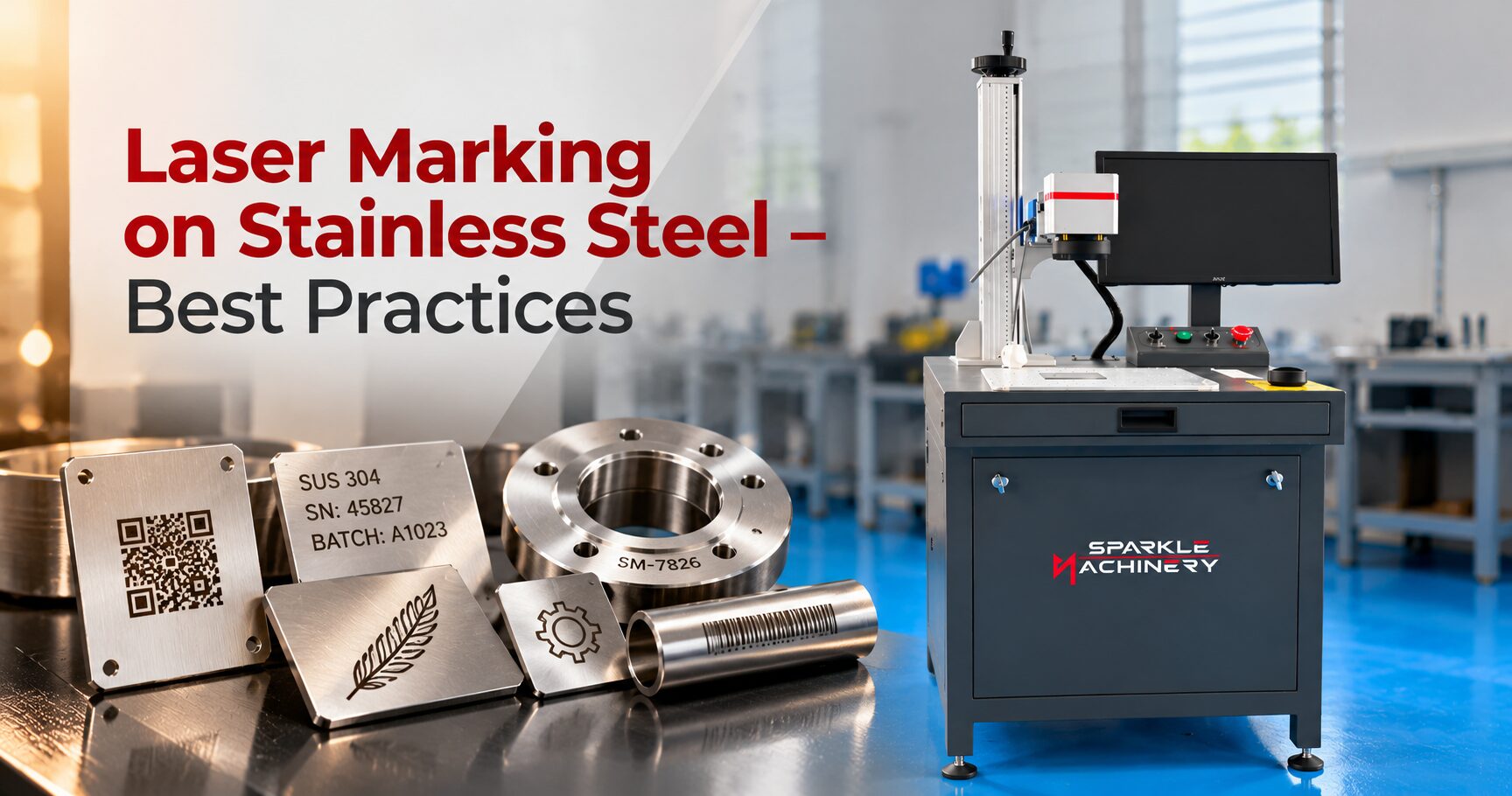
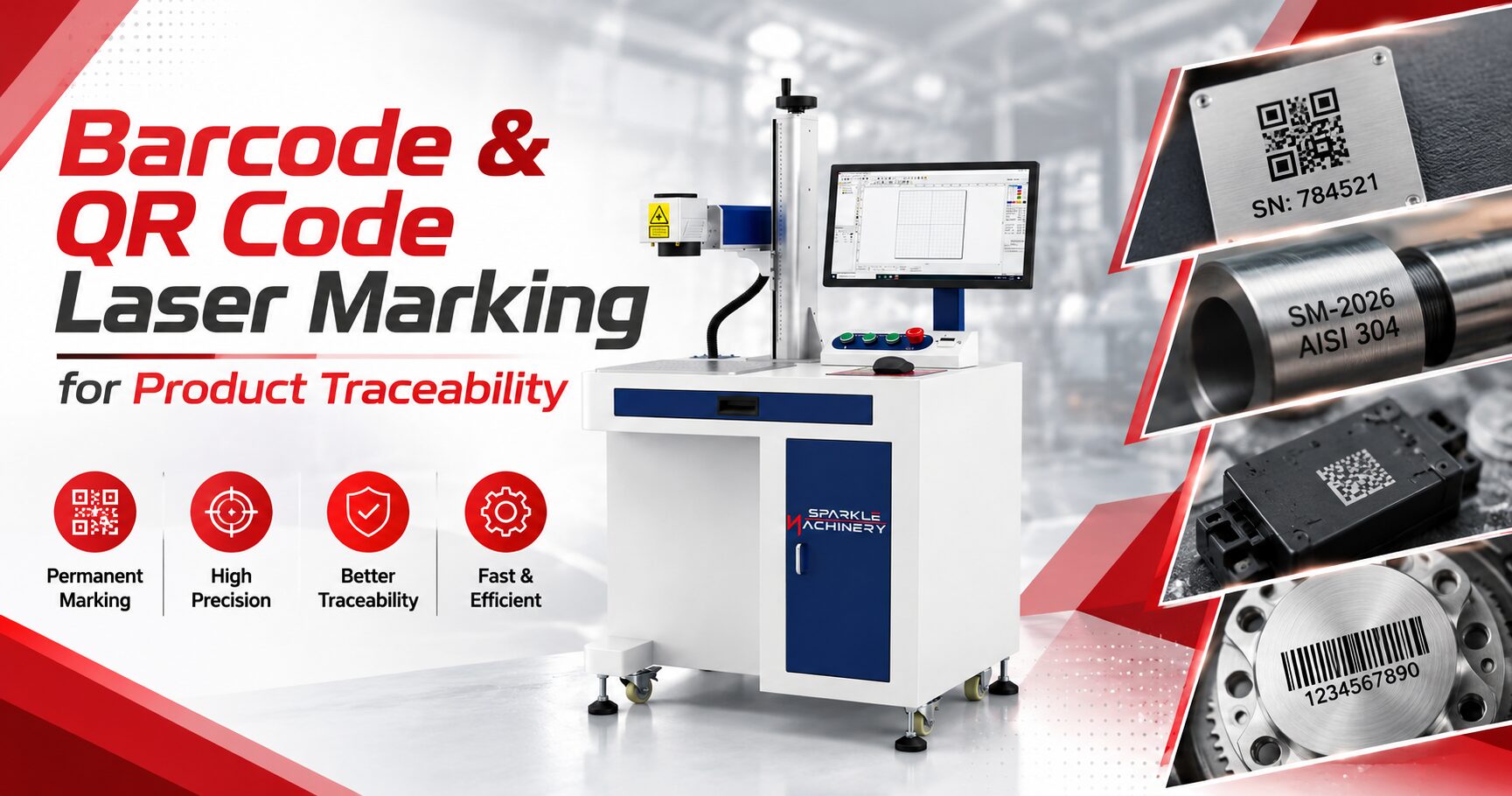
A laser marking machine, for example, can permanently mark product information, serial numbers, barcodes, QR codes, logos, and identification codes without requiring labels or additional consumables.
Similarly, a laser cutting machine can produce precise cuts with repeatable accuracy, helping manufacturers increase production output.
Higher production capacity means manufacturers can complete more orders within the same working hours, improving overall profitability.
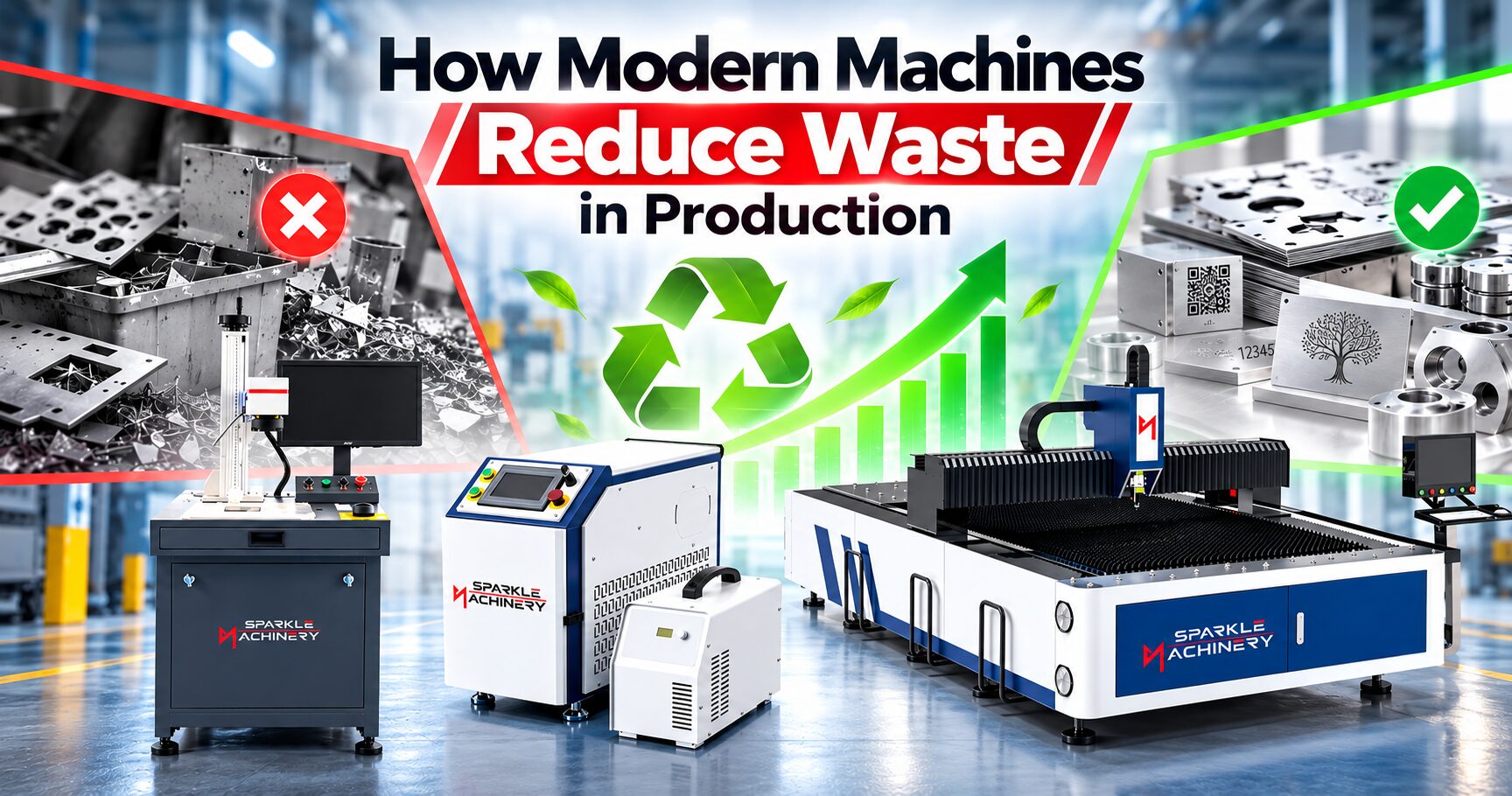
2. Minimize Material Waste
Material waste is one of the hidden costs in manufacturing.
Inaccurate cutting, excessive heat, poor marking, and inconsistent welding can result in rejected components and wasted raw materials.
Modern laser technology provides precise and controlled processing, which helps reduce unnecessary material loss.
A laser cutting machine can follow programmed cutting paths accurately, while optimized laser parameters can help reduce scrap and improve material utilization.
For manufacturers working with expensive metals and components, even a small reduction in material waste can significantly improve profit margins over time.
3. Improve Product Quality
Quality problems can be expensive.
Rejected products, rework, customer complaints, and returns all increase manufacturing costs.
A modern fiber laser marking machine provides consistent and repeatable marking across large production volumes. Manufacturers can create clear and durable identification marks with high accuracy.
For applications requiring extremely fine marking on sensitive materials, a UV laser marking machine can provide a suitable solution because of its precise and controlled processing characteristics.
Consistent quality means less rework and fewer rejected components, ultimately contributing to better margins.
4. Reduce Dependence on Consumables
Traditional marking, cutting, and cleaning processes may require inks, chemicals, labels, tools, or other consumables.
Laser processing can reduce the requirement for many of these consumables.
For example, laser marking creates permanent marks directly on the component, eliminating the need for separate labels or printing materials in many applications.
A laser cleaning machine can also remove rust, oxide layers, paint, and contaminants without relying on chemical cleaning agents for suitable applications.
Lower consumable usage can reduce both direct production costs and inventory requirements.
5. Improve Welding Productivity
Welding quality has a major impact on manufacturing costs.
Traditional welding processes can involve longer processing times, more finishing work, and greater dependency on operator skill.
A laser welding machine offers high-speed and precise welding for suitable materials and applications.
Laser welding can help manufacturers achieve:
- Faster welding cycles
- Precise and controlled welds
- Reduced heat-affected areas
- Lower rework requirements
- Consistent production quality
For manufacturers producing components in large quantities, improved welding productivity can have a direct impact on production costs and profitability.
6. Lower Rework and Rejection Costs
Rework is often an underestimated manufacturing expense.
When a component does not meet specifications, manufacturers may need additional labor, machine time, materials, and inspection before the product can be accepted.
Modern laser systems are designed for repeatable processing. Once the correct parameters are established, the same process can be reproduced across multiple components.
This is particularly valuable for industries where traceability, identification, and dimensional accuracy are important.
Fewer rejected parts mean more usable products from the same raw materials and production resources.
7. Improve Production Flexibility
Manufacturing requirements can change quickly.
Different products may require different markings, designs, materials, or processing parameters.
Modern laser machines can be digitally programmed for different applications, making it easier to switch between jobs.
For example, a fiber laser marking machine can be programmed for different:
- Serial numbers
- QR codes
- Barcodes
- Logos
- Product information
- Part identification
This flexibility helps manufacturers handle customized orders without major changes to their production setup.
8. Support Automation
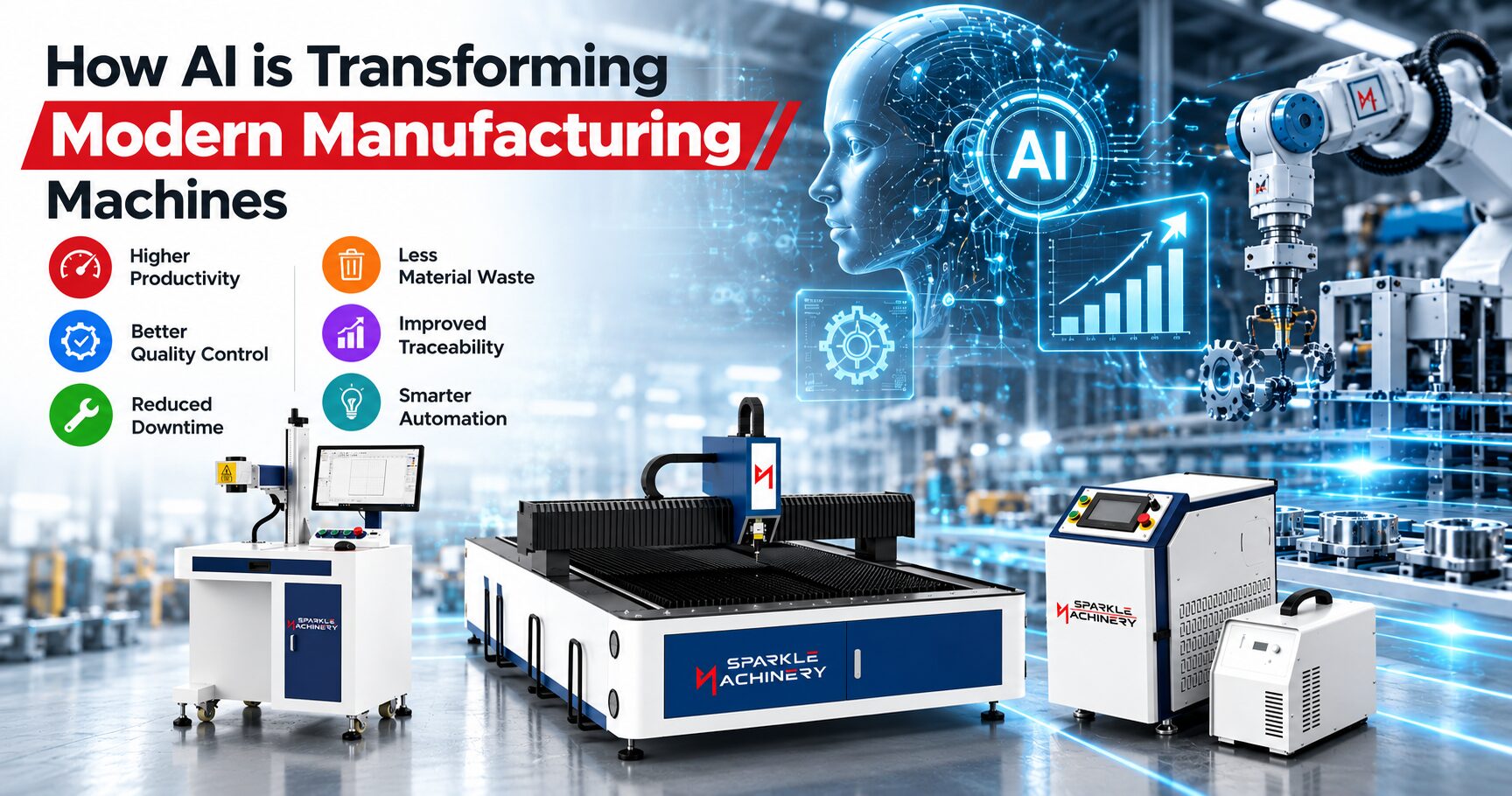
One of the biggest advantages of modern machinery is its ability to integrate with automated production systems.
Laser automation can connect laser processing with conveyors, robotic systems, rotary systems, sensors, vision systems, and other production equipment.
Automated laser processing can help reduce manual handling and improve production consistency.
For high-volume manufacturing, automation can significantly increase throughput while reducing repetitive manual operations.
This allows manufacturers to focus their workforce on higher-value activities while machines handle repetitive processes.
9. Reduce Long-Term Operating Costs
The initial investment in modern machinery may appear higher than traditional equipment, but purchase price alone should not determine the investment decision.
Manufacturers should consider the total cost of ownership, including:
- Labor costs
- Energy consumption
- Consumables
- Maintenance
- Rework
- Material waste
- Production downtime
- Machine productivity
A modern industrial laser machine can provide long-term savings by improving several of these areas simultaneously.
The real value of machinery is therefore not simply its purchase price but the amount of value it creates throughout its operating life.
10. Improve Return on Investment
A machine becomes a profitable investment when it generates measurable savings and additional production value.
For example, suppose a manufacturer invests in a laser system that:
- Increases production speed
- Reduces material waste
- Lowers rejection rates
- Reduces manual labor
- Minimizes consumable costs
The combined savings can gradually recover the initial investment.
This is why manufacturers should evaluate a machine based on ROI and productivity, rather than only comparing machine prices.
Choosing the Right Laser Machine
Not every application requires the same laser technology.
The correct solution depends on the material, component size, production volume, required accuracy, processing speed, and application.
Depending on the requirement, manufacturers may consider:
Fiber Laser Marking Machine – Suitable for durable marking and identification applications on metals and various industrial components.
UV Laser Marking Machine – Suitable for fine and precise marking applications where controlled processing is required.
Laser Welding Machine – Designed for precision welding applications where speed, accuracy, and consistency are important.
Laser Cutting Machine – Used for accurate cutting of suitable materials with programmable cutting paths.
Laser Cleaning Machine – Used for suitable surface cleaning applications such as rust, paint, oxide, and contaminant removal.
Laser Automation Solutions – Designed to integrate laser processing into higher-volume and automated production environments.
Why Work With an Experienced Laser Machine Manufacturer?
Selecting the machine is only one part of the investment.
A reliable laser machine manufacturer should understand the customer’s application and help determine the right machine configuration.
Before investing, manufacturers should consider:
- Application testing
- Material compatibility
- Required laser power
- Production volume
- Processing speed
- Automation requirements
- Machine maintenance
- Operator training
- After-sales support
Application testing is particularly important because the same laser configuration may not provide identical results for every material or product.
Conclusion
Investing in modern machinery is not simply about upgrading equipment. It is about building a more efficient and profitable manufacturing process.
Modern laser technology can help manufacturers increase productivity, reduce waste, improve quality, minimize rework, lower operating costs, and support automation.
Whether the requirement is marking, welding, cutting, cleaning, or automated laser processing, choosing the right industrial laser solution can create measurable long-term value.
The right machine should not only perform the job—it should help your production save more, produce more, and earn more.


One reply on “How Investing in Modern Machinery Increases Profit Margins”
The analysis gives a good starting point for deeper market research.
investing