India’s manufacturing industry is continuously evolving with the adoption of advanced technologies, automation and modern production equipment. Manufacturers are looking for solutions that can improve production efficiency, maintain consistent quality and reduce manufacturing time.
One technology gaining attention across industrial sectors is Laser Welding Technology.
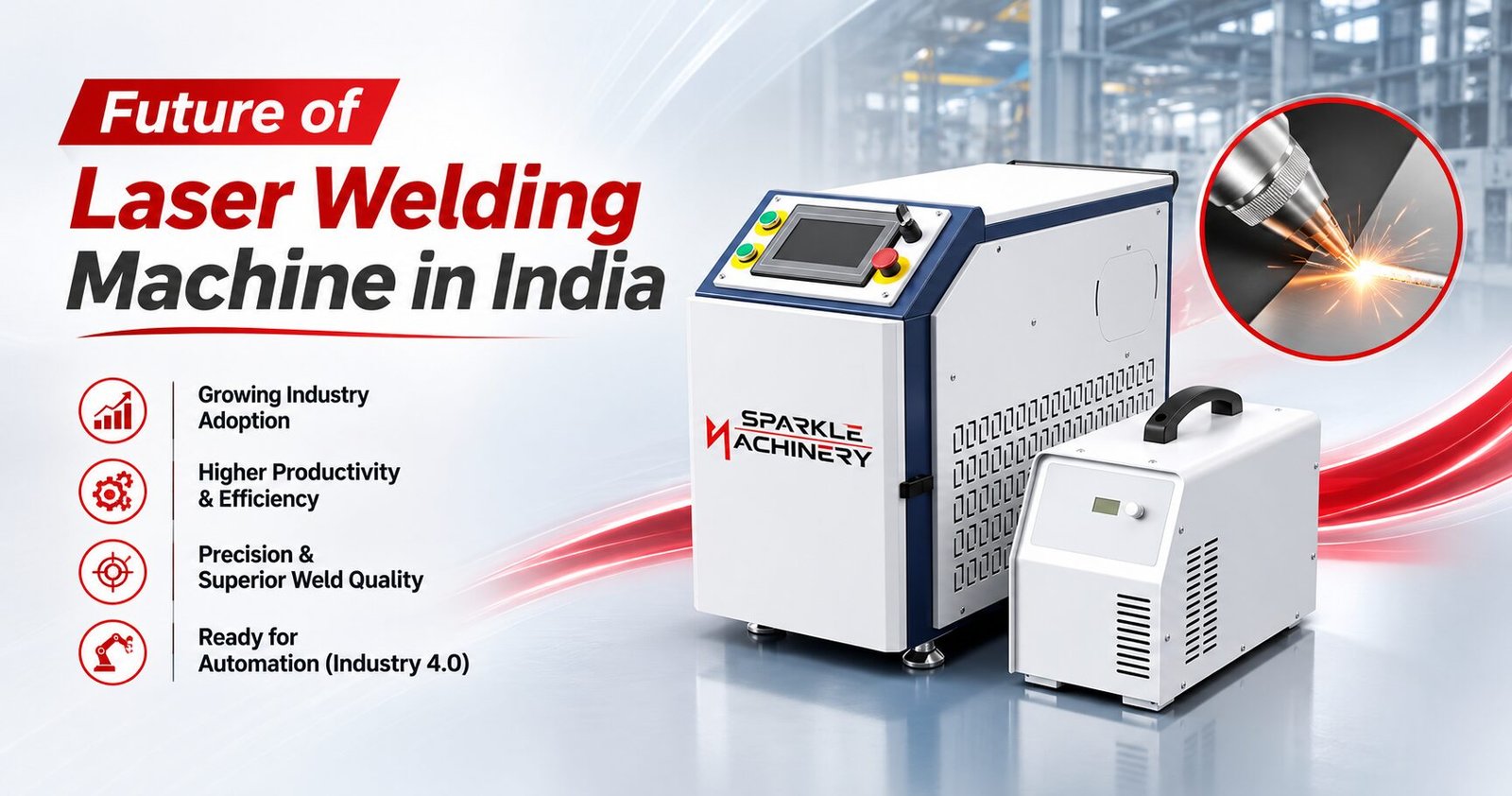
A laser welding machine uses a concentrated laser beam to join metal components with precision. It is increasingly being considered for applications where welding quality, speed, appearance and process consistency are important.
From automotive components and metal fabrication to electronics and industrial equipment, laser welding technology offers new possibilities for modern manufacturing.
In this article, we explore the future of laser welding machines in India, their applications, advantages and the opportunities they offer to Indian industries.
1. Growing Demand for Laser Welding Machines in India
India has a diverse manufacturing sector that includes automotive, engineering, electronics, electrical equipment, metal fabrication and industrial machinery.
As production requirements become more demanding, manufacturers are exploring advanced welding solutions that can support accurate and repeatable results.
Traditional welding methods such as TIG, MIG and arc welding continue to serve many applications. However, laser welding provides an alternative for suitable metal joining applications where concentrated heat input, precise control and clean weld appearance are required.
Some important factors supporting interest in laser welding machines include:
- Increasing demand for precision manufacturing
- Growth in automotive and engineering production
- Expansion of metal fabrication businesses
- Demand for consistent welding quality
- Adoption of industrial automation
- Need to improve production efficiency
The Indian laser industry is also seeing wider interest in fiber laser platforms and material-processing technologies across manufacturing applications.
2. What Is a Laser Welding Machine?
A laser welding machine is an industrial machine that uses a focused laser beam to join two or more metal components.
The laser beam delivers concentrated energy to the welding area, melting the material and forming a joint as it cools.
Depending on the machine configuration, laser welding systems can be used for different metal thicknesses, joint designs and production requirements.
Modern laser welding machines are available in different configurations, including:
Handheld Laser Welding Machine
A handheld laser welding machine allows operators to guide the welding torch manually along the joint.
It is suitable for various fabrication and production applications where flexibility and ease of movement are important.
Common applications include:
- Stainless steel fabrication
- Metal furniture manufacturing
- Kitchen equipment production
- Sheet metal enclosures
- Automotive components
- General engineering work
Automatic Laser Welding Machine
Automatic laser welding machines are designed for production processes that require repeatable welding operations.
They can be integrated with suitable fixtures, motion systems, CNC controls or robotic equipment depending on the application.
These systems are useful for manufacturers handling repetitive components and higher-volume production.
3. Major Advantages of Laser Welding Technology
Laser welding offers several advantages when the process is correctly selected and configured for the material and application.
A. High-Speed Welding
Laser welding can support high welding speeds in suitable applications. This can help manufacturers improve production throughput.
B. Precise Welding
The concentrated laser beam allows controlled energy delivery to the welding area, supporting accurate joints and fine welding applications.
C. Smooth Welding Finish
Laser welding can produce clean weld seams with reduced spatter in suitable applications, potentially reducing the need for additional finishing.
D. Reduced Heat-Affected Area
The concentrated energy input can help limit the heat-affected zone compared with some conventional welding processes, depending on the material and welding parameters.
E. Easy Integration with Automation
Laser welding technology can be integrated with automation systems, robotic equipment and production lines for repeatable industrial processes.
4. Industries Using Laser Welding Machines in India
Laser welding technology has applications across several manufacturing sectors.
Automotive Industry
Automotive manufacturers and component suppliers use welding processes for metal assemblies, brackets, enclosures and other components.
Laser welding can be considered for suitable automotive applications where precision and repeatability are important.
Metal Fabrication Industry
Fabrication businesses manufacture metal enclosures, cabinets, frames, panels and industrial structures.
Handheld laser welding machines can support selected fabrication operations involving stainless steel, mild steel and other compatible metals.
Electronics and Electrical Industry
Electronic and electrical equipment manufacturers require precise joining for selected metal housings, connectors and components.
Laser welding can be useful for applications requiring controlled heat input and accurate joining.
Kitchen Equipment Manufacturing
Manufacturers of stainless steel kitchen equipment produce tables, cabinets, sinks, counters and commercial kitchen products.
Handheld laser welding machines can support suitable stainless steel fabrication and joining work.
Medical Equipment Manufacturing
Certain medical equipment and instrument manufacturers require precise metal joining for selected components.
Applications must be evaluated carefully according to material requirements, cleanliness standards and process validation needs.
Aerospace and Precision Engineering
Aerospace and precision engineering applications can require tightly controlled welding processes, specialised equipment and documented quality procedures.
Laser welding may be suitable for selected components where process qualification and material compatibility are established.
5. The Future of Handheld Laser Welding Machines
One important development in industrial welding is the increasing availability of handheld laser welding systems.
These machines provide a flexible welding solution for businesses that do not require a fully automated production line.
Handheld laser welding machines are attracting interest from:
- Small and medium manufacturing businesses
- Stainless steel fabricators
- Sheet metal manufacturers
- Metal furniture manufacturers
- Industrial maintenance workshops
- General engineering companies
Their applications can include butt welding, lap welding, corner welding and fillet welding, depending on machine configuration and joint requirements.
As laser technology becomes more accessible, handheld systems may provide additional options for businesses looking to modernise selected welding operations.
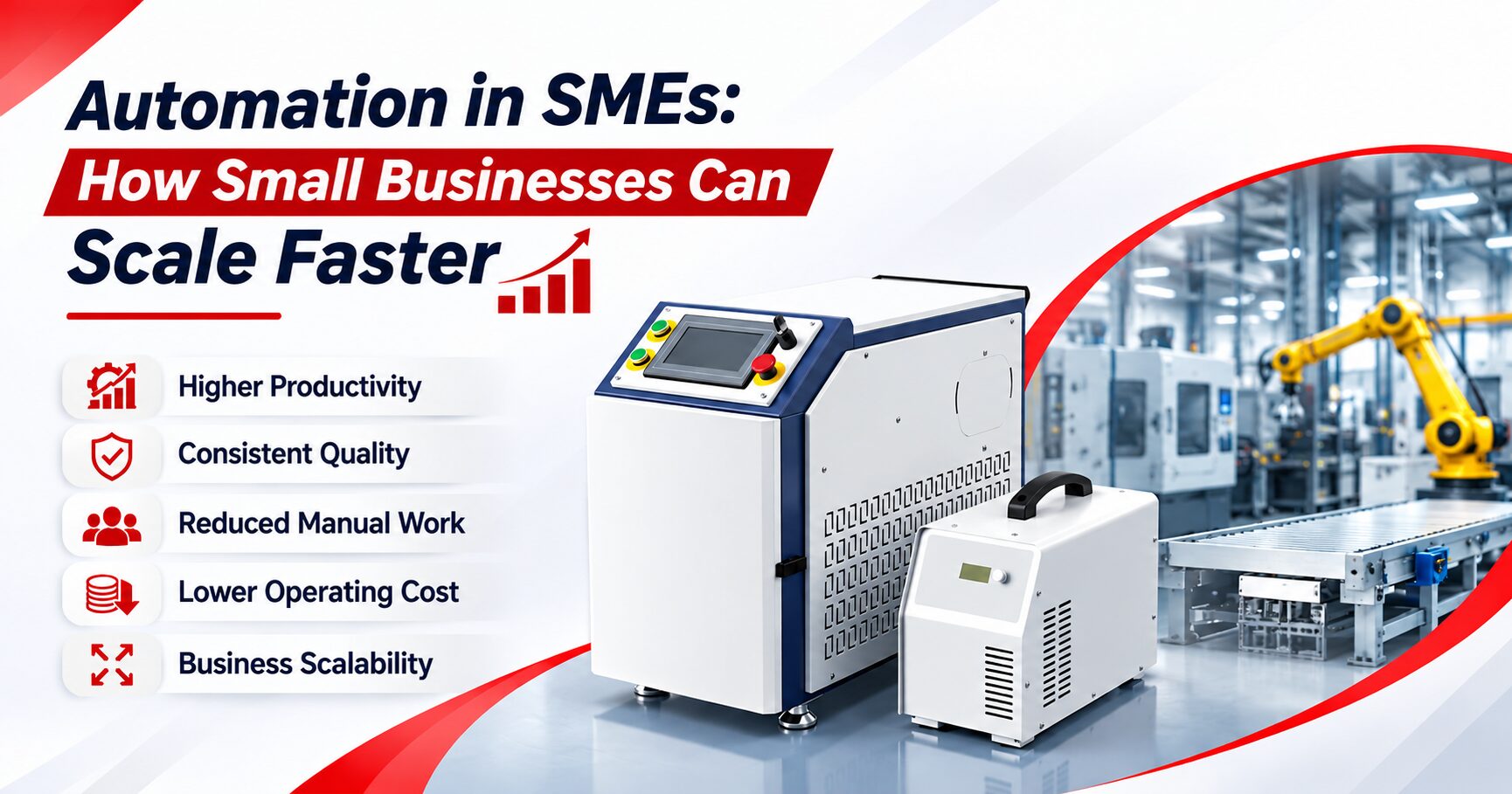
6. Laser Welding and Industrial Automation
Automation is becoming an important part of modern manufacturing.
Laser welding systems can be integrated with robotic arms, programmable controls, fixtures and other automated equipment.
This combination can help manufacturers achieve:
- Repeatable welding operations
- Consistent production processes
- Reduced manual intervention in suitable applications
- Better control over welding parameters
- Integration with existing production workflows
In the future, manufacturers may increasingly explore automated laser welding workstations for applications involving repetitive components and higher production volumes.
7. Materials That Can Be Welded Using Laser Technology
Laser welding machines can be configured for different metal materials.
Common materials include:
- Stainless Steel
- Mild Steel
- Carbon Steel
- Aluminium
- Selected alloy materials
However, welding performance depends on material grade, thickness, surface condition, joint design, laser power and machine configuration.
Before selecting a machine, manufacturers should evaluate their actual material samples and welding requirements.
8. How to Choose the Right Laser Welding Machine for Your Business
Selecting the right laser welding machine is an important investment decision.
Before purchasing a machine, consider the following factors:
1. Material Type
Identify the metals you regularly work with, such as stainless steel, mild steel, carbon steel or aluminium.
2. Material Thickness
Understand the thickness range of your components and verify whether the machine configuration is suitable.
3. Production Requirements
Consider your daily production volume, working hours and welding speed requirements.
4. Machine Configuration
Choose between handheld and automated laser welding systems based on your production process.
5. Technical Support
Check installation assistance, operator training, maintenance guidance and after-sales service availability.
6. Product Demonstration
Request a welding demonstration using your actual material and joint samples before making a purchase decision.
9. Why Choose SM Laser Technology for Laser Welding Machines?
SM Laser Technology provides industrial laser machine solutions for businesses across different manufacturing sectors.
Our product range includes:
- Handheld Laser Welding Machines
- Fiber Laser Marking Machines
- UV Laser Marking Machines
- Laser Cleaning Machines
- CO2 Laser Cutting and Engraving Machines
- Fiber Laser Cutting Machines
- Industrial Laser Automation Solutions
We focus on providing suitable laser machine solutions according to customer applications, material requirements and production needs.
If you are planning to upgrade your welding process or explore modern laser welding technology, our team can help you understand the available machine options.
10. Conclusion: A Promising Future for Laser Welding in India
The future of laser welding machines in India is closely connected to the growth of precision manufacturing, industrial automation and advanced fabrication technologies.
From handheld laser welding machines to automated welding systems, laser technology offers manufacturers additional options for improving selected production processes.
As Indian businesses continue to modernise their manufacturing facilities, laser welding is expected to remain an important technology to evaluate for suitable industrial applications.
Choosing the right machine, understanding material compatibility and receiving proper technical support are essential for achieving good welding results.
Looking for a Handheld Laser Welding Machine or Industrial Laser Welding Solution?
Connect with SM Laser Technology to discuss your welding requirements and explore suitable machine options.
Website: https://sparklemachinery.com/