Introduction
Manufacturing industries are under constant pressure to increase production speed, maintain product quality, reduce operating costs and meet customer expectations. Traditional manufacturing processes can struggle to achieve all these goals when machines operate without sufficient monitoring, automation or real-time production data.
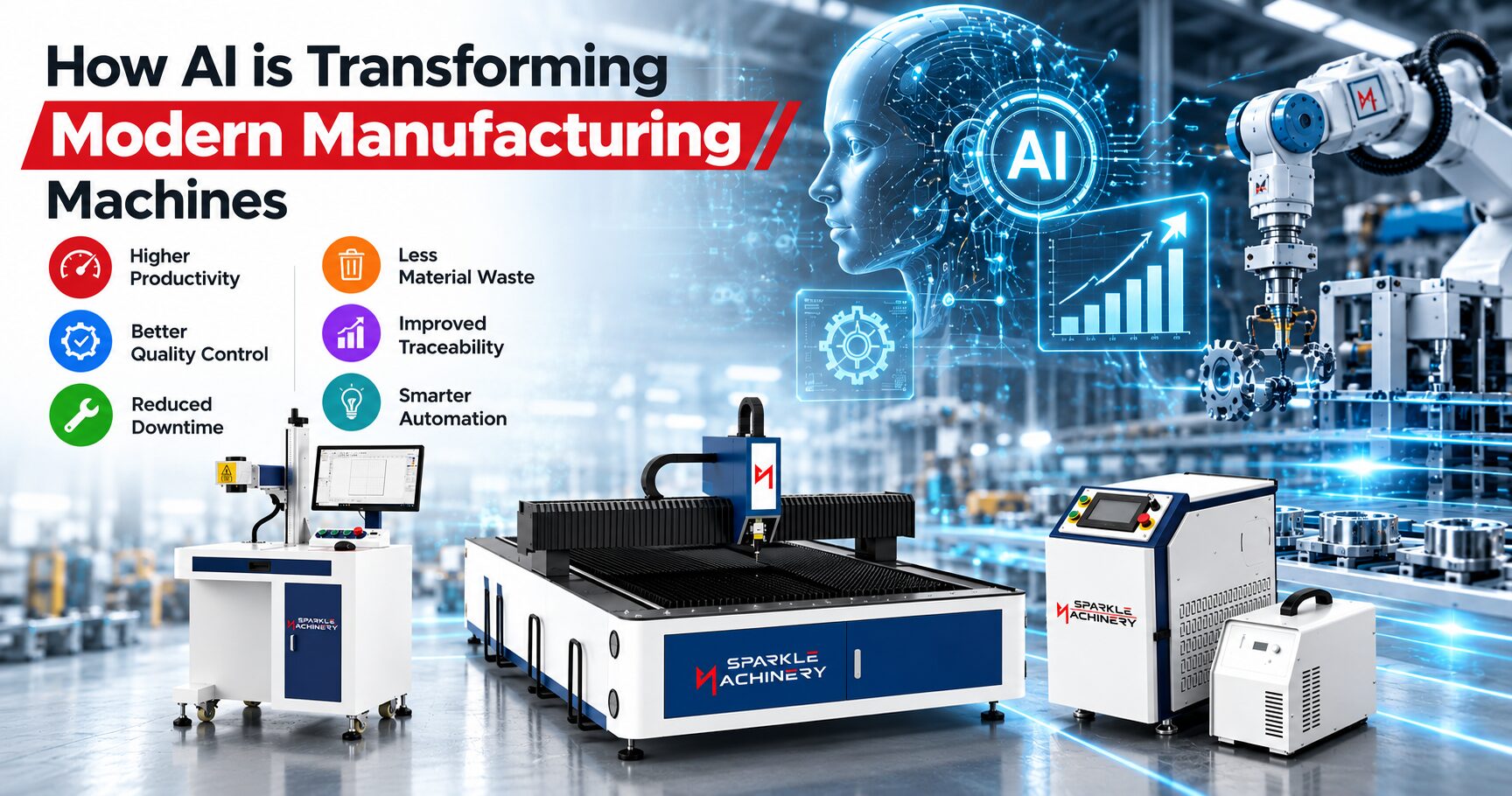
Artificial Intelligence (AI) is changing this landscape by helping manufacturers analyze machine data, identify potential problems, improve quality inspection and make better production decisions. When combined with industrial automation, robotics and advanced machinery, AI can support smarter and more efficient manufacturing operations.
For manufacturers in automotive, electronics, engineering, metal fabrication and other industrial sectors, understanding these technologies is becoming increasingly important.
1. What Is the Role of AI in Modern Manufacturing?
Artificial Intelligence enables machines and software systems to analyze data, recognize patterns and generate insights that support operational decisions.
In manufacturing, AI can work with sensors, cameras, production software and connected equipment to help teams understand machine performance and identify opportunities for improvement.
Some important applications include:
- Predictive maintenance and machine monitoring
- Automated quality inspection using computer vision
- Production planning and process optimization
- Robotics and intelligent automation
- Energy and resource optimization
- Production data analysis and traceability
AI does not automatically make every machine intelligent. Its effectiveness depends on the available data, suitable hardware, software integration and the specific manufacturing application.
2. Predictive Maintenance: Reducing Unexpected Downtime
Unexpected machine breakdowns can interrupt production, delay deliveries and increase maintenance costs. Traditional maintenance often relies on fixed schedules or action taken after a problem occurs.
AI-powered predictive maintenance uses equipment data, such as temperature, vibration, operating conditions and historical maintenance records, to identify patterns that may indicate developing faults.
This can help maintenance teams:
- Detect potential equipment problems earlier
- Plan maintenance activities more effectively
- Reduce avoidable production interruptions
- Improve equipment availability
- Manage maintenance resources efficiently
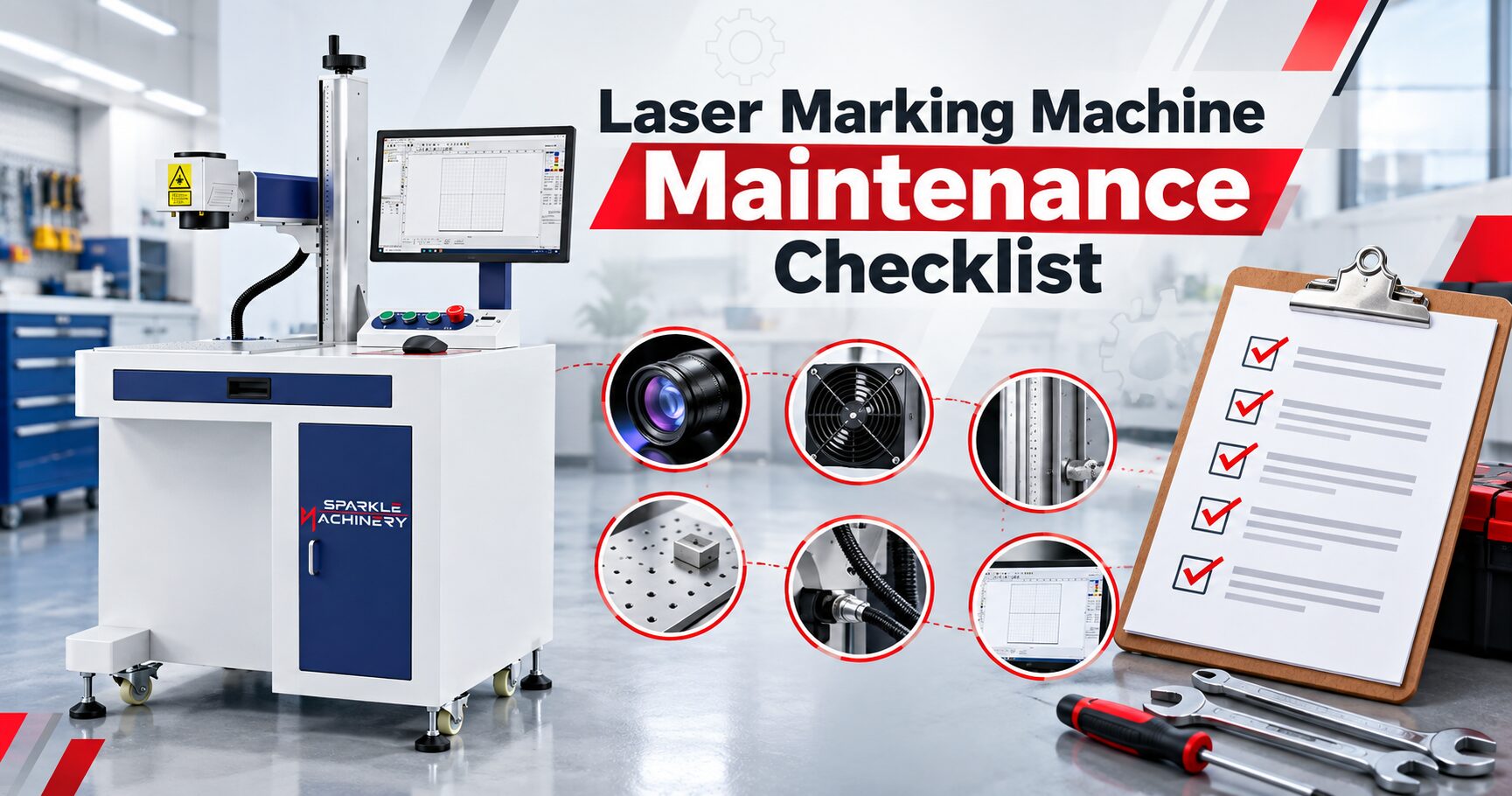
For industrial laser machines, regular inspection of optical components, cooling systems, motion systems and other critical parts remains essential. Where suitable monitoring data and connected systems are available, analytics can further support maintenance planning.
3. AI-Powered Quality Control and Inspection
Product quality is a major concern for manufacturers. Manual inspection can be time-consuming, and results may vary depending on the inspection method and working conditions.
AI-based computer vision systems can analyze images captured by industrial cameras to identify specific defects, surface variations, dimensional issues or missing features. When properly trained and validated, these systems can help inspect products more consistently.
In laser marking applications, vision systems may help verify whether a mark is present, readable and positioned correctly.
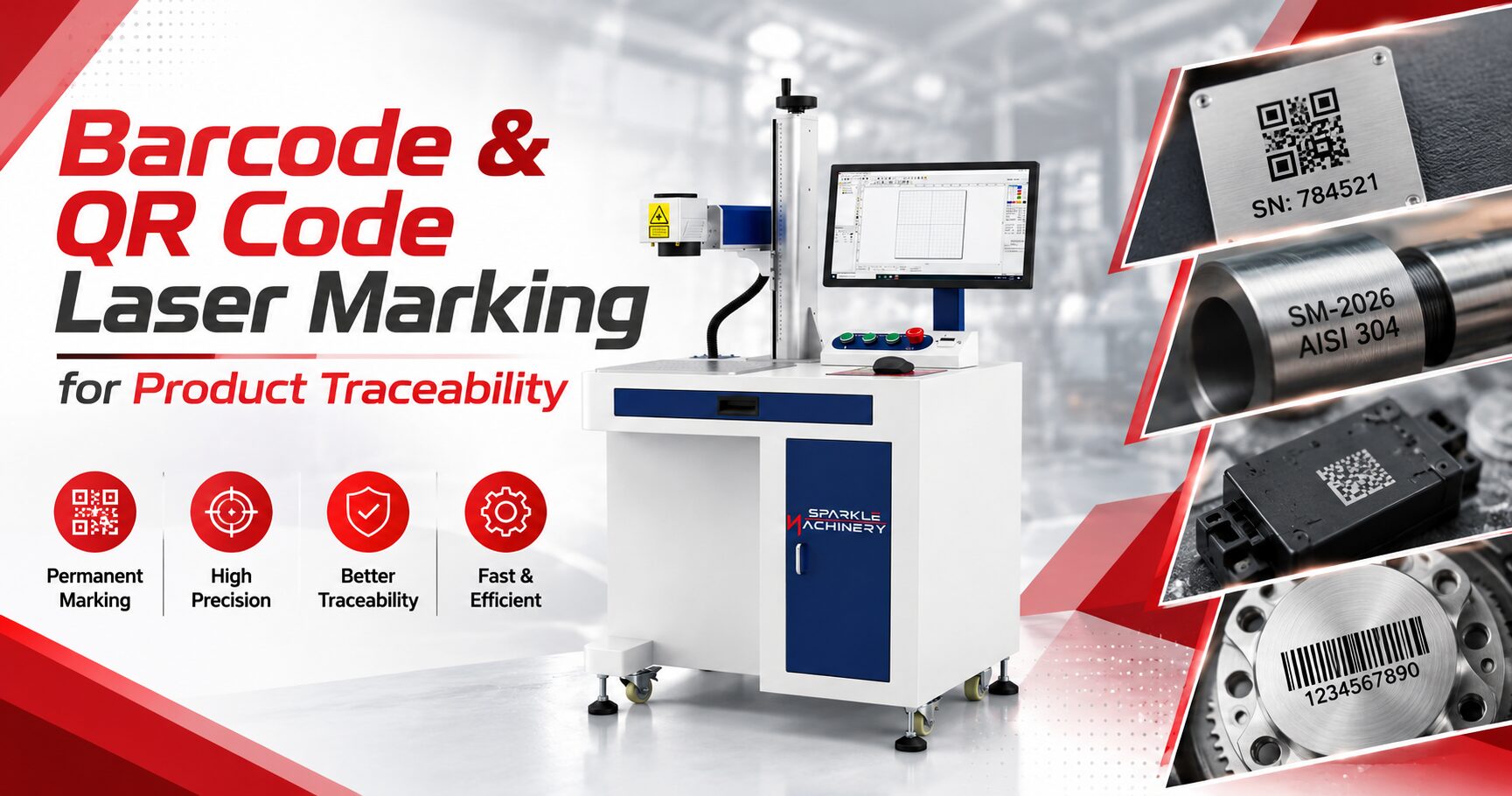
For example, a manufacturer using a barcode laser marking machine or a QR code laser marking system may integrate vision inspection and code-reading technology to verify identification marks before components move to the next production stage.
Potential benefits include:
- More consistent inspection
- Faster identification of selected defects
- Reduced manual inspection effort
- Improved product traceability
- Better quality documentation
Actual inspection performance depends on camera quality, lighting, material characteristics, marking contrast and the inspection software.
4. Smart Automation and Increased Production Efficiency
Manufacturing productivity depends on more than the speed of an individual machine. Material handling, operator intervention, setup time and coordination between production stages also influence overall output.
AI combined with industrial automation can help manufacturers analyze production data, coordinate selected tasks and identify process bottlenecks.
For example, automated laser marking systems can be integrated with conveyors, fixtures, sensors and production software to support repeatable marking operations.
Depending on the configuration, laser automation solutions can help manufacturers reduce repetitive manual tasks, improve production flow and maintain consistent marking positions.
Other applications include automated loading and unloading, robotic component handling and production scheduling.
The key is to identify the right process for automation rather than adding technology without a clear production objective.
5. How AI Supports Laser Marking and Traceability
Product identification is essential in industries where components must be tracked throughout manufacturing, inspection and service.
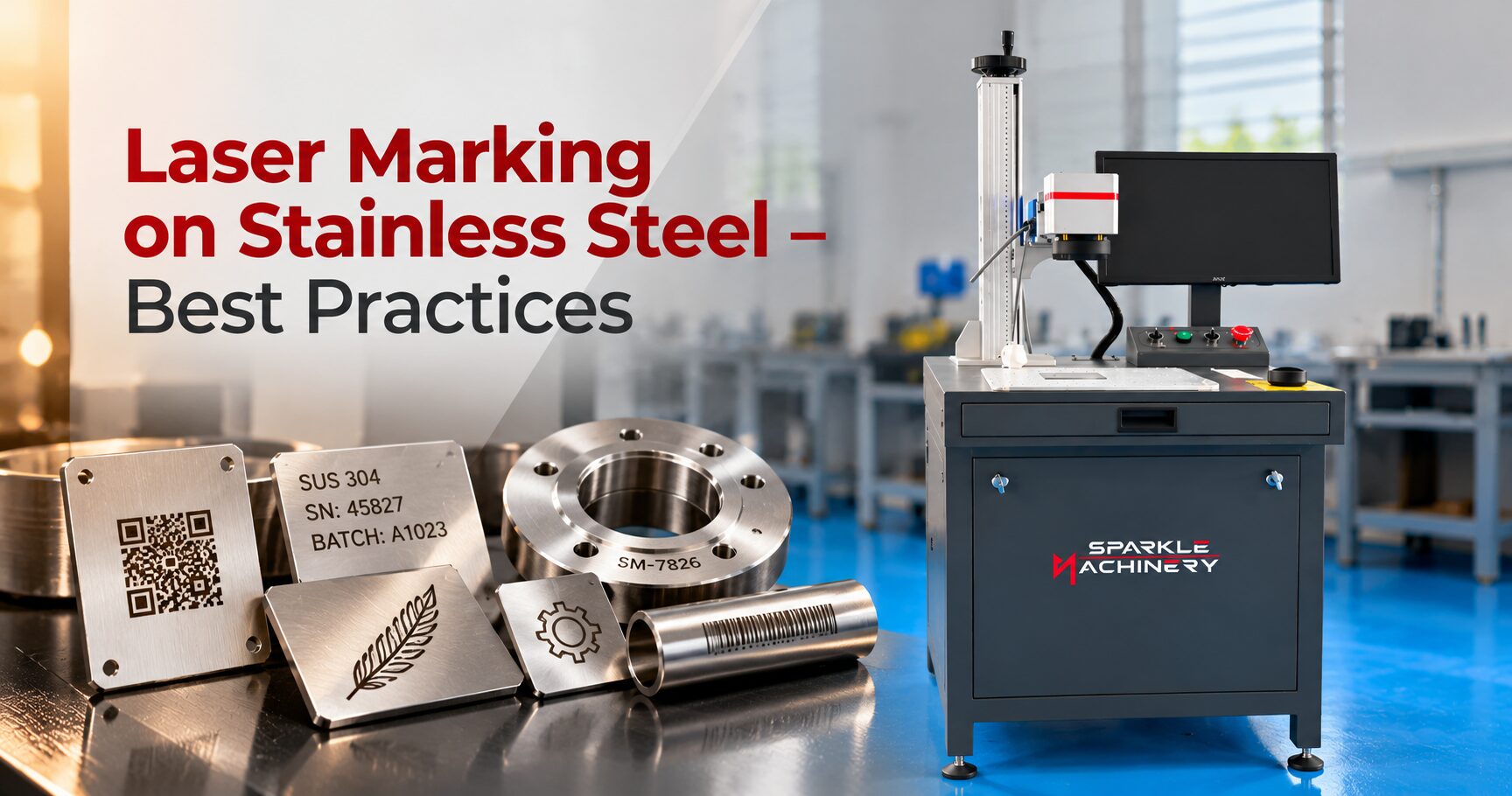
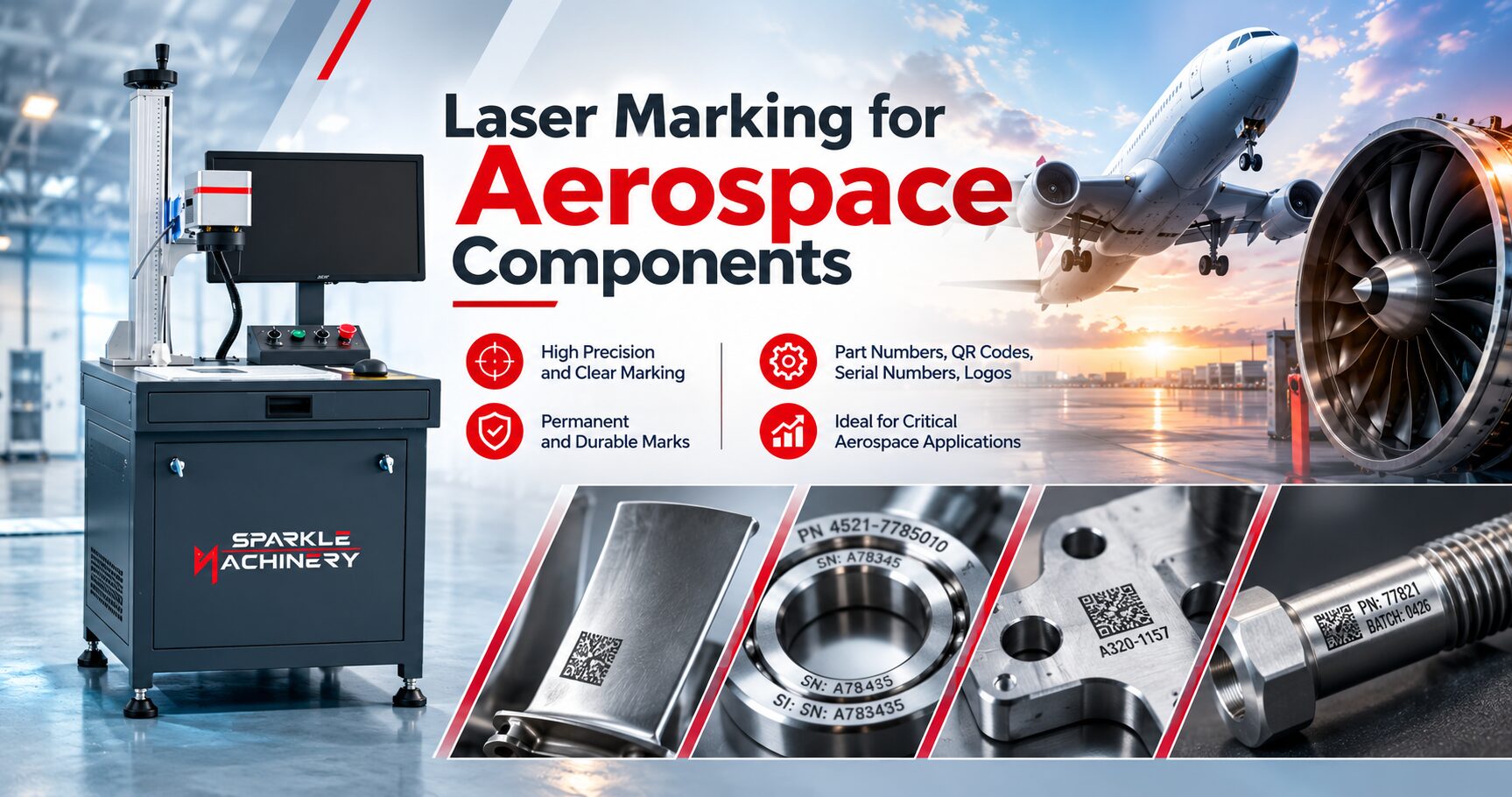
A modern industrial laser marking system can create permanent identification marks such as serial numbers, product codes, barcodes, QR codes and Data Matrix codes on suitable materials.
When connected with production databases and verification systems, laser marking can become part of a broader digital traceability process.
For example:
- A production system assigns a unique serial number to a component.
- The laser marking machine marks the assigned information.
- A scanner or vision system reads the mark.
- The result is checked against the production record.
- The system stores the verification result for traceability.
AI may support this workflow by helping analyze inspection images, recognize marking defects or identify recurring quality issues. However, code generation, laser marking, database integration and AI inspection are separate functions that must be configured to work together.
A suitable fiber laser marking machine can be evaluated for permanent marking on compatible metals, while UV and CO2 laser systems may be more appropriate for particular plastics, coated materials and non-metallic applications.
The correct solution depends on the material, marking requirements, production speed and desired level of automation.
6. AI in Laser Welding, Cleaning and Cutting
AI can also support wider industrial laser processing applications, although the level of intelligence varies by machine and system configuration.
Laser Welding
Laser welding requires suitable power, speed, focus and process settings to achieve the required joint quality. Sensors, machine monitoring and vision-based inspection can help detect process variations and support quality control.
A handheld laser welding machine or automated laser welding system should be selected according to the material, joint design, production requirements and applicable safety procedures.
Laser Cleaning
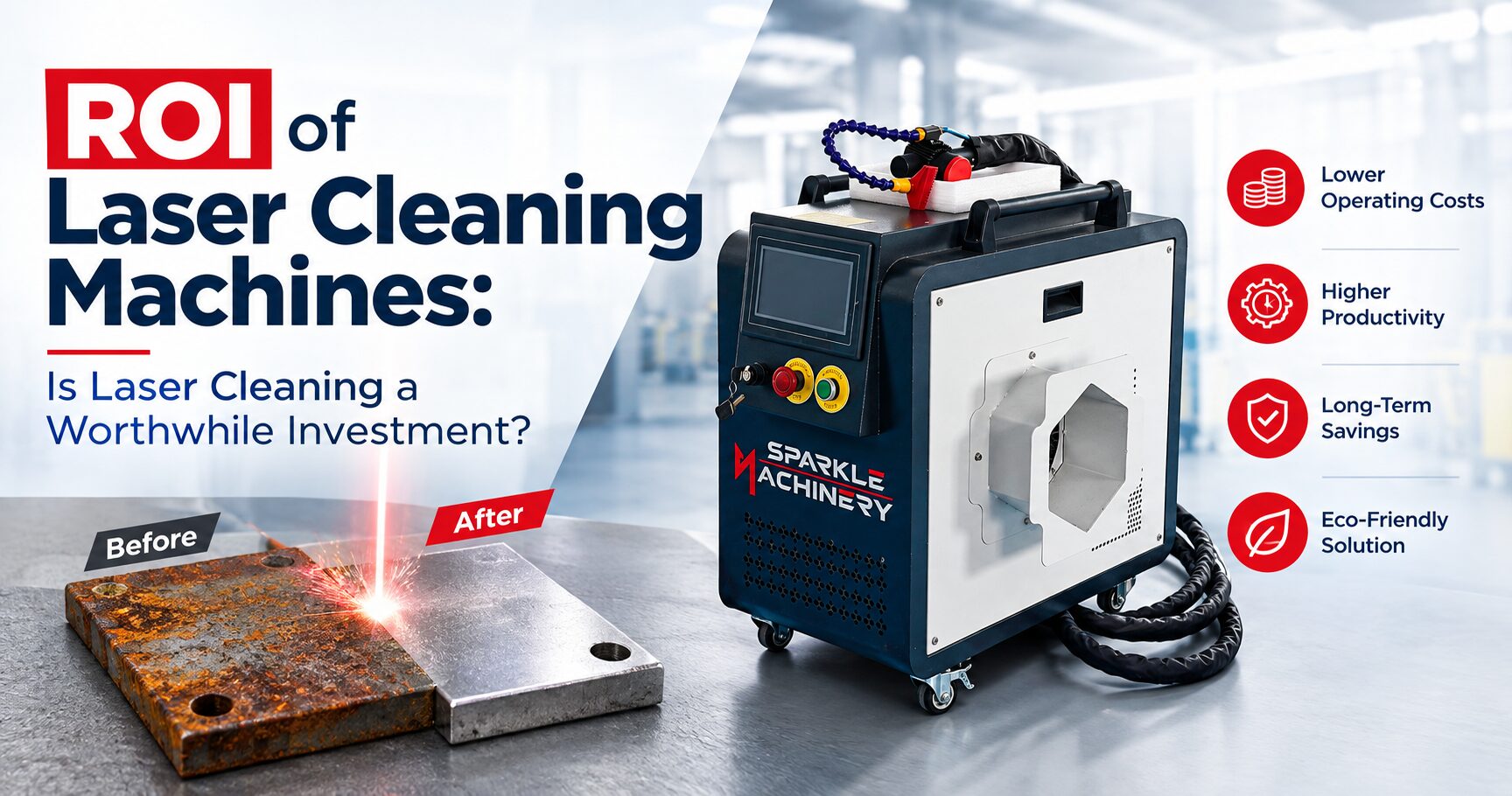
Laser cleaning removes selected contaminants, rust, coatings or unwanted surface layers using controlled laser energy. Monitoring and process data can help operators maintain suitable cleaning conditions, while inspection systems may support verification of the treated surface.
A laser cleaning machine must be configured for the substrate, contaminant and required surface finish.
Laser Cutting
AI-supported production planning and machine monitoring can help improve scheduling, material utilization and process consistency in suitable cutting operations.
A fiber laser cutting machine can be considered for compatible metal-cutting applications, with selection based on material type, thickness, required accuracy and production volume.
In all three applications, AI is most effective when integrated with appropriate process engineering, machine controls and quality checks.
7. Key Benefits of AI-Enabled Manufacturing
When implemented for clearly defined operational needs, AI and automation can help manufacturers achieve several improvements.
- Higher productivity: Identify bottlenecks and improve production planning.
- Better quality control: Support faster detection of selected defects.
- Reduced downtime: Use machine data to improve maintenance decisions.
- Less avoidable waste: Identify recurring production and quality problems.
- Improved traceability: Connect marking, verification and production records.
- Data-driven decisions: Use operational information to guide process improvements.
These benefits are not automatic. Results depend on the quality of the data, integration with existing equipment, staff training and continuous evaluation.
8. Challenges Manufacturers Should Consider Before Adopting AI
Despite its potential, AI implementation requires careful planning. Manufacturers should evaluate:
- Initial investment: Hardware, software, integration and training costs.
- Data availability: AI systems require relevant, reliable data.
- Legacy equipment: Older machines may need additional sensors or interfaces.
- Cybersecurity: Connected systems require suitable access controls and protection.
- Employee training: Teams must understand how to use and validate AI-supported recommendations.
- Return on investment: Projects should be assessed using measurable indicators such as downtime, rejection rates, cycle time and operating costs.
For many manufacturers, starting with one clearly defined problem and expanding after evaluating the results is a practical approach.
9. How SM Laser Technology Supports Modern Manufacturing
SM Laser Technology provides industrial laser marking, welding, cleaning, cutting, engraving and customized laser solutions for a range of manufacturing applications.
Our product range includes fiber laser marking machines, UV laser marking machines, CO2 laser marking and engraving machines, laser welding machines, laser cleaning machines and fiber laser cutting solutions.
These technologies can support manufacturers seeking improved marking consistency, permanent product identification, precision processing and opportunities for production automation.
When evaluating a laser solution, manufacturers should consider the material, required output, marking or processing quality, cycle time, integration requirements and future production needs.
AI and advanced automation can complement suitable laser equipment, but the appropriate configuration should always be determined by the actual application.
Explore our range of industrial laser solutions at www.sparklemachinery.com.
Conclusion
AI is helping transform modern manufacturing by supporting predictive maintenance, quality inspection, process optimization and intelligent automation. When combined with suitable industrial machinery, it can help businesses improve productivity, maintain consistent quality and make more informed decisions.
However, successful implementation requires more than adopting new technology. Manufacturers must identify their operational challenges, choose suitable equipment, prepare reliable data and measure performance against clear production goals.
For businesses exploring laser marking, welding, cleaning, cutting or customized automation, selecting the right machine is an important step towards a more efficient manufacturing process.