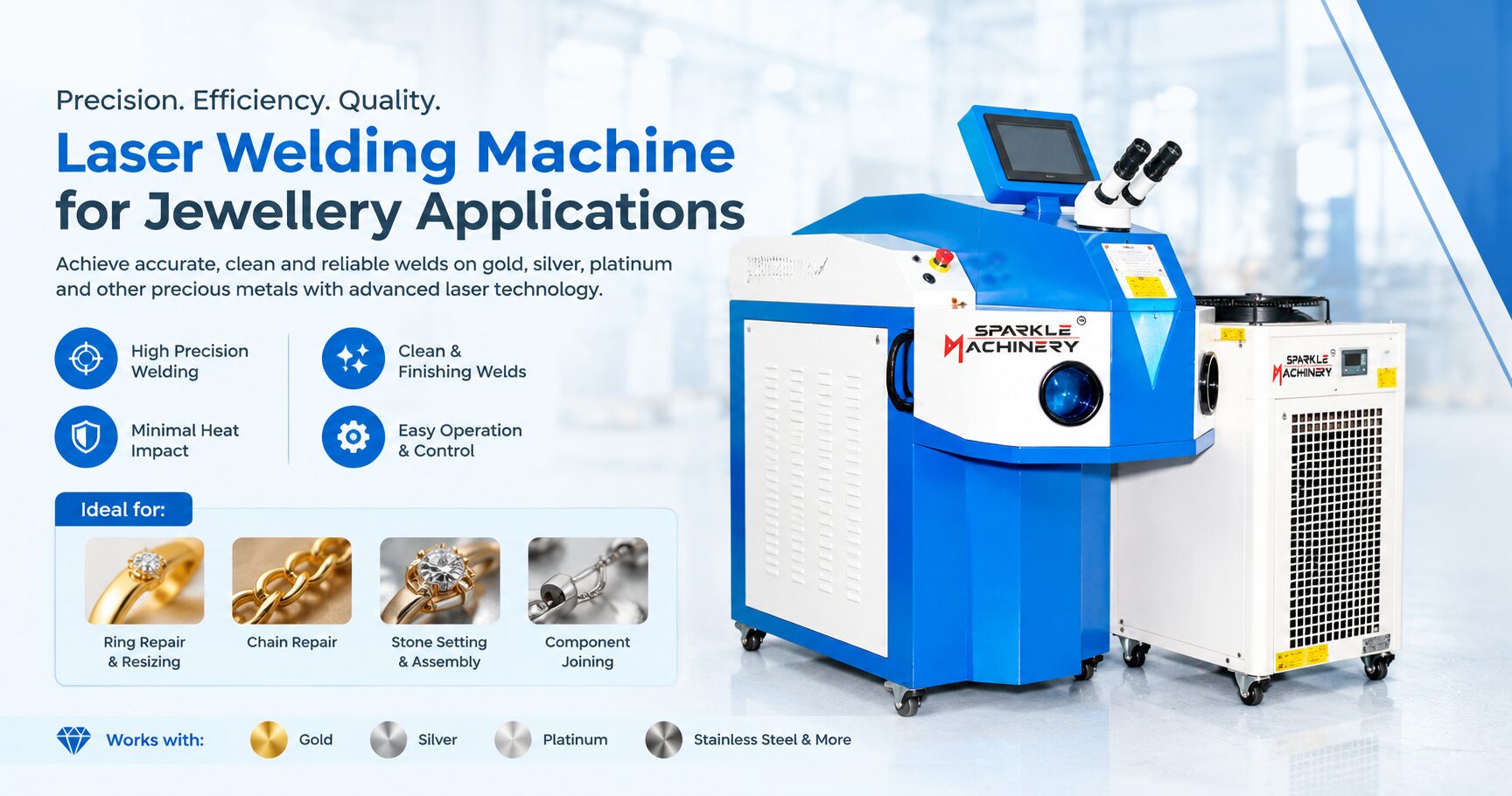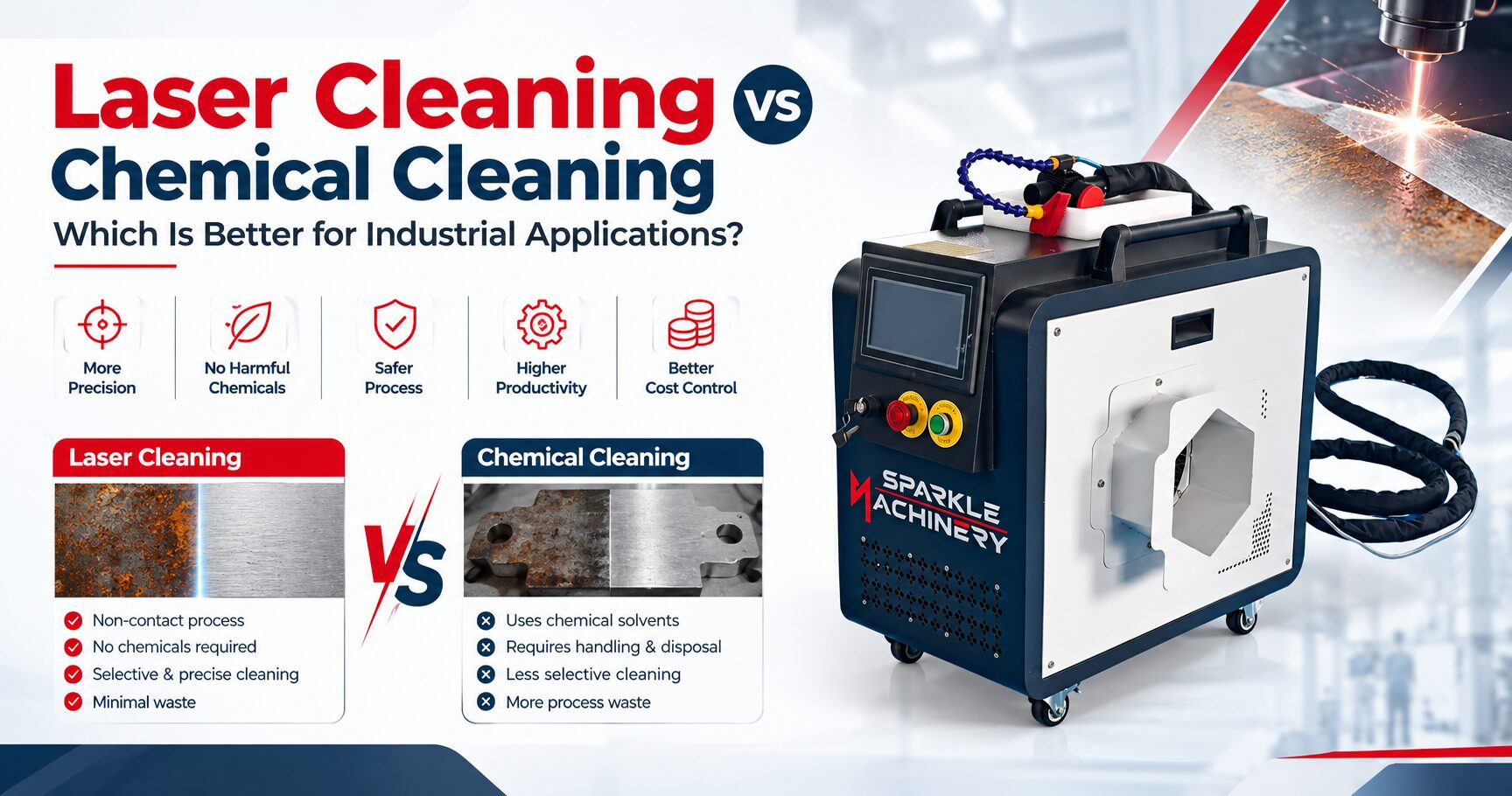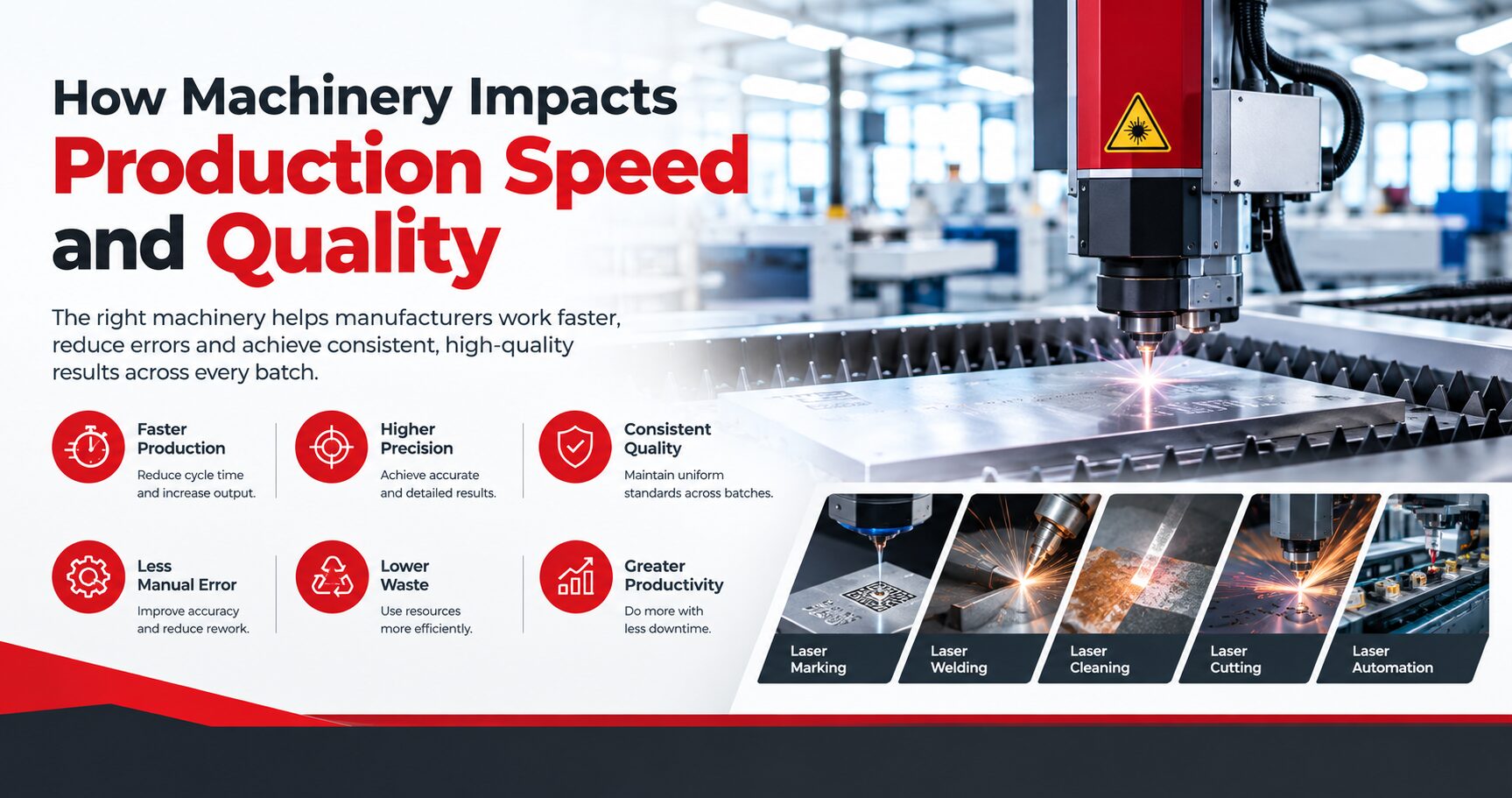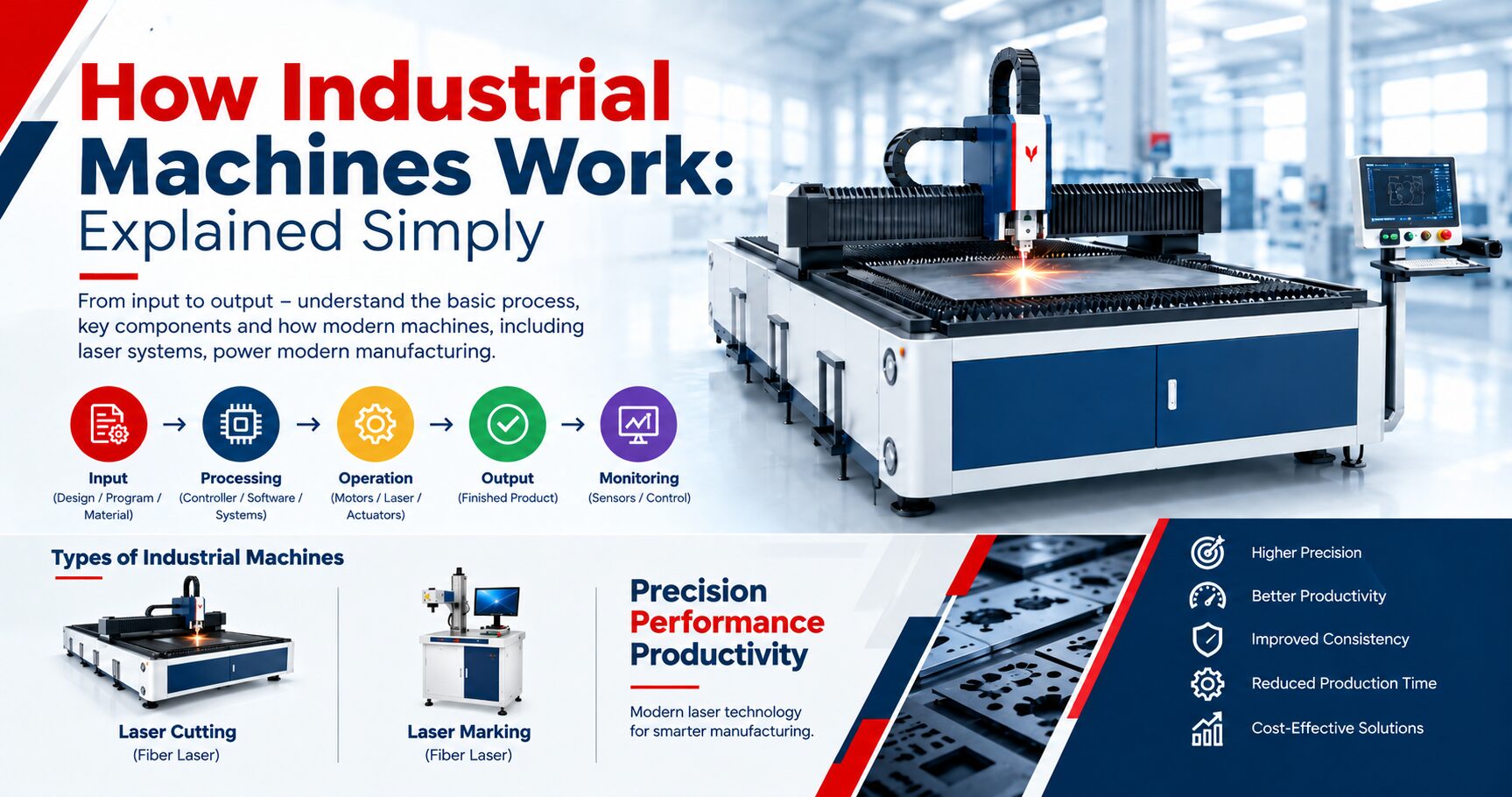
The jewellery industry requires extremely high levels of precision, especially when working with valuable metals and intricate designs. Traditional welding and soldering methods can sometimes introduce excessive heat into the surrounding area, which may affect delicate components, gemstones, surface finishes, or intricate jewellery designs.
Laser welding technology provides a precise and controlled alternative for many jewellery manufacturing and repair applications. A jewellery laser welding machine can deliver concentrated energy to a specific area, allowing manufacturers and jewellery professionals to perform accurate welding with minimal impact on the surrounding material.
From gold and silver jewellery manufacturing to repair, resizing, chain repair and stone-setting applications, laser welding has become an important technology for modern jewellery production.
What Is Jewellery Laser Welding?
Jewellery laser welding is a precision welding process that uses a focused laser beam to join, repair or modify metal components.
Unlike conventional welding methods, laser welding concentrates the energy into a small area. This allows operators to control the welding process more precisely and helps reduce unnecessary heat transfer to surrounding areas.
A jewellery laser welding machine can be used for applications involving materials such as:
- Gold
- Silver
- Platinum
- Stainless steel
- Other jewellery-related metal alloys
The exact machine configuration and welding parameters depend on the material, thickness, jewellery design and application.
Why Is Laser Welding Used in Jewellery Manufacturing?
Jewellery manufacturing often involves small components, intricate designs and expensive materials. This makes process control particularly important.
Some important advantages of laser welding for jewellery applications include:
1. High Precision
The focused laser beam allows welding to be performed on small and intricate areas.
This is particularly useful for delicate jewellery components where conventional welding methods may be difficult to control.
2. Controlled Heat Input
Laser welding can concentrate energy on the required welding area, helping minimise unnecessary heating of the surrounding material.
This is useful when working on detailed jewellery designs.
3. Minimal Distortion
Because the welding area can be highly localized, laser welding can help reduce distortion compared with processes involving a larger heat-affected area.
4. Fine and Clean Welds
With appropriate machine settings and process parameters, laser welding can produce precise welds suitable for detailed jewellery work.
5. Reduced Need for Conventional Soldering
For suitable applications, laser welding can reduce dependence on traditional soldering methods and provide greater control over the welding area.
Major Jewellery Laser Welding Applications
Jewellery laser welding can be used across several stages of jewellery manufacturing, finishing and repair.
1. Jewellery Repair
One of the important applications of a jewellery laser welding machine is jewellery repair.
Laser welding can be used for repairing:
- Broken jewellery components
- Cracks
- Small fractures
- Damaged joints
- Broken chains
- Fine metal sections
- Worn jewellery components
The precision of the laser allows operators to work on specific damaged areas without unnecessarily affecting the surrounding design.
2. Ring Resizing and Modification
Ring resizing is another application where controlled welding can be useful.
During resizing, the ring may need to be cut, adjusted and joined again. Laser welding can help create a precise joint after the required modification.
It can be particularly useful when working with valuable jewellery where maintaining the original appearance is important.
3. Chain Repair
Jewellery chains contain small links and delicate connections that can be challenging to repair using conventional methods.
Laser welding allows operators to focus the welding energy on the required link or joint.
Applications include:
- Chain link repair
- Broken chain joints
- Fine-link jewellery
- Delicate chain components
- Bracelet link repair
The precision of the process makes laser welding suitable for detailed repair work.
4. Stone Setting and Jewellery Assembly
Jewellery manufacturing often involves assembling multiple components around gemstones.
Laser welding can be used for selected assembly and repair applications where controlled heat input is important.
For suitable jewellery designs, laser welding can help operators work close to components while limiting unnecessary heating of surrounding areas.
Note: The suitability of laser welding near gemstones depends on the stone type, setting, material and process parameters. Proper application testing is recommended before production.
5. Gold Jewellery Welding
Gold jewellery manufacturing and repair is one of the key areas where laser welding can be applied.
A laser welding machine for gold jewellery can be used for applications such as:
- Gold jewellery repair
- Ring modification
- Chain repair
- Component joining
- Fine jewellery assembly
- Crack and defect repair
Different gold alloys can behave differently during laser welding, so appropriate parameters and application testing are important.
6. Silver Jewellery Welding
Silver jewellery can also be processed using laser welding technology.
Applications may include:
- Silver jewellery repair
- Chain repair
- Component joining
- Ring modification
- Decorative jewellery assembly
- Precision repair work
The welding parameters should be selected according to the silver alloy, thickness and specific application.
7. Platinum Jewellery Welding
Platinum jewellery requires careful processing because of its material characteristics and value.
Laser welding provides a concentrated and controllable heat source that can be used for suitable platinum jewellery applications.
Potential applications include:
- Platinum ring repair
- Jewellery modification
- Component joining
- Fine repair work
- Precision jewellery manufacturing
Application testing is important for determining the appropriate laser parameters for specific platinum alloys and designs.
Laser Welding vs Traditional Jewellery Soldering
Laser welding and traditional soldering are different processes, and the appropriate method depends on the jewellery application.
| Feature | Laser Welding | Traditional Soldering |
| Heat control | Highly localized | Larger surrounding heat area |
| Precision | Very high | Depends on operator and application |
| Fine jewellery work | Suitable for many applications | Commonly used |
| Automation potential | High | More operator-dependent |
| Material addition | May be performed with or without filler depending on application | Typically uses solder |
| Repair work | Suitable for precision repairs | Widely used |
| Process control | Programmable parameters | More manual |
The choice between laser welding and soldering should be based on the material, jewellery design, required finish, production volume and application requirements.
Benefits of Using a Jewellery Laser Welding Machine
For jewellery manufacturers and repair professionals, laser welding can offer several process-level benefits.
Precision
The focused laser beam enables accurate welding of small areas.
Repeatability
Once suitable welding parameters are established, the process can be repeated consistently for similar applications.
Better Access to Small Areas
Laser welding can be useful when working on intricate jewellery components and difficult-to-access joints.
Controlled Process
Parameters such as laser power, pulse duration, frequency and spot characteristics can be adjusted according to the application.
Production Efficiency
For suitable repetitive applications, laser welding can help improve process efficiency and reduce manual rework.
Application Flexibility
The same machine platform can potentially support different jewellery repair and manufacturing applications by adjusting the process parameters.
What Jewellery Manufacturers Should Consider Before Buying a Laser Welding Machine
Selecting a jewellery laser welding machine should not be based only on laser power or machine price.
Consider the following factors:
1. Jewellery Materials
Identify the metals and alloys you regularly process, such as gold, silver and platinum.
2. Typical Component Size
Small jewellery components require appropriate beam and spot characteristics for accurate processing.
3. Welding Applications
Clearly define whether your requirement is primarily:
- Jewellery repair
- Ring resizing
- Chain repair
- Manufacturing
- Component joining
- Stone-setting-related work
- Custom jewellery production
4. Machine Controls
Check the available control system and whether operators can adjust parameters according to different materials and applications.
5. Microscope and Viewing System
For fine jewellery work, clear visibility of the welding area is important for accurate positioning and operation.
6. Operator Training
Proper training is essential to understand laser parameters, material behaviour, machine operation and safety procedures.
7. Application Testing
Before purchasing a machine, it is advisable to test your actual jewellery samples.
This helps determine whether the machine and selected parameters are suitable for your specific application.
Why Application Testing Matters in Jewellery Laser Welding
Different jewellery designs and metal alloys can require different laser parameters.
Factors such as:
- Material type
- Alloy composition
- Thickness
- Joint design
- Welding position
- Required weld size
- Surface condition
- Filler requirement
can influence the final result.
Therefore, manufacturers should evaluate their actual components through sample testing and application trials before finalizing a laser welding solution.
Jewellery Laser Welding for Modern Jewellery Manufacturing
As jewellery manufacturing becomes more focused on precision, repeatability and efficient production, laser technology provides manufacturers with additional options for welding and repair applications.
A properly configured jewellery laser welding machine can support applications ranging from fine jewellery repair to component joining and production work.
The key is not simply selecting a high-power laser but choosing a machine that matches the material, application, component size and production requirement.
Why Choose SM Laser Technology for Jewellery Laser Welding?
SM Laser Technology provides industrial laser solutions for different manufacturing and processing applications, including laser welding technology for jewellery applications.
Our approach focuses on understanding the customer’s application before recommending a suitable laser solution.
Depending on the requirement, we can support customers with:
- Jewellery laser welding solutions
- Application consultation
- Sample testing
- Machine demonstrations
- Machine installation
- Operator training
- After-sales support
If you are evaluating a laser welding machine for gold, silver, platinum or other jewellery applications, testing your actual samples is an important step before making a purchase decision.
Frequently Asked Questions
What is a jewellery laser welding machine?
A jewellery laser welding machine is a precision laser welding system designed for applications involving small and intricate metal components commonly found in jewellery manufacturing and repair.
Can laser welding be used for gold jewellery?
Yes, laser welding can be used for suitable gold jewellery manufacturing and repair applications. The appropriate laser parameters depend on the gold alloy, thickness and application.
Can silver jewellery be laser welded?
Yes. Laser welding can be applied to suitable silver jewellery applications, including repair and component joining, with parameters selected according to the material and application.
Can laser welding be used for platinum jewellery?
Laser welding can be used for suitable platinum jewellery applications. Application testing is recommended to establish appropriate process parameters.
Is laser welding better than soldering for jewellery?
Laser welding and soldering have different characteristics and applications. The appropriate process depends on the jewellery design, material, required finish, production process and repair requirement.
Can laser welding be used near gemstones?
It can be suitable for certain applications, but the suitability depends on the gemstone, setting, material and process parameters. Proper application testing and appropriate precautions are important.
How do I select the right jewellery laser welding machine?
Consider your jewellery materials, component thickness, application, production volume, required precision, machine controls, viewing system and available application support. Testing your actual samples is recommended.
Conclusion
Jewellery laser welding technology offers a precise and controlled approach to many jewellery manufacturing, modification and repair applications.
From gold and silver jewellery to platinum components, ring resizing, chain repair and precision assembly, laser welding can help jewellery manufacturers achieve controlled and repeatable welding results for suitable applications.
The right machine, however, depends on the actual material and application. Before investing in a jewellery laser welding machine, manufacturers should evaluate their components, conduct application testing and select the appropriate laser configuration and process parameters.