Indian manufacturing is rapidly moving toward higher productivity, better quality, automation, and improved traceability. As manufacturers face increasing pressure to reduce production costs while maintaining consistent quality, traditional manufacturing processes are increasingly being complemented by advanced technologies.
One technology making a significant impact across industries is laser technology.
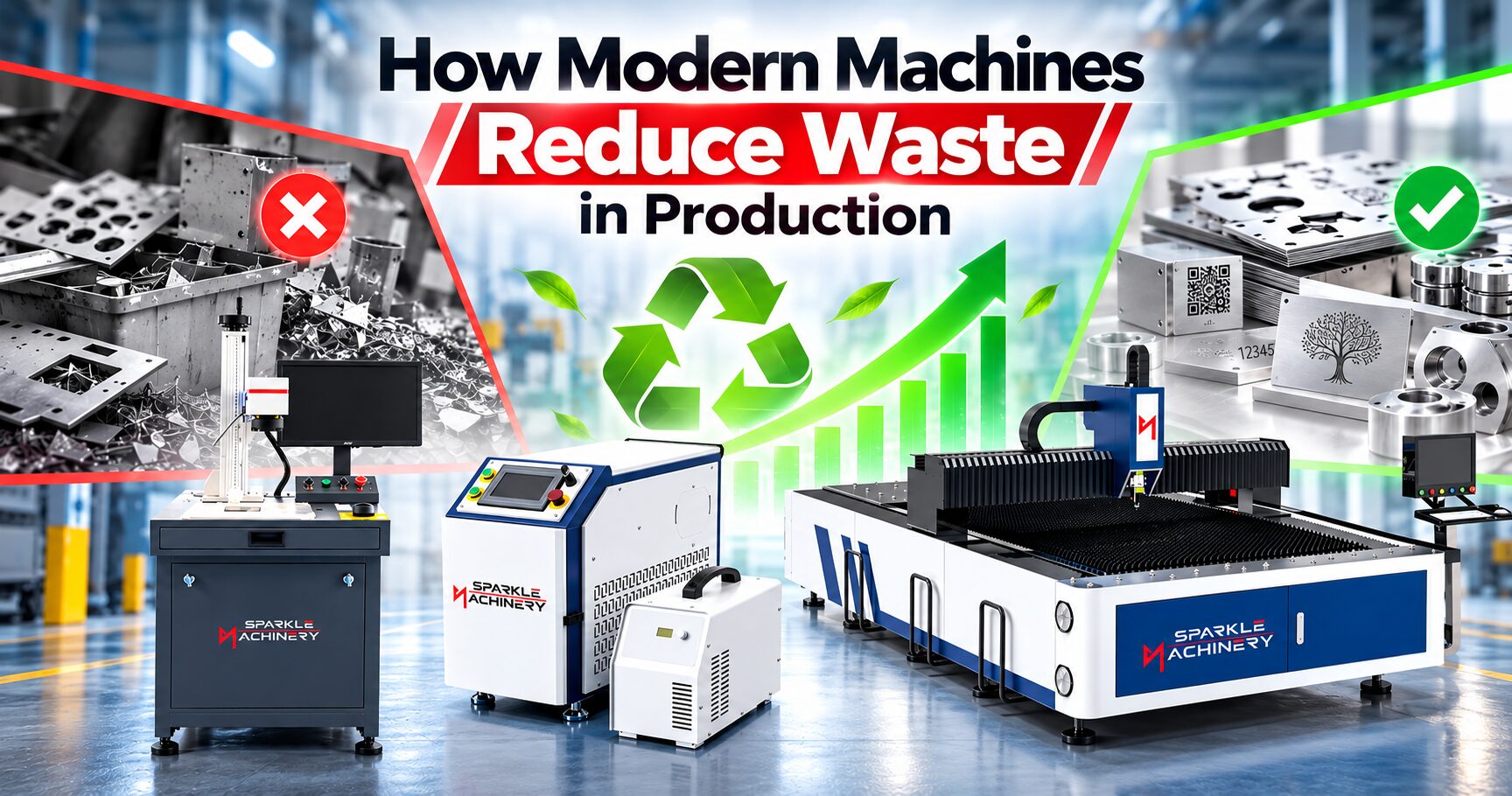
From permanent product identification and precision welding to surface cleaning, accurate cutting, and automated production, industrial laser machines can help manufacturers improve efficiency, reduce material wastage, and achieve more consistent results.
For Indian manufacturers, laser technology can be particularly useful in industries such as automotive, engineering, electronics, electrical, aerospace, medical devices, tools and dies, sheet metal fabrication, and EV battery manufacturing.
1. Laser Marking for Permanent Identification and Traceability
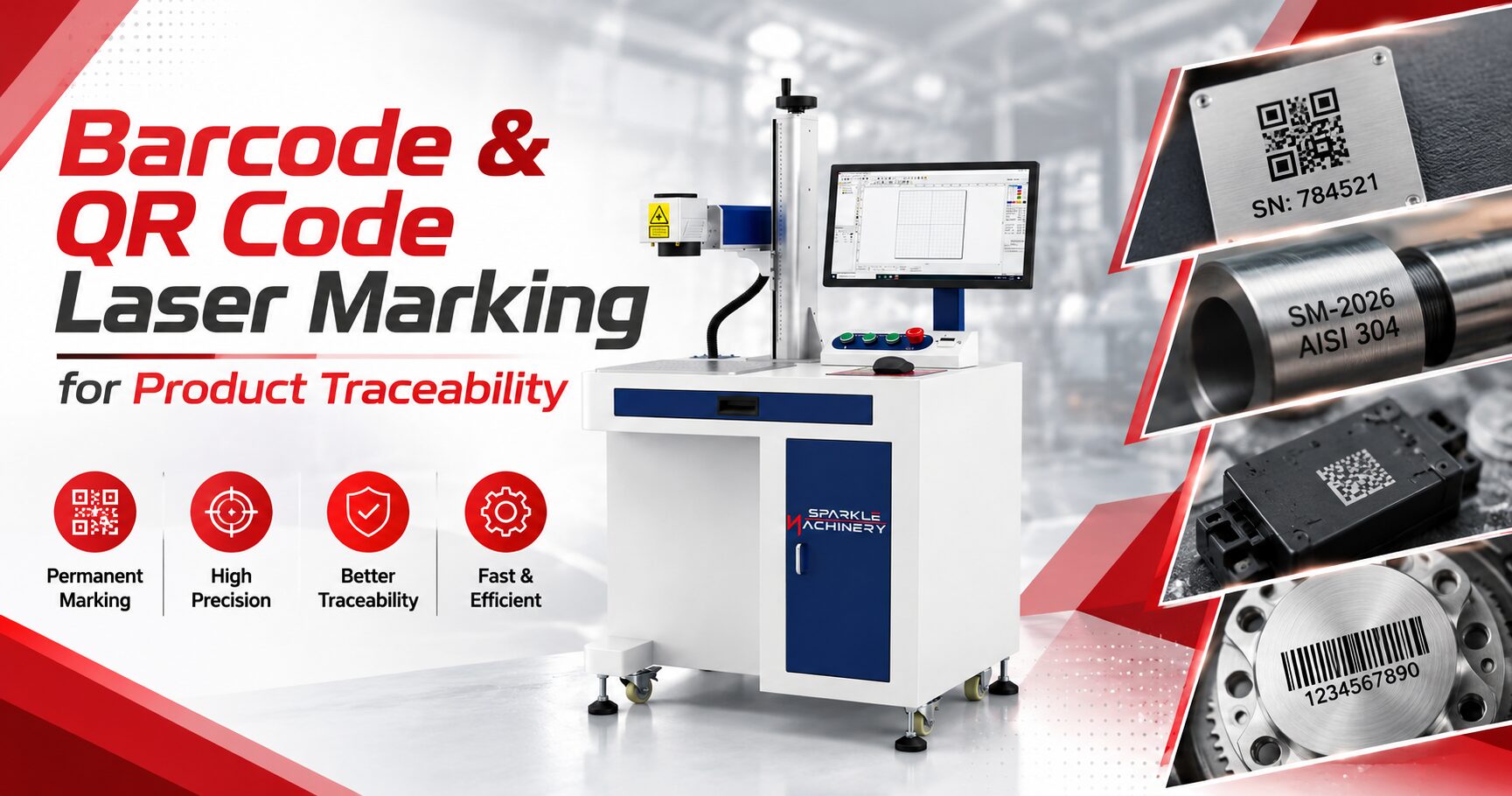
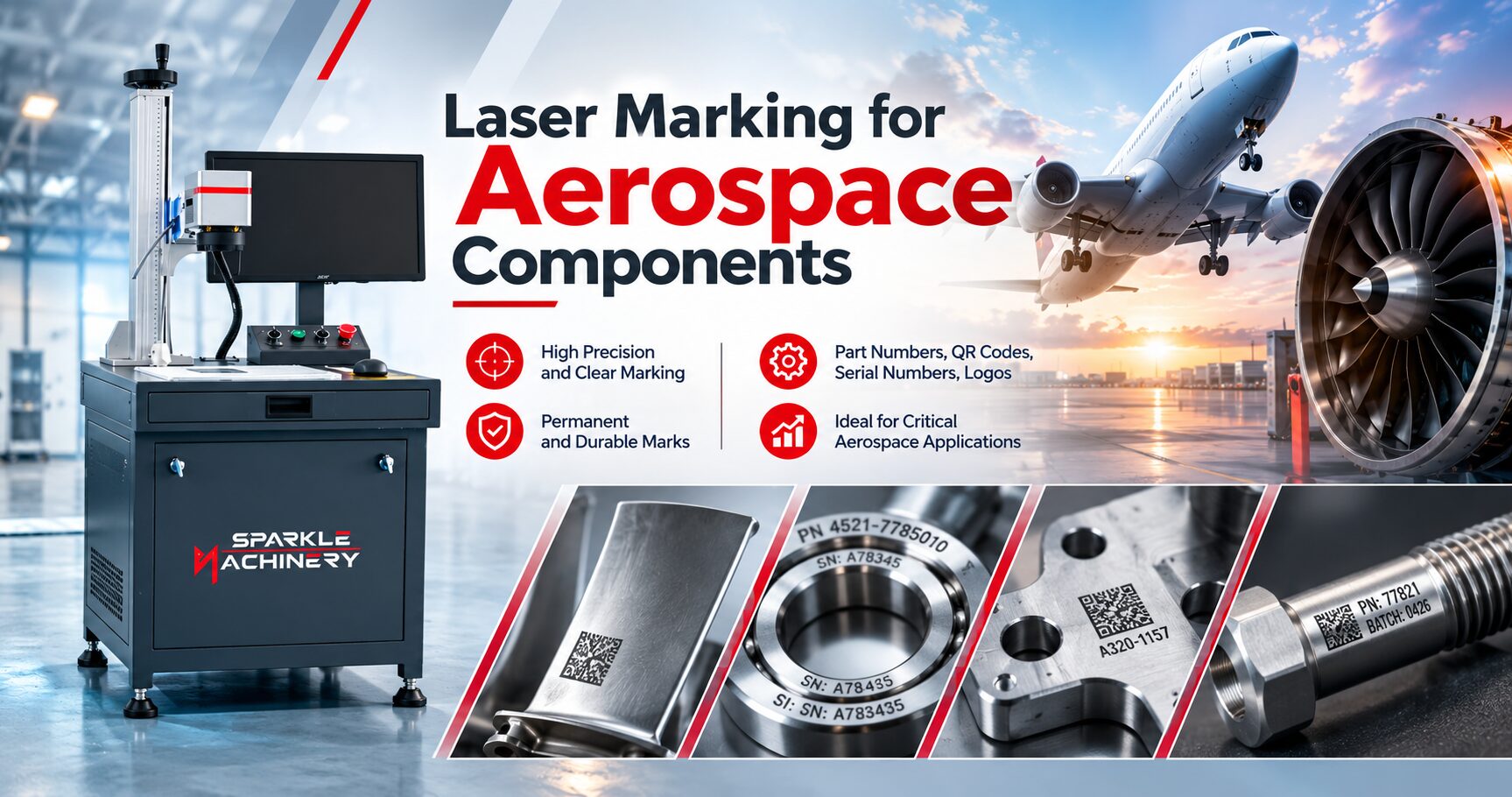
Product identification is an important part of modern manufacturing. Serial numbers, part numbers, barcodes, QR codes, logos, and other information often need to remain readable throughout a product’s lifecycle.
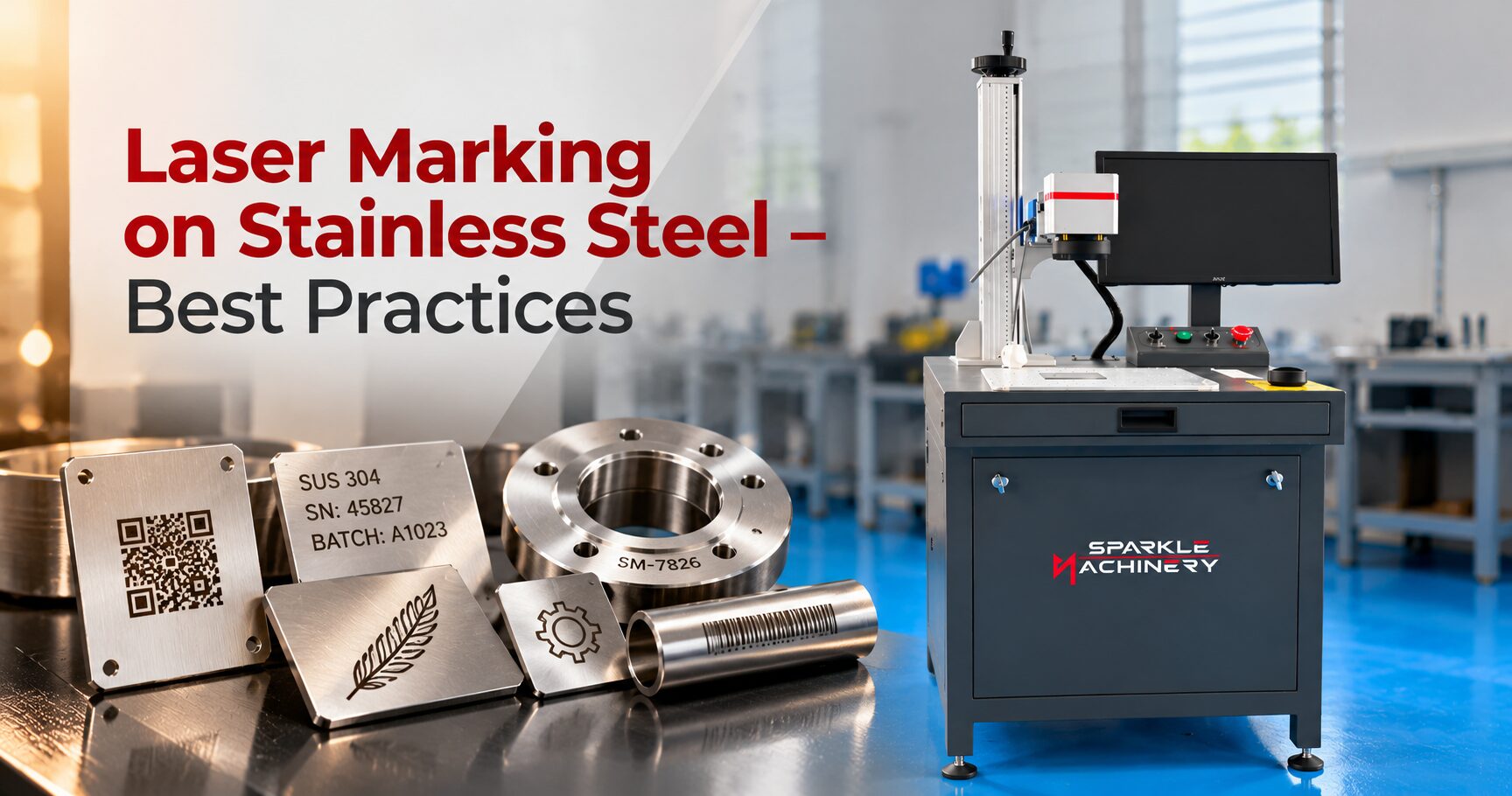
Laser marking machines create permanent marks directly on the surface of components without physical contact.
Unlike conventional labeling or printing methods, laser marking can provide durable identification that is resistant to wear and suitable for many industrial applications.
Key benefits of laser marking:
- Permanent serial numbers and part marking
- Barcode and QR code marking
- Product traceability
- High-speed marking
- Consistent marking quality
- Contactless processing
- Suitable for metals, plastics and other materials
- Reduced consumable requirements
Fiber laser marking machines are widely used for marking stainless steel, aluminium, mild steel, brass, copper and various industrial components.
For applications requiring finer and more precise marking, UV laser marking machines can also be considered, particularly for sensitive materials and electronics-related applications.
2. Laser Welding for Precision and Repeatability
Welding is a critical manufacturing process, but conventional welding methods can sometimes result in excessive heat input, distortion, spatter, or inconsistent weld quality.
Laser welding machines offer a highly concentrated heat source that allows manufacturers to create precise welds with controlled heat input.
This can be especially useful for components where appearance, dimensional accuracy, and repeatability are important.
Advantages of laser welding include:
- Precision welding
- Lower heat input
- Reduced heat-affected zone
- Minimal distortion
- High welding speed
- Consistent weld quality
- Reduced post-processing requirements
- Easy integration with automation systems
Handheld laser welding machines can be useful for flexible welding applications, while automated laser welding systems can provide greater consistency for repetitive production environments.
Laser welding is finding applications in automotive components, stainless steel fabrication, electrical components, sheet metal, battery components, and precision engineering.
3. Laser Cleaning for Better Surface Preparation
Surface contamination can affect welding, coating, painting, bonding, and overall product quality.
Rust, paint, oxide layers, grease, dirt, and other contaminants may need to be removed before the next manufacturing process.
Laser cleaning machines provide a contactless method for removing unwanted surface contaminants using controlled laser energy.
Depending on the application, manufacturers can select suitable continuous-wave (CW) or pulsed laser cleaning systems.
Benefits of laser cleaning:
- Removes rust and oxidation
- Paint and coating removal
- Surface contamination removal
- Contactless cleaning
- Reduced use of chemical cleaning agents
- Minimal mechanical wear
- Improved surface preparation
- Suitable for maintenance and manufacturing applications
Laser cleaning can be particularly valuable where conventional abrasive cleaning methods may damage the underlying surface or generate excessive waste.
4. Laser Cutting for Accurate and Efficient Production
Cutting accuracy has a direct impact on manufacturing quality, assembly, and material utilization.
Traditional cutting processes can sometimes result in larger kerfs, mechanical deformation, or increased material wastage depending on the application.
Laser cutting machines use a focused laser beam to produce precise cuts with high repeatability.
Key advantages of laser cutting:
- High cutting accuracy
- Consistent results
- Reduced material wastage
- Narrow cutting kerf
- Complex profile cutting
- High repeatability
- Reduced mechanical contact
- Suitable for automation
Laser cutting is widely used in sheet metal fabrication, automotive components, industrial machinery, electrical panels, engineering components, and customized parts manufacturing.
For applications requiring high-speed processing of suitable materials, CO2 laser cutting machines and other laser cutting technologies can provide an efficient production solution.
5. Laser Automation for Higher Productivity
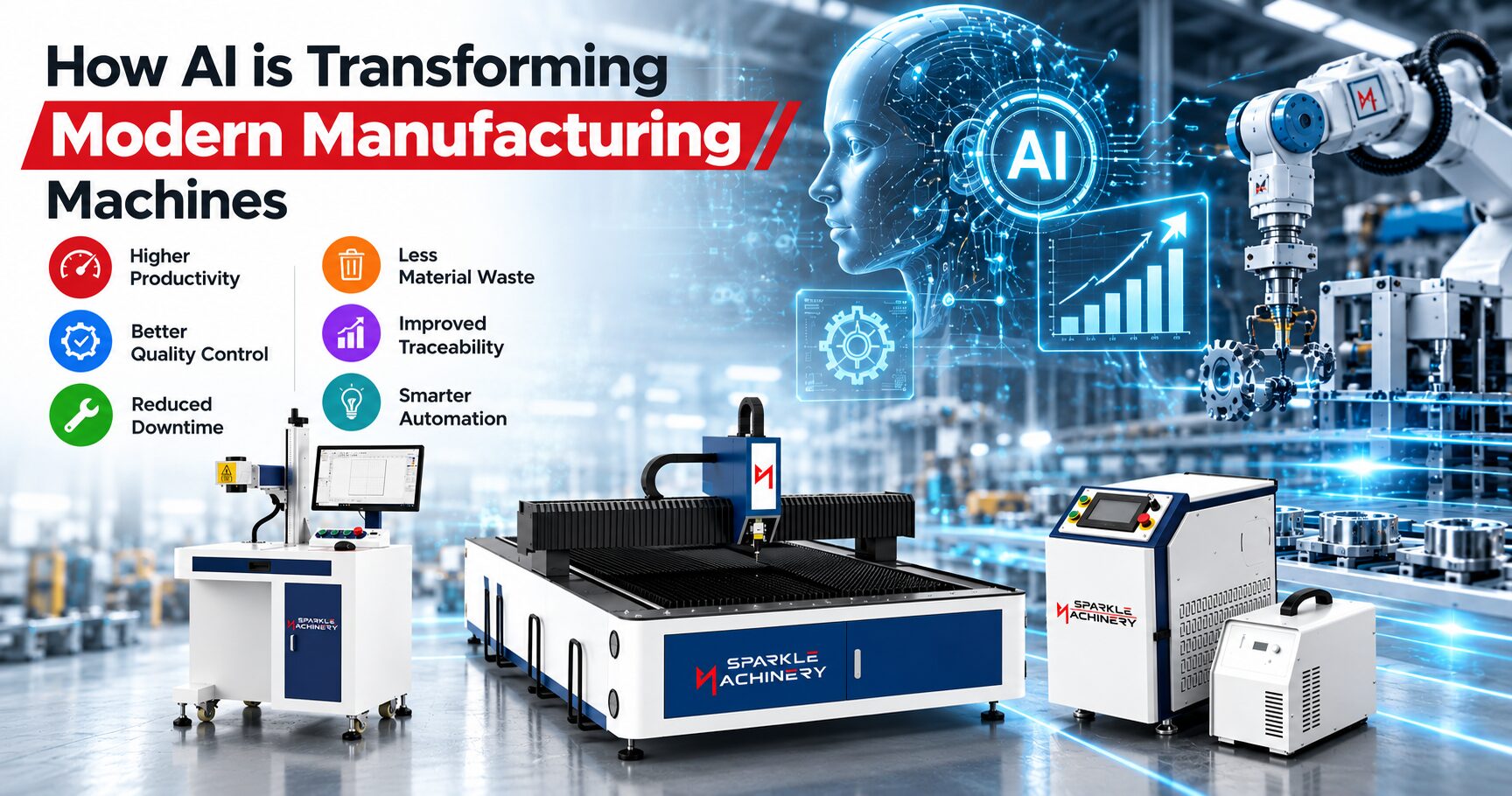
As Indian manufacturers move toward Industry 4.0 and smart manufacturing, automation is becoming increasingly important.
Laser processes can be integrated with robotic systems, conveyors, rotary indexing systems, vision systems, PLC controls, and customized automation to create more efficient production lines.
Laser automation can help manufacturers reduce manual intervention and maintain consistent processing parameters across production cycles.
Benefits of laser automation:
- Higher production productivity
- Consistent processing quality
- Reduced manual intervention
- Repeatable operations
- Improved production monitoring
- Integration with existing production lines
- Better process control
- Customized solutions for specific applications
For high-volume manufacturing, an automated laser marking machine or automated laser welding system can help improve throughput while maintaining consistent quality.
Why Should Indian Manufacturers Consider Laser Technology?
The objective of adopting laser technology is not simply to replace an existing machine. The real benefit comes from improving the overall manufacturing process.
Laser technology can help manufacturers address several common production challenges:
| Manufacturing Challenge | Laser Technology Solution |
| Difficult product identification | Laser marking |
| Non-permanent labels | Permanent laser marking |
| Excessive welding heat | Laser welding |
| Welding distortion | Controlled laser welding |
| Rust and paint removal | Laser cleaning |
| Surface contamination | Laser cleaning |
| Cutting inaccuracies | Laser cutting |
| Material wastage | Optimized laser cutting |
| Repetitive manual operations | Laser automation |
| Inconsistent production | Automated laser processing |
Applications Across Indian Industries
Laser technology is not limited to a single manufacturing sector. Different laser solutions can be adapted according to material, component geometry, production volume, and process requirements.
Automotive Industry
Laser marking can be used for part numbers, serial numbers, barcodes, and traceability codes, while laser welding and cutting can support precision component manufacturing.
EV and Battery Manufacturing
Laser technology is increasingly relevant to the EV ecosystem. Laser marking, laser welding, cleaning, and automation can support different stages of battery and component manufacturing where precision and repeatability are important.
Engineering and Machinery
Industrial components often require permanent identification, precision welding, surface preparation, and accurate cutting. Laser machines can address these requirements with contactless and repeatable processing.
Electronics and Electrical Industry
Small components and sensitive materials may require highly controlled processing. UV laser marking and precision laser processing can be suitable for applications where conventional marking or processing methods may not provide the required accuracy.
Sheet Metal Fabrication
Laser cutting and laser welding can help fabricators improve accuracy, productivity, and consistency while reducing unnecessary material wastage.
Choosing the Right Laser Solution
There is no single laser machine that is suitable for every manufacturing application.
The right solution depends on several factors, including:
- Material type
- Material thickness
- Component size
- Required marking or welding depth
- Production volume
- Required processing speed
- Desired accuracy
- Automation requirements
- Available workspace
- Budget and return on investment
For example, a manufacturer looking for permanent identification may require a fiber laser marking machine, while a precision welding application may require a laser welding machine. A manufacturer dealing with rust or coating removal may benefit from a laser cleaning machine.
For high-volume production, a customized laser automation solution may provide greater productivity than a standalone machine.
The Future of Laser Technology in Indian Manufacturing
Indian manufacturing is increasingly focused on automation, digital traceability, quality control, productivity, and sustainable production.
Laser technology fits naturally into this transformation because laser processes can offer high precision, repeatability, contactless processing, and integration with automated systems.
As industries such as automotive, EV, electronics, aerospace, and general engineering continue to evolve, the demand for industrial laser machines in India is expected to grow.
Manufacturers who evaluate laser technology based on their specific production requirements can potentially improve process efficiency while maintaining the quality standards demanded by modern manufacturing.
Conclusion
Laser technology can help Indian manufacturers improve marking, welding, cleaning, cutting, and automation processes.
Whether the requirement is permanent product identification, precision welding, rust removal, accurate cutting, or automated production, laser-based solutions can provide manufacturers with greater control and repeatability.
At SM Laser Technology, we provide industrial laser solutions including laser marking machines, laser welding machines, laser cleaning machines, laser cutting solutions, and customized laser automation systems for different manufacturing requirements.
The right laser solution should always be selected based on the material, application, production volume, and desired result. A proper application evaluation can help manufacturers determine whether laser technology is the right fit for their production process.